





Unconditional Cash Transfers and Crisis They Reveal
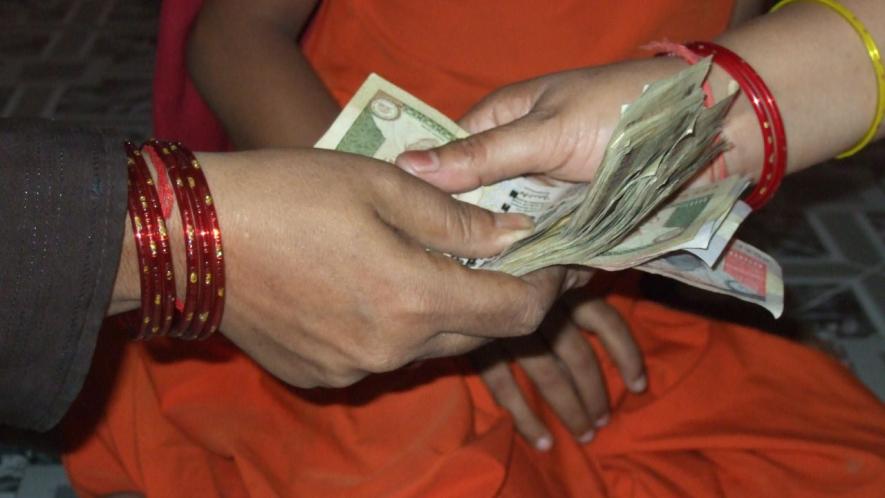
Representational Image. Image Courtesy: Wikimedia Commons
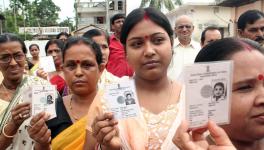
Women-centric unconditional cash transfer schemes (UCTs) have become the defining electoral feature of contemporary India. Being decisive in the most recent Assembly elections in Bihar, West Bengal and Tamil Nadu, the number of UCT-implementing states has now risen from 2 to 13.
In Tamil Nadu, the now ruling TVK’s (Tamilaga Vettri Kazhagam) promise of Rs 2,500 monthly allowance eclipsed the incumbent DMK’s (Dravida Munnetra Kazhagam) cash transfer scheme; in West Bengal, the incumbent TMC (Trinamool Congress) government failed to retain its women vote bank despite its Rs 1,500 monthly cash transfer, while the Bharatiya Janata Party (BJP) government is currently trying to consolidate its mandate by issuing the much-anticipated formal notification of a Rs 3,000 monthly universal cash transfer.
If we do not let ourselves be distracted by the debate over the implementation issues (often turned out to be vague promises by reducing the number of beneficiaries or even the amount of transfer), we would recognise that, starting as a state-level experiment before the 2021 Assembly election in West Bengal, the cash transfer scheme has now become a nationwide trend. Throughout India, political parties are busy competing over how much they will offer.
Women’s unpaid domestic labour has historically been central to capitalism. Still, neither the State nor even the traditional labour movement offered any real, practical recognition until these schemes were introduced, and even then, only in a tokenistic form.
Now, women of labouring classes and women in general have suddenly gained a bargaining chip with their ability to negotiate the value of their votes through a pragmatic, quasi-contractual exchange with the State.
While these cash transfer schemes are markedly different from the old Indian tradition of pre-election freebies, they are still commonly interpreted as either a vote-buying exercise or straightforward redistributive welfare measures. Both these readings miss a more profound and ongoing transformation in labour relations and in the State’s role under contemporary capitalism.
It is primarily necessary to distinguish between labour and work, terms often used interchangeably but not synonymous. For Karl Marx, labour is a natural human activity through which people mediate their relationship with nature. Humans laboured before markets, before formal societies, and before capitalism. It is not inherently tied to wages or relations of exchange. Every woman who has fed a family, raised children, sustained a household has laboured in this sense before any wage, before any contract, before any market took notice.
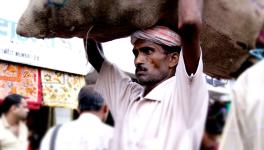
Work, by contrast, is a historically specific social form of labour. It refers to labour organised through discipline and control, where labour-time is abstracted and subsumed to produce surplus value. Work relations rest on making survival of life conditional upon selling one’s labour-time in the market. It is not an eternal human condition but a social relation peculiar to capitalism. Whether an individual labourer is a salaried wage worker or a debt-ridden self-employed producer is not quite important until their life survival depends on the commodification of their labour-time.
This issue becomes crucial in contemporary capitalism, which is in an acute structural crisis. Productivity is rising rapidly with automation, digitalisation, financialisation, and artificial intelligence. Whereas stable, dignified employment continues to fall.
Capitalism, as Marx argued, always produces a surplus population of workers over what it immediately requires, who are never fully absorbed into the production process. The resulting surplus labour exerts downward pressure on wages and maximises accumulation.
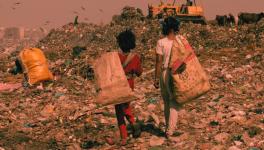
In India, this surplus population is produced through overlapping processes, i.e., dispossession, acquisition, and enclosure of the commons, and a stage of capitalism in which rising productivity reduces the need to absorb labour power. Large sections of the population possess nothing but labour power, yet find no stable opportunity to commodify it. Informal labour, gig work, contractual employment, forceful eviction and agrarian displacement are all expressions of this condition. To politically legitimise this post-colonial capitalism, the welfare State comes into play to provide minimal means of subsistence as life support for the surplus population. Women-centric unconditional cash transfer programmes function precisely within this framework. They are neither purely electoral ploys nor acts of charity.
This is where a dialectical tension emerges. Do these schemes merely stabilise capitalism, or do they point toward the possibility of survival beyond compulsory commodification of labour-time? The concept of necessary labour-time is valid here, which refers to the amount of labour-time required to secure the means of subsistence. The labour of reproducing life itself -- cooking, caring, and raising children -- was always necessary in this sense; in capitalism, it is kept unpaid.
Historically, this time was long because productive forces were underdeveloped. Technological advances have progressively reduced necessary labour time, generating vast surplus labour time and, consequently, enormous social wealth.
Welfare measures redistribute a fraction of this surplus. Millions of people benefit from public distribution systems, public healthcare, public education, and public digital services at minimal cost. These examples show that labour by everyone is no longer technically necessary to meet basic survival needs.
The critical question is whether the ongoing development of productive forces will be used merely to preserve the stability of the existing system or whether it carries the potential for a fundamental reconstitution of social relations.
While the material conditions necessary to sustain everyone are emerging, exploitative relations rooted in inequality prevent their realisation. The same productive potential that appears to be a pathway to freedom becomes a source of systemic crisis, which is likely to intensify manifold as automation and artificial intelligence continue to expand in the coming days.
Estimates suggest that the combined budgetary allocation for UCTs already accounts for about 0.5% of India’s GDP. Even before these initiatives, in the Economic Survey of India 2016–17, the government, with Arvind Subramanian as its Chief Economic Advisor, proposed a roadmap for a Universal Basic Income (UBI). Rolling out a quasi-UBI covering 75% of the country’s adult population, with an annual per capita transfer of Rs 7,620, would cost around 4.2% of GDP (gross domestic product). The total cost, as a percentage of GDP, would probably be lower today due to nominal GDP growth. At the same time, the per capita transfer amount would be significantly higher if adjusted for inflation.
These figures point to something more consequential than the Indian State’s fiscal headroom. That such a proposal emerged from within the technocratic core of the Indian State, rather than from the margins of radical politics, signals a deepening crisis of ‘work’ and a growing problem of a superfluous surplus population.
Unlike its classical industrial avatar, in contemporary capitalism, wealth no longer grows only through the production of more useful goods or the generation of use-values. Rather, accumulation now increasingly depends on maintaining artificial scarcity, extracting rents, and monopolising finite resources. It ruptures the positive relationship between value and wealth.
When UCT and UBI are introduced into this structure, they may function as instruments of population management by providing minimal subsistence to vast sections of labouring people. In the Schmittian sense, such an arrangement grants ultimate sovereignty to the State, in conjunction with financial elites, i.e., the power to decide the exception by regulating life and producing subjects through control over survival itself, reducing people to what Italian philosopher Giorgio Agamben would call ‘bare life’. It is the same woman who cooked, cared, raised children, and sustained households without wages or recognition who now receives the transfer, her survival at last acknowledged, and in the same gesture, managed.
Yet, this very strategy reveals the system’s deepest anxiety. The necessity to address survival requirements outside work relations, acknowledges that capitalist labour relations might no longer be capable of organising social life in its entirety.
Here, the dichotomy is real. These policies might reinforce State domination through population management while simultaneously exposing the historical limits of ‘work’ as the foundation of life and political order. It marks the central fear of the system: the surplus population -- no longer disciplined by employment, increasingly unmanageable, and unhinged.
From this perspective, UCTs and UBI proposals gain importance beyond poverty alleviation. These measures stabilise a crisis-ridden system by redistributing a tiny fraction of the massive surplus produced socially. These policies implicitly admit that engagement in work relations is no longer a prerequisite for life’s survival. They do not go beyond capitalism but do unsettle the orthodox relationship between life and work.
This raises a fundamental political question: should emancipatory politics limit itself exclusively to the pursuit of ‘good jobs’, or should it strive for a society in which life’s survival is no longer contingent upon capitalist labour relations?
Andre Gorz, the French-Austrian philosopher, had argued that making ‘work’ universal would only universalise domination in a particular form. It reduces human development to job creation, higher wages, and inclusion in social security systems, risking a narrowing of the scope of human emancipation itself. UCTs and UBI create a contentious political space that makes imaginable a condition in which necessary labour-time diminishes and the ‘law of value’ starts to collapse.
The deepening crisis of liberal democracy and resultant anti-establishment angst are pushing labouring people towards leaderless ‘direct action’, bypassing all conventional mediating institutions and political parties. UCTs and UBI operate under a structurally analogous logic in which people enter a direct transactional relationship with the State, with political parties reduced to doing people’s PR (public relations) work. This directness is empowering in a real sense. But here a qualification is required. Where ‘direct action’ is autonomous, this directness is administered, and the difference between these two is precisely what is politically at stake.
The decisive question is whether these policies will persist and expand as compensatory welfare mechanisms that manage the crisis, leaving this transactional space open to capture and use as an instrument of sovereign control over bare life. Or, whether they can be transformed into a popular political movement for greater collective and democratic control over the production, appropriation, and distribution of social surplus; whether survival will become a concession the ‘sovereign’ dispenses or a condition the people reclaim.
The writer, a former public policy professional, is currently a doctoral researcher at the Department of Development Studies, SOAS University of London. 704734@soas.ac.uk The views are personal.
Get the latest reports & analysis with people's perspective on Protests, movements & deep analytical videos, discussions of the current affairs in your Telegram app. Subscribe to NewsClick's Telegram channel & get Real-Time updates on stories, as they get published on our website.