





Political Economy of Austerity Via Moral Suasion
Representational Image. File Image
The Indian Prime Minister’s recent appeal urging citizens to reduce use of various commodities in the "national interest" reveals far more than perhaps was intended. Framed as a "patriotic" call to conserve foreign exchange amidst the escalating crisis in West Asia, the appeal asks households to consume less fuel, reduce edible oil use, postpone gold purchases, avoid foreign travel, work from home, and embrace a more restrained lifestyle.
Yet, the very list of items the citizens are now being instructed to pare back functions as an inadvertent revelation of India's neoliberal project that has systematically dismantled domestic alternatives while deepening a precarious reliance on imports. What is presented as temporary discipline is in truth the outcome of a long‑term attenuation of India's strategic autonomy, which accelerated after 2014.
The most striking feature of this exercise in moral suasion is its asymmetric ambition. While the working people are entreated to forgo small luxuries and even dietary staples, no equivalent demand is placed upon the elites who consume luxury imports. There is no serious call to curb purchases of imported luxury automobiles, designer goods, foreign education or overseas holiday‑making. Likewise, there is no mention of the need to regulate speculative capital flows or reduce profit repatriation.
An authentic strategy to stabilise the balance of payments would surely begin with non‑essential, elite‑oriented imports, yet the prevailing discourse assiduously spares the affluent from any appeal to sacrifice. The objective of this appeal is to distribute the burden of adjustment along existing fault lines of class. The elite may postpone an overseas holiday without material disruption; for a family of the working people already budgeting to the last rupee, a rise in the price of edible oil is an erosion of basic food security. Moreover, if there is a consequent shift in income distribution toward profits from incomes of the working people, that will impart a stagnationary impulse to macroeconomic demand and output.
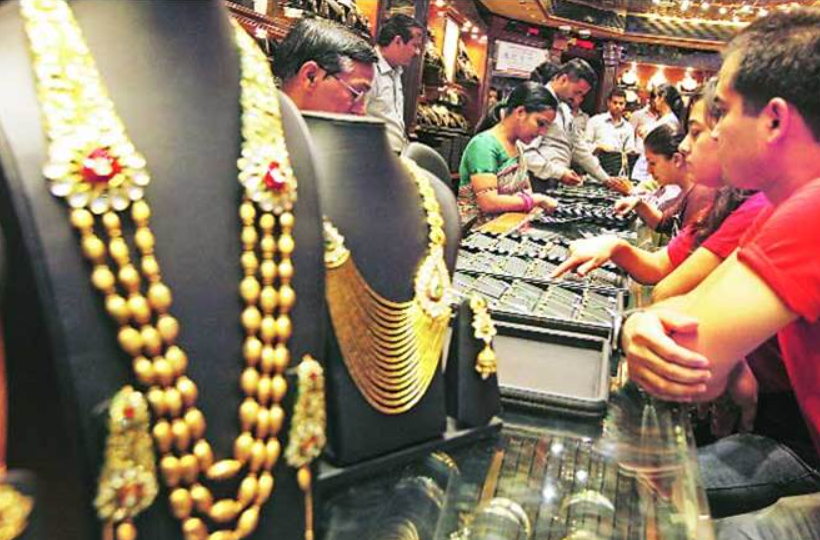
Gold occupies a nuanced position in families of the working people. For tens of millions of such families, particularly in rural and semi‑urban India, a relatively minuscule holding of gold is not a form of conspicuous consumption but a parallel currency of last resort, which could be an informal insurance scheme, a collateral base for micro‑credit, and one of the few assets over which women can exercise a modicum of autonomous control, especially in the absence of de facto property rights for most women.
Decades of inadequate social protection, precarity, weak public welfare systems and limited formal banking access have consolidated gold’s role as a shock‑absorber. To ask such households to curtail their minuscule gold purchases without offering any institutional substitute is to demand that they accept greater vulnerability. The appeal reveals how remote the formulations of India's current economic policy are from the lived realities of the working people.
Gold is also held by elites to a greater extent than by the working people. The elite holding of gold is an asset that is an alternative to enterprise investment or financial assets denominated in Indian rupees. When the aforementioned adverse change in income distribution follows the implementation of austerity, the expected profitability of enterprise investment will decline, resulting in greater holding of gold by Indian elites.
The edible oil component of the same plea carries its own distinct genealogy. Dependence on imported palm, sunflower and soy oils did not emerge arbitrarily. It was caused by successive trade liberalisation measures and policy neglect under pressure from metropolitan capital that exposed domestic oilseed cultivators to subsidised foreign competition from corporate agribusiness based in the Global North.
Peasants growing groundnut, mustard, sesame and coconut increasingly found themselves unable to compete, their livelihoods rendered unviable as regional milling and processing networks atrophied as corporate encroachment proliferated. The outcome is a country that once enjoyed considerable oilseed self‑sufficiency now importing over two‑thirds of its requirement, leaving millions of households of working people susceptible to price swings mediated by manoeuvres of multinational corporate agribusiness.
In this light, any framing of reducing consumption (de facto solely by the working people) as an act of patriotism is to disguise a policy‑induced structural wound as a temporary inconvenience requiring individual forbearance.
The fertiliser crisis is even more telling because it straddles the fault line between immediate production needs and the long‑term erosion of domestic industrial capacity. The Kharif planting window does not accommodate appeals for gradual behavioural change; in an agrarian setting where conventional farming prevails, if urea and di‑ammonium phosphate do not reach the soil in time, yields will collapse, food prices will escalate, food sovereignty will be undermined, rural distress will deepen, and inflation will worsen.
The present shortages are routinely depicted as unfortunate consequences of instability in the international political economy, yet they are actually the cumulative result of disinvestment in public‑sector fertiliser units, the withdrawal of feedstock subsidies, and a regulatory framework that has encouraged a shift toward import dependence under the pressure of multinational corporate agribusiness. Urging peasants to reduce fertiliser use while guaranteeing neither affordable organic alternatives (which takes time, as the recent experience of Sri Lanka demonstrates) nor the bridging supplies needed for the immediate season demonstrates the facetious reasoning underlying the appeal.
Beneath each of these self-created vulnerabilities lies an architecture of international political economy that has narrowed rather than expanded the space for autonomous policy making. India once spoke the language of strategic autonomy and Global South solidarity, but especially since 2014, India's foreign policy has become ever more subservient to US government demands.
In the present West Asian crisis, the Indian government has appeared increasingly reluctant to unequivocally criticise the criminal actions of the US‑Israel axis, even as these actions by those governments have directly destabilised energy routes and threatened global production networks. The decision to align ever more tightly with the US government to try and preserve international financial entanglement of Indian elites in the US has foreclosed the possibility of India mediating and working for de-escalation.
Likewise, the strategic distancing from Russia and China, due to the pressure mounted by the US government, has made India more vulnerable to the fallout of the US government‑created crisis in West Asia by short‑circuiting alternative but reliable sources of oil and gas as well as renewable energy.
The consequences of this foreign policy, which is plumbing the depths of strategic autonomy, are now being internalised domestically through an austerity drive, and the appeal to change household behaviour becomes a mechanism for diverting the costs of the international political economy of the self-created strategic trap of the Indian government onto the kitchen, the farm and the savings purse of the working people of India.
This diversion of costs also operates through the exchange rate. A depreciating rupee is presented as a natural outcome of adverse shocks in international political economy, yet it is equally the product of a specific policy configuration: an open capital account that exposes the currency to the depredations of US‑centred international finance. The Indian government is reluctant to deploy capital controls or to impose even temporary quantitative restrictions on luxury imports. Moral suasion effectively directed at households of working people to buy less gold implicitly admits that the state is either unwilling or unable to use these more direct instruments or to try moral suasion against Indian elites or US‑centred international finance.
In such a framework, the currency’s fall and the accompanying imported inflation serve to compress real incomes of the working people automatically, disciplining mass demand without the government having to legislate overt wage or price controls.
The danger, moreover, is that the appeal can actively compound the economy’s weaknesses. When households conserve fuel by curtailing travel, transport workers, street vendors and small traders lose customers. When gold purchases stall, jewellers, artisans and informal credit circuits contract. When cooking oil is rationed, demand for a host of agricultural and retail services shrinks further. In a demand‑constrained environment, one person’s sacrifice is another person’s lost income, and collective restraint can readily slide into aggregate contraction. It is precisely at moments of external stress that the economy most requires robust domestic purchasing power, yet the moral framework being advanced treats that very purchasing power as a drain on the national interest. Moral suasion is tantamount to an attempt to manufacture consent from the working people for a macroeconomics of austerity induced by an attenuation of strategic autonomy.
A more coherent policy response would begin by reversing the sequence of accountability. Instead of framing the working people as the source of vulnerability through their quotidian habits, policy would identify the institutional and corporate channels through which foreign exchange actually exits the country, including capital outflows, royalty payments, profit repatriation, luxury goods imports and overseas acquisitions, and enact progressive regulation to discipline capital.
Policy could reactivate South‑South cooperation to not only work towards de-escalation but also enhance strategic resilience when confronted with adverse shocks. This move toward enhancing strategic autonomy would dovetail into an urgent programme of rebuilding domestic fertiliser production through public investment, re‑animating oilseed cultivation via public procurement based on a minimum support price that guarantees the livelihoods of peasants, establishing strategic reserves, massively expanding affordable public transport on the basis of renewable energy to reduce the dependence on imported fossil fuels, and strengthening welfare systems so that households of working people are not forced to treat gold as their only safety net. More significantly, the disciplining of finance through an industrial policy centred around capital controls would also, inter alia, reduce demand for gold by elites.
Shirin Akhter is Associate Professor at Zakir Husain Delhi College, University of Delhi: C. Saratchand is Professor, Department of Economics, Satyawati College, University of Delhi. The views are personal.
Get the latest reports & analysis with people's perspective on Protests, movements & deep analytical videos, discussions of the current affairs in your Telegram app. Subscribe to NewsClick's Telegram channel & get Real-Time updates on stories, as they get published on our website.