





Ganga Jamuni Tehzeeb: Myth or Reality?
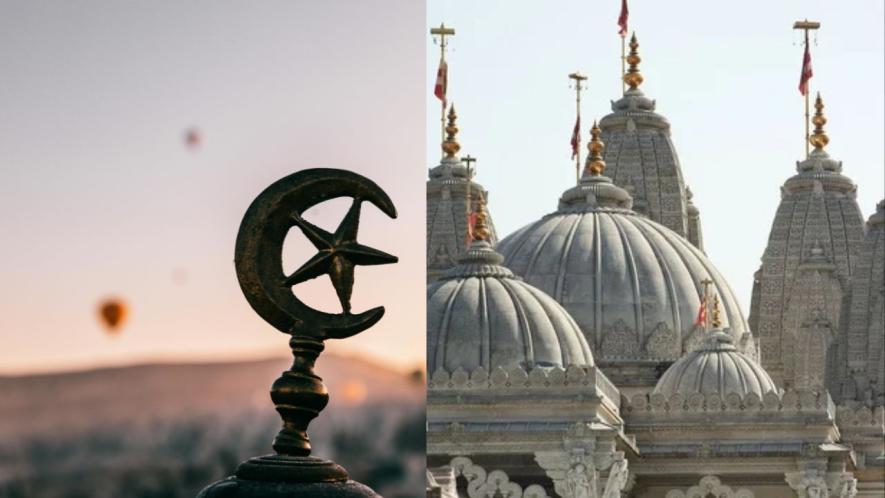
What is Indian culture? Is it Hindu culture or a mixed one? Many such questions have been floating in the air. Those belonging to Hindu Right wing, the proponents of ‘Hindutva: Hindu Rashtra’ claim that it is a Hindu culture that was attacked by the Muslim aggressors, while Hindu culture resisted it with full energy. While some converts from Hinduism to Islam have not overcome their Hindu past while adopting Islam, this point came to one’s mind yet again as the debate on ‘Hinduism needs protection from Hindutva’ was held in Kolkata recently.
As such Hindutva ideologues have been arguing this for quite some time. J. Sai Deepak, one of those who also participated in the Kolkata debate, has been arguing that “Post-independence, the deification of this creature -- Ganga-Jamuna Tehzeeb -- must be laid at the door of distortion of history under Jawaharlal Nehru and the Marxist-Nehruvian coterie of historians that he put together.” As such he traces this phenomenon’s rise between 1916 to 1923.
What is Ganga Jamuni Tehzeeb? It is synonymous with the development of mixed culture between Hindus and Muslims over a long period of time, close to a millennium, roughly speaking. As the advent of Islam began in the 7th Century, ‘Hindu-Muslim’ interaction began right then and flowered in the medieval period of India. The aim of Sultanate rulers or Mughal rulers was not to wipe out the local culture, primarily they were here for wealth and power, and ruled large part of this land, it is during this period that many of these syncretic traditions developed here and many of them are continuing in many parts of this country even now despite intimidating impositions of Hindu Nationalist politics.
This mixed culture begins with the rule of Muslim kings, particularly in North India, in Ganga-Yamuna and adjacent areas, hence this nomenclature. This was underlined by many leaders of the freedom movement. Those who remained aloof from the freedom movement, Muslim nationalists and Hindu nationalists, did not appreciate the intermingling of Hindus and Muslims. This Hindu-Muslim interaction in all areas of the social life flowered particularly in mediaeval India and continues even today, though in muted form at some places.
Scholar B.N. Pandey summarises it well, "Islam and Hinduism which appeared at the start so antithetical, at last intermingled, each one stirred the profoundest depth of the other and from their synthesis grew the religion of Bhakti and Tasawwuf, the religion of love and devotion, which swept the hearts of millions following different religions and sects in India. The current of Islamic Sufism and Hindu Bhakti combined into a mighty stream which fertilised old desolate tracts and changed the face of the country… and created those monuments of art, literature, painting, music and poetry and love inspired religion which are the heritage of Indian History, during the Middle Ages".
Due to the interaction of the Muslim kings, Islam and local culture, there developed a whole stream of synthetic culture in all walks of life. In music, khayal, ghazal and thumri are outstanding contributions of this interaction. North Indian classical music as known today, is a thorough blend of Hindu and Muslim elements achieved over 500 years. Ibrahim Adil Shah of Bijapur (1580-1626) had 300 Hindu singers in his court. To popularise this music among Muslims, he himself composed Kitab-e-Naurang in Urdu (a book containing 59 poems) and of those, the first one is an invocation of goddess Saraswati).
Chaitanya Mahaprabhu and most of the Vaishnav saint poets influenced many Muslims to write in their idiom. Rahim and Raskhan are among the very popular Hindi poets who have written in Brij-bhasha in praise of Lord Krishna. Sufi poet Syed Waris Shah wrote Heer Ranjha’, the great classic of medieval times. Sheikh Mohammed has greatly contributed to Marathi literature.
The mixture of Persian dialect with Western Hindi spoken in and around Delhi produced a new language that later on came to be called Urdu. There were great Hindu scholars who took to Urdu not only as an administrative language but also wrote and contributed to Urdu literature.
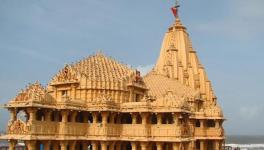
Hindu architecture was enriched by the profusion of intricate sculptured details from Islamic architecture. The fusion of the two manifested in different architectural marvels that came up during this phase. This fusion is seen in Jodhabai's palace in Agra Fort, in Fatehpur Sikri, and in the arches of Kuwat-ul-Islam Mosque. The influence of this mixture is discernible far and wide in the havelis of Rajasthan and Madhya Pradesh and the Indo-Saracenic architecture of Jodhpur, Bikaner and Jaisalmer. Similarly, the fusion of Persian techniques and brilliant Hindu colours resulted in the type of miniature painting marked by beauty and lyricism.
The observing of festivals was a profound social phenomenon to the extent that Hindu festivals like Diwali were celebrated as Jashn-e-Charagan, Holi as Jashn-e-Gulabi. The Dushara festival of Mysore, when Tipu Sultan was the king, was celebrated for 10 days under the patronage of the King. The Tazia procession was also part of the community.
These traditions are very much alive. Researcher-activist Irfan Engineer, who was recently part of Maharashtra's Warkari Dindi, says: “When the wari (Part of Warkari Pilgrimage) passes through a Muslim area on Eid or other festivals, the Muslim community defers their celebrations, or includes warkaris in their celebrations by sharing food. Many Muslims also join the wari”.
We also know very well about the Hindu navratnas of Akbar, Birbal and Todarmal. As per Professor Athar Ali, in Aurangzeb’s court, 33% of officials were Hindus, like Raja Jaising and Raja Raghunath Bahadur. Maratha King Chatrapati Shivaji Maharaj had many Muslim commanders. These examples abound in the fields of our social life.
Commenting on our culture, Nehru, in his classic, Discovery of India, underlined the word Ganga Jamuni Tehzeeb. This was not a motivated comment but a part of our past and present. In our freedom movement, people from all religions participated with equal enthusiasm, except of course those who are opposed to pluralism and democracy.
Nehru elaborated our past in an excellent manner. For him, India is like an ancient palimpsest “where new layers of history, culture, and thought (like Mughal, British, modern) were inscribed over older ones, but without completely erasing the past, creating a continuous, complex civilization with deep unity amidst diversity, emphasizing synthesis and absorption rather than obliteration, a vision he sought to build a modern, democratic nation upon.”
In the present times, where hate is promoting violence for sectarian nationalism, there is all the more need to uphold the values of our Ganga Jamuni Tehzeeb.
The writer is a human rights activist, who taught at IIT Bombay. The views are personal.
Get the latest reports & analysis with people's perspective on Protests, movements & deep analytical videos, discussions of the current affairs in your Telegram app. Subscribe to NewsClick's Telegram channel & get Real-Time updates on stories, as they get published on our website.