






Transgender Bill: Visible Shift in Relationship Between Identity and State Power
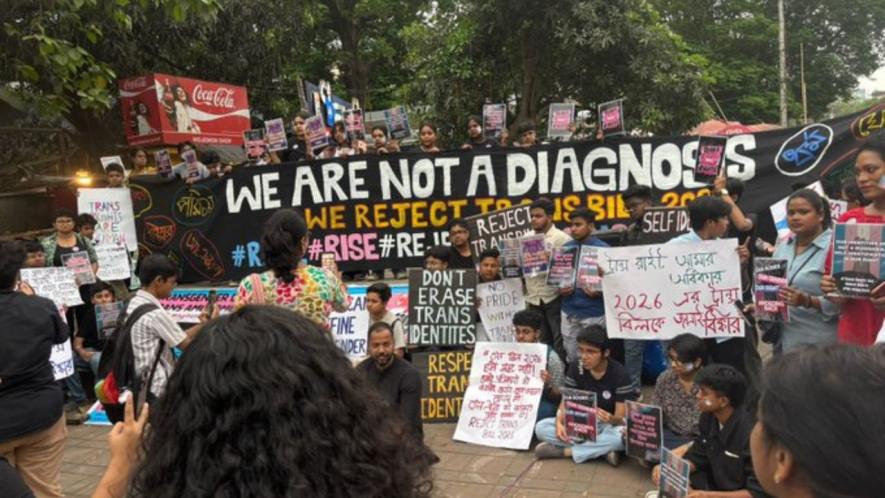
Image: Twitter
Understanding The Transgender Persons (Protection of Rights) Amendment Bill, 2026 requires a realisation that the Bill does not mark a shift toward welfare for an oppressed population; rather, it signifies an expansion of governmental control over identity. With the move to replace individuals’ self-identification, which had been recognised as integral to dignity and personal liberty, with medical certification or bureaucratic verification, the government will now operate as an entity that determines the conditions for recognising all individuals.
The importance of this shift lies in how it restructures the boundary between State power and private selfhood, such that identity will now be validated and given legal status only after institutional approval, rather than being treated as an autonomous right of an individual.
Recent developments in the legal domain preceding the passage of the extant Bill make this transformation concrete. The Bill introduces two important changes. First, it narrows the definition of “transgender” by eliminating the former basis on self-identified identity. Second, it imposes medical and administrative verification as the gatekeepers to validate one’s identity as “transgender.” Now, identity is no longer something one asserts, but something one must demonstrate to the satisfaction of the State.
To understand the importance of this shift, it is necessary to revisit the legal framework that preceded it. The earlier legal position in India, which was largely shaped by the decision in NALSA v. Union of India (2014), recognised gender identity as a component of fundamental rights. The court situated self-identification in the following constitutional provisions: equality before law (Article 14), freedom of expression (Article 19), and right to life and personal liberty (Article 21).
What is important is that the court did not accept any form of medical or administrative certification as a requirement for recognition by the state. This understanding was reinforced in the Navtej Singh Johar v. Union of India case (2018), where the court emphasised dignity, privacy, and the right to self-determination in matters of identity and sexuality.
The Transgender Persons (Protection of Rights) Act, 2019, while criticised on various other grounds, formally recognised self-identification. It recognised the issuance of a certificate of identity by a District Magistrate on a declaration by a person without requiring any medical intervention. The Act also introduced a separate provision for those seeking recognition as male or female after undergoing surgery, thereby creating an internal inconsistency between self-identification and medical validation.
This arrangement resulted in a multi-layered system of recognition. At one level, a person could identify as transgender based on self-identification. At another, a person seeking recognition within the binary categories of male or female, would be required to demonstrate a medical transition. The coexistence of these provisions reflected an unresolved tension within the law. However, despite these provisions, the foundational aspect of identity inherent in individuals had not been completely ignored.
Against this backdrop, the 2026 amendment is not merely a change in procedure, but a change in normative perspective. It is a shift from a system where identity is recognised to one where it needs to be validated before it can be acknowledged.
By shifting the burden of proof to an individual to prove their identity according to heteronormative and acceptable standards, the amendment acts as a mechanism of exclusion, effectively denying recognition to trans-men, trans-women, and other cultural and gender identities that were previously included within the legal framework. This transition in law does not deny the existence of gender diversity; rather, it places conditions on its recognisability.
The justification offered for this shift is grounded in the familiar language of governance, precision, clarity, and the need to ensure that benefits reach the “right” and “genuine” beneficiaries. On the surface, this appears reasonable. Any distributive welfare framework requires some form of identification. However, the underlying assumption here is that identity must be verifiable to be legitimate.
What is being presented as an administrative necessity is, in fact, a reorganisation of how identity itself is understood within the legal order. Identity is no longer something that is accepted by law; rather, it is something that has to be produced in a form acceptable by law.
The certification process through the district authorities and the medical evaluation provides multiple points of scrutiny, where decision-making occurs, where the individual's identity is measured against criteria that are often ambiguous or not well-defined. The role of the District Magistrate, for example, assumes critical importance, not merely in their capacity as a certifying authority, but in their potential role as interpreters of identity. Similarly, the involvement of medical boards raises questions about the standards and parameters through which gender identity is evaluated.
Such systems don't usually operate consistently in practice. Depending on the location, institutional readiness, or the attitude of the officials concerned, there is frequently an opportunity for administrative discretion and a lack of defined criteria, which can lead to varying interpretations of the individual's potential for recognition.
The issue is not simply that the State is intruding into a personal domain, but also re-designing the conditions in which this domain becomes intelligible to law.
This desire to classify, regulate, and control gender and sexuality is not new in the Indian legal system. Its origins can be found in the colonial era, when the British government introduced Victorian moral codes that attempted to classify and control non-normative identities.
Also, Section 377 of the Indian Penal Code, the Criminal Tribes Act 1871, particularly the sections on “Eunuchs,” not only criminalised these identities but also created a social category of deviance that could be monitored, recorded, and regulated. These legal interventions marked a significant departure from pre-colonial social arrangements in India, where gender variance was located in more fluid cultural constructs.
The colonial government’s interest in regulating these identities was not merely moralistic; it was also interested in making these identities legible. By constructing these bodies as inherently suspicious, the British government attempted to create administrative tools to control these bodies. The registration of “eunuchs,” the regulation of their mobility, and the denial of civil rights to these bodies were attempts to render gender non-conformity intelligible in a strict classificatory framework. Thus, the Indian legal system not only responded to gender non-conformity but also constructed it in such a manner that it could be controlled.
The contemporary shift toward verification can be understood as operating on a similar logic, albeit in a different language. While the language has shifted from criminalisation to welfare and protection, the underlying logic of classification, documentation, and state-mediated recognition remains in place. What has shifted is not the presence, but the justification of such a regulatory framework.
The shift from colonial criminalisation to post-colonial verification indicates a continuity in how the State approaches gender diversity, not in outright denial, but in imposing a framework that determines which identities are recognisable and under what conditions.
The State's perception and comprehension of transgender identities seen through the limited socio-cultural lens of the Hijra, Kinner, Aravani, Jogta, or a eunuch, are frequently connected to Hindu mythology and the limited understanding of what constitutes a "traditional" Indian identity. It reduces a vast and heterogeneous spectrum of gender-diverse lives into a singular, culturally recognisable archetype, often aligned with a Hindu civilisational lens.
By prioritising the narrative of the "culturally acceptable" and "recognisable" individual, the law risks reproducing a patriarchal logic that seeks to stabilise gender variance within acceptable boundaries.
What makes this transformation complex is that it is framed through the lens of protection. The government is advocating for stricter definitions to prevent misuse and ensure the effective targeting of welfare programmes. But this framing is based on the wrong foundational assumption, that identity must be verified to be protected. This is indicative of the larger shift in the nature and character of the welfare State.
Today, access to welfare is increasingly subject to processes of identification, authentication, and verification. While these processes can be viewed as legitimate in terms of efficiency and accountability, they can also be seen to extend the reach of administrative control into the realm of personal autonomy.
The Transgender Amendment Bill, 2026, signifies an important moment in the evolution of this tension. It is important to note that this issue is much broader than merely the rights of transgender individuals; it involves the nature of the relationship between the individual and the State within contemporary constitutional systems. The amendment thus demonstrates how power can operate not by denying identity outright, but by shaping the conditions under which identity becomes recognisable.
The writer is a Research Scholar in the Department of Political Science, Panjab University, Chandigarh, specialising in Gender, Marriage, and Sexuality studies. The views are personal. tanvi3559@gmail.com
Get the latest reports & analysis with people's perspective on Protests, movements & deep analytical videos, discussions of the current affairs in your Telegram app. Subscribe to NewsClick's Telegram channel & get Real-Time updates on stories, as they get published on our website.