





Scientists Find New Spray That Cuts Hidden Poison in Rice by Nearly Half
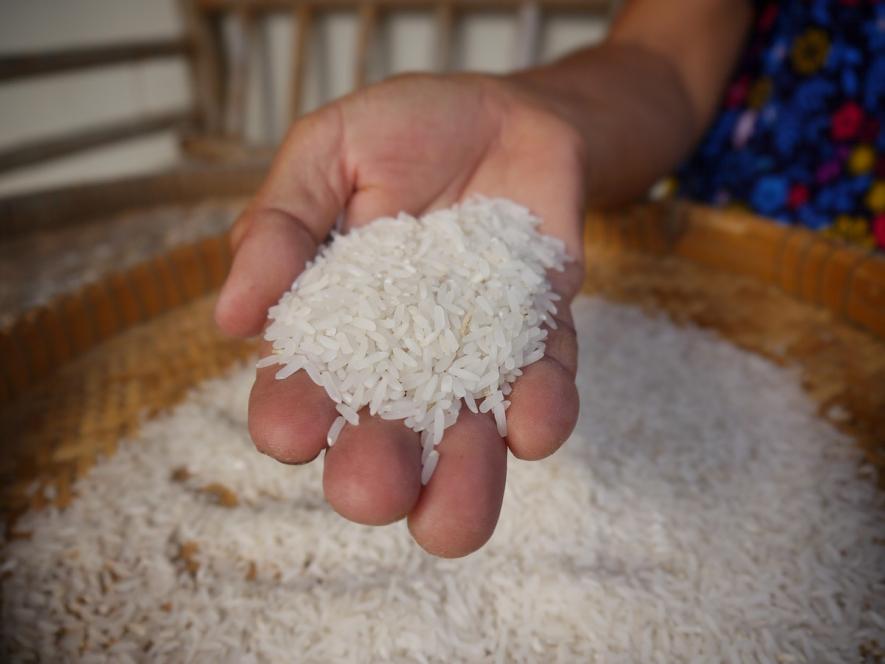
Representational Image. Image Courtesy: Rawpixel
A plate of dal-chawal (pulses and rice) is comfort food in millions of Indian homes. But scientists are now warning that the same rice eaten every day by families across the country may also carry a hidden toxic metal linked to kidney failure, cancer, and long-term health damage.
The metal is cadmium—an invisible contaminant that cannot be seen, smelled, or tasted. Unlike food poisoning that causes sudden illness, cadmium quietly builds up inside the body over many years. Experts say it mainly collects in the kidneys, slowly reducing their ability to filter waste from the blood.
Now, researchers from the Beijing Academy of Agriculture and Forestry Sciences and Jiangnan University say they may have found a practical way to reduce this danger without reducing crop production. In field trials conducted on moderately contaminated paddy soil, scientists sprayed rice plants with tiny engineered carbon particles known as “carbon dots." The result surprised even researchers: cadmium levels in rice grains fell by 46%, while crop yield increased by 18%.
The findings come at a time when India is facing growing concerns over toxic metals entering staple foods through soil, fertilisers, and irrigation water.
Rice feeds more than 65% of India’s 1.4 billion population. According to food consumption estimates, the average Indian eats around 6 to 7 kilograms of rice every month. This makes rice one of the biggest sources of daily exposure to contaminants if toxic metals enter the grain.
India’s food regulator, the Food Safety and Standards Authority of India, allows a maximum cadmium limit of 0.1 mg per kilogram in polished rice. But several scientific studies have found levels far above that threshold in hotspot regions.
A major international survey led by researcher Andrew Meharg in 2013 found Indian rice samples containing up to 1,000 micrograms of cadmium per kilogram—nearly 10 times the permitted limit. A 2025 study published in Biological Trace Element Research found cadmium levels of 250-1,300 micrograms per kilogram in commercial rice available in Varanasi’s markets. Another review said that rice from Punjab had about 990 micrograms per kilogram.
Scientists say cadmium enters paddy fields mainly through phosphate fertilisers, contaminated groundwater, and industrial pollution. Phosphate rock used to make fertilisers naturally contains cadmium impurities, which slowly accumulate in soil over decades.
What makes the metal especially dangerous is its long stay inside the human body. The International Agency for Research on Cancer classifies cadmium as a Group 1 carcinogen, meaning there is strong evidence that it can cause cancer in humans. The metal has also been linked to kidney disease, weak bones, and damage to the body’s filtering system.
Researchers looking into chronic kidney disease of unknown origin (CKDu) in farming areas of Odisha, Andhra Pradesh, and Telangana are increasingly investigating if eating food with cadmium over a long time is part of the issue.
A 2023 study published in Frontiers in Environmental Science found that people living in kidney disease-affected areas of Odisha faced significant long-term health risks from locally grown food contaminated with cadmium.
The new spray-based solution works in a surprisingly simple way. Scientists sprayed the nano-sized carbon particles directly onto rice leaves. The particles then activated the plant’s own defence system. Researchers found that the spray helped roots build a rust-like protective layer that trapped cadmium in the soil before it could enter the grain.
“Our work demonstrates that a simple foliar spray can trigger a complex cascade of benefits, from reprogramming the plant's internal metabolism to building a stronger biogeochemical barrier in the soil,” said Guoyuan Zou from the Institute of Plant Nutrition, Resources and Environment at the Beijing Academy of Agriculture and Forestry Sciences.
He added that the method links “the plant's own defenses with the power of the rhizosphere microbiome” to produce safer rice “without sacrificing yield."
Scientists believe the discovery could become important for South Asia, where rice is both a survival food and a major source of hidden toxic exposure. But public health experts. also warn that technology alone cannot solve the crisis.
India still does not have a nationwide cadmium monitoring program for rice. Experts say stricter testing, safer fertiliser standards, and long-term surveillance of toxic metals in food are urgently needed before this silent contamination problem grows into a much larger health emergency
The writer is a Delhi-based freelancer who writes on health issues and medical discoveries.
Get the latest reports & analysis with people's perspective on Protests, movements & deep analytical videos, discussions of the current affairs in your Telegram app. Subscribe to NewsClick's Telegram channel & get Real-Time updates on stories, as they get published on our website.