





Republic at Risk: Slow Erosion of Trust in India’s Diverse Democracy
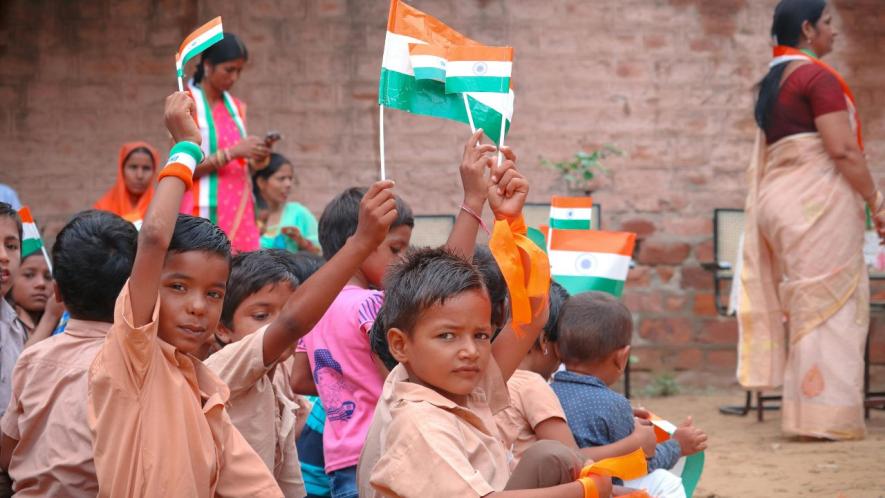
Image Courtesy: Pexels
India’s greatest strength has never been uniformity. It has always been its ability to accommodate difference.
From ancient kingdoms to the modern republic, the subcontinent evolved not as a single cultural bloc but as a layered civilisation shaped by multiple faiths, languages, ethnicities, and traditions coexisting within the same political space. Pluralism in India is, therefore, not a fashionable constitutional slogan. It is a historical necessity.
The inscriptions of Emperor Ashoka urged respect for all sects and warned against glorifying one faith by condemning another. Centuries later, Mughal emperor Akbar attempted to institutionalise coexistence through sulh i kul, or “peace with all,” as a governing principle for a deeply diverse empire.
In the 20th century, leaders of the freedom movement reinterpreted this civilisational inheritance within a democratic framework. India’s first Prime Minister, Jawaharlal Nehru, repeatedly argued that secularism was not merely a moral preference but a structural requirement for the survival of a nation as diverse as India.
That warning appears increasingly relevant today.
The central challenge before modern India is no longer whether diversity exists. The challenge is whether the social trust necessary to sustain diversity is gradually weakening.
Over the past decade, recurring incidents of mob violence, communal polarisation, hate speech, and identity-based hostility have generated growing anxiety about the health of India’s democratic culture.
According to recent findings by the Pew Research Center, a significant proportion of Indians across communities continue to value religious diversity, yet many simultaneously prefer strong social separation between religious groups in matters such as marriage and neighborhood life. The coexistence of diversity alongside deepening social distance presents a serious democratic contradiction.
Similarly, the Sweden based V Dem Institute has repeatedly raised concerns regarding increasing polarisation, pressures on civil liberties, and democratic backsliding in India in its annual democracy reports. Regardless of political interpretation, such assessments indicate growing international concern regarding the condition of democratic institutions and civic trust.
One of the most widely discussed cases was the 2019 lynching of Tabrez Ansari in Jharkhand after allegations of theft. Videos of the assault circulated nationally and intensified debate over mob violence, religious polarisation, and delayed institutional response.
Another controversial case concerns the death of Tauseef Raza Mazhari from Kishanganj. Police described the incident as an accidental railway death, while family members alleged assault and foul play. The investigation remains ongoing. Yet the broader issue extends beyond the facts of a single case. In polarised societies, conflicting narratives themselves become sources of instability. Suspicion deepens rapidly when communities lose confidence in impartial institutional processes.
There have also been documented reports of harassment and intimidation targeting Kashmiri students and traders in different parts of India during periods of heightened political tension following developments in Jammu and Kashmir. Civil society groups and independent observers have recorded incidents involving threats, verbal abuse, and social exclusion.
These incidents do not by themselves define India. Nor do they erase the country’s still significant institutional resilience and democratic diversity. However, together they point toward a disturbing transformation in public culture, where religious identity increasingly shapes perceptions of loyalty, belonging, and security.
The danger extends beyond isolated acts of violence.
Democracies rarely collapse only through coups or constitutional breakdowns. More often, they weaken gradually when equal citizenship begins to feel uncertain for sections of society.
When citizens begin believing that justice depends upon identity, democratic trust starts eroding from within.
This erosion carries long term consequences.
Polarisation weakens public faith in institutions. It deepens social fragmentation. It reduces political disagreements into civilisational conflicts. It normalises suspicion between communities that must continue sharing the same society long after elections and headlines fade away.
Recent monitoring by organisations such as India Hate Lab has documented rising instances of hate speech at public events in recent years, particularly during politically charged periods. Such developments matter because rhetoric often shapes social behaviour long before violence becomes visible on the streets.
Comparative experiences from South Asia offer particularly important warnings.
In Pakistan, the Ahmadiyya community has faced decades of legal and social exclusion following the constitutional amendment of 1974 and Ordinance XX of 1984, which prohibited Ahmadis from publicly identifying as Muslims or openly practicing central aspects of their faith.
Human rights organisations, including Human Rights Watch, have repeatedly documented discrimination, blasphemy related prosecutions, attacks on places of worship, and systematic marginalisation targeting the community.
One of the deadliest incidents occurred in Lahore in May 2010, when coordinated attacks on Ahmadi mosques killed nearly ninety worshippers during Friday prayers.
Pakistan demonstrates how exclusion, once normalised legally and politically, can slowly harden into a wider culture of social hostility.
Bangladesh presents a different but equally relevant warning. Human rights organisations have documented repeated attacks on Hindu minorities during periods of political unrest and communal tension. Such episodes demonstrate how quickly minorities become vulnerable when institutions appear weakened, inconsistent, or politically polarised.
These examples are not presented as simplistic equivalence. India’s constitutional structure remains substantially stronger and more democratic than either comparison. Yet constitutional strength alone cannot guarantee social stability.
A common counterargument is that communal tensions and identity conflicts have always existed in India, and that present concerns are therefore exaggerated. History certainly shows that India has witnessed communal violence before. However, the normalisation of polarisation through digital media ecosystems, continuous political mobilization around identity, and the speed at which misinformation now spreads create a far more volatile environment than earlier decades. The scale of amplification has changed dramatically.
Institutions survive not merely through laws, but through public confidence in their neutrality.
That confidence weakens when hate speech becomes normalised in political discourse.
It weakens when communities are portrayed as permanent adversaries rather than equal citizens.
It weakens when mob violence becomes routine enough to stop shocking society.
It weakens when television debates reward outrage more than verification.
Sections of India’s television media ecosystem increasingly operate through confrontation driven formats where sensationalism generates greater commercial value than factual nuance. In such environments, communal tensions are often amplified instead of responsibly contextualised.
Popular culture and cinema also influence social imagination in subtle but lasting ways. Repeated stereotypes and simplified portrayals of religious communities gradually shape perceptions of threat, patriotism, and belonging within public consciousness.
The deeper danger, therefore, is not only communal conflict. The deeper danger is the slow corrosion of democratic trust itself.
No diverse nation can remain stable if large sections of its population begin feeling politically disposable, socially unwelcome, or institutionally unprotected.
Addressing these concerns requires responsibility across institutions.
The state and law enforcement agencies must ensure consistent and impartial enforcement of law in cases involving communal violence, hate speech, and intimidation.
Political leadership must exercise restraint in rhetoric that risks reducing citizens into permanent religious camps for electoral mobilisation.
The judiciary must ensure timely accountability so that impunity does not become normalised.
Media institutions must prioritise verification over sensational amplification, especially during sensitive communal incidents.
Educational institutions, civil society groups, and religious organisations must actively reinforce constitutional ethics, inter community understanding, and habits of coexistence in everyday life.
Ultimately, however, responsibility also belongs to society itself. Democracies depend not only upon constitutions and courts, but upon ordinary civic choices made daily by citizens, whether to reject rumours, resist collective blame, and preserve empathy during moments of tension.
India’s diversity is not under threat because diversity exists. It comes under threat when trust disappears between communities expected to live together within the same democratic framework.
Nations rarely fracture in a single dramatic moment. More often, they weaken slowly through accumulated suspicion, normalised hostility, and unresolved tensions.
What is ultimately at stake is not merely the absence of conflict, but the preservation of trust itself.
And once trust erodes, rebuilding it becomes far more difficult than preserving it ever was.
Shabir Ahmad Ganaie is a researcher in South Asian history, specialsing in socio-political dynamics, minority experiences, and marginalised voices. Shabeerhistory18@gmail.com. The views are personal.
Get the latest reports & analysis with people's perspective on Protests, movements & deep analytical videos, discussions of the current affairs in your Telegram app. Subscribe to NewsClick's Telegram channel & get Real-Time updates on stories, as they get published on our website.