





Populism and Symbolism
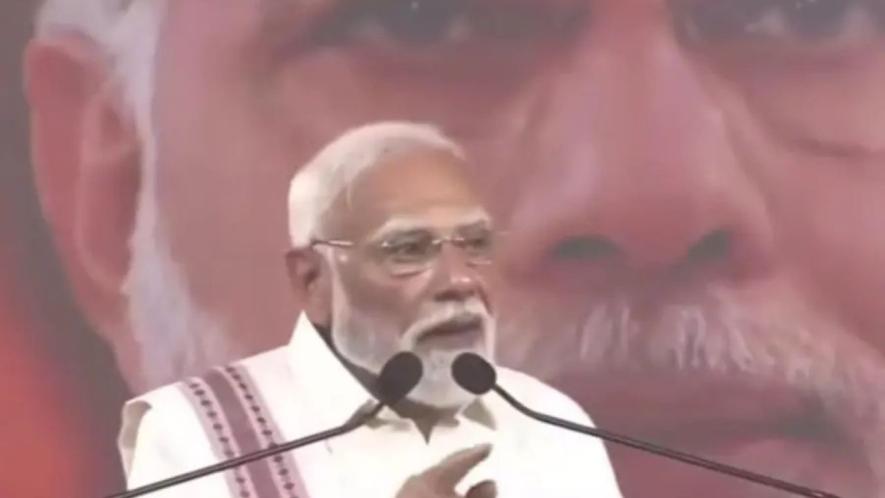
Image Courtesy: Mathrubhumi.com
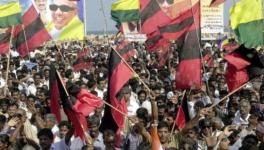
Prime Minister Narendra Modi has yet again courted controversy by reportedly darkening his skin tone during the campaign in Tamil Nadu, although these claims remain unverified. Internet erupted in making sense of such a gesture. Was it about identifying with the Tamilians or does it represent a racist understanding of the Tamilians and other South Indian States? The point precisely is to incite, provoke and weaponise the criticism and sarcasm that is expected to grow out of such a gesture. The memes are bound to make fun of, as they did, Mr.Modi looking unusually dark, which borders on making fun of the dark skin, even if that is not what is intended. It creates a discomfort among the Tamilians who actually identify being dark, even if that identification is without a sense of inferiority but explicit public discourse and one which borders on sarcasm and ridicule creates a strange awareness of how dark skin is perceived in a racist society. Using the dark tone then is not only about identification with the locals but a booby-trap laid for the opposition to walk into. It’s like a land mine where one wrong step can blow into a major racist controversy.
Why should memes be made when Mr.Modi looks dark and it is not even noticed when Mr.Modi looks fair and with lighter tone? Is there not a hidden racist prejudice in this? And is Modi not calling out the underlying elitism and even the prejudice in the North against the South? It is a case of deep symbolism that is open to multiple interpretations and inferences. It is simultaneously a way of compensating for the damage done with the attempts at delimitation. But what deep symbolism does, in this case, is it mobilises the South without calling out or criticizing the prejudice of the North for glorifying fairness and assuming an inherited and superior Aryan race. It weaponises without criticizing. It creates a controversy without calling out or attempting to change the underlying prejudice and it polarizes with a possibility of drawing support from both the sides of the warring groups.
Consistent Strategy
Deep symbolism has been the consistent strategy of the Modi regime and much of the narratives it was riding high on. It signifies without naming it. It hits the target without having to take responsibility. It is the same strategy in combining women`s reservations bill with delimitation. If the opposition had backed the delimitation, BJP was to gain long term in changing the political map of India. Since the opposition stood united in its opposition to the delimitation bill, it was accused of being against the women`s reservation bill. Mr.Modi addressed the nation, keeping consolidation of the women voters in mind. Opposition had to offer an explanation that it is not against the women`s reservations, while the BJP went hammer and tongs in saying it will attract the wrath of all the women of India. The phraseology of attracting the wrath or ill-will – like a curse or a shrap - draws from a mythological imagination.
Deep symbolism is used to set narrative frames in order to stroke underlying prejudices without having to name them or explicitly support them. It also helps in deeper identification as it draws on memory, myth and mythologies. The imagery of Mr.Modi on the swing with the Chinese premier in Gujarat led to overt criticisms of the bonhomie when we had troubled border issues with China. But I was told by a Modi supporter that one should not forget that Shakuni in Mahabharat was on the swing with the adversaries who he later settled scores with.
Similarly, in the previous elections in Bengal, Modi got dressed like Tagore inviting ridicule. There is a certain kind of vulnerability that is projected by voluntarily becoming a target of ridicule. It was one such land mine that Mani Shankar Iyer stepped on when he referred to Modi as `neech`, it soon got converted into a caste slur. In fact, such projected vulnerability is at the heart of consolidating the Hindu constituency. When Karan Thapar`s interview got stalled abruptly, Modi baiters were happy to see him troubled and taken to task but it also helps project an imagery of Hindus being harassed in their own country. Symbolism helps in achieving a certain valuation. It, for instance, helped generate the narrative of Hindus being a victim in their own land. This could not have been possible through social facts, statistics and Data.
Power of Symbolism
In a polarized setting deep symbolism can communicate what can otherwise not be named. It allows one to say without either facing the legal consequences or the burden of the conscience. In response to his role in the Gujarat riots, Mr.Modi responded by saying one feels sorry even if a puppy comes under a car`s tyre. This could come across as concern at the vulnerability of Muslims, or as a vulgar comparison of Muslims with puppies, making silent majoritarian gloating and smirking a possibility. Deep symbolism attempts to obfuscate the direction of a dialogue. A critique against BJP`s brand of Hinduism can be converted into an anti-Hindu jibe or demanding accountability can be converted into an emotional appeal on behalf of the armed forces.
Deep symbolism also displaces the focus from the substance and content of the discourse to a focus on the style and performance of it. It draws on the mantle of being heroic or an unfairly targeted victim, depending on the context. It’s not what you do but the way you do. Deep symbolism under populism could draw on body language, gestures and clothes, and the choice of the local idiom. For instance, in a nation obsessed with English, it takes gumption to take an anti-English posturing as Home Minister Amit Shah did. If one goes by the contents of what he said, many may not approve of his position but the optics that he took on a mighty English lobby in the nation has the potential to disconnect the substance from the performance.
One of reasons that the Modi regime is able to escape the grave failures of governance and accountability is related to the ability to set narratives based on deep symbolism. It will be interesting to observe as when such symbolism will stop speaking to the people and what one can learn about political mobilization in India.
The writer is Associate Professor at the Centre for Political Studies, Jawaharlal Nehru University, Delhi. The views are personal.
Get the latest reports & analysis with people's perspective on Protests, movements & deep analytical videos, discussions of the current affairs in your Telegram app. Subscribe to NewsClick's Telegram channel & get Real-Time updates on stories, as they get published on our website.