






PHOTO ESSAY: Space Between Fantasy and Memory
Animation has always existed in a strange space between fantasy and personal memory. Even though these worlds are fictional, they often stay with audiences long after the screen turns off.
Certain characters, scenes, and emotions become attached to different stages of life and begin to feel familiar in a deeply personal way. Over time, these stories stop feeling distant and instead start feeling like places that viewers emotionally return to again and again.
This photo essay comes from the idea of wanting to step inside those worlds rather than only watching them from the outside. The project explores the relationship between a fan and fiction by placing a fan directly into iconic animated scenes from anime, superhero animation, Disney films, and other animated media. Instead of recreating these scenes exactly as they originally appeared, the images slightly alter them through the presence of the fan. The fan is inserted into each still as someone reacting to, participating in, or simply existing within the moment.
The objective of the project is not to parody or imitate these fictional works, but to explore the emotional connection audiences build with them over time. Fiction is often experienced very personally. Fans do not simply consume stories passively; they emotionally invest in them, grow attached to characters, remember important scenes for years, and sometimes imagine themselves inside those fictional spaces. This project visually represents that feeling through edited compositions where the fan physically enters the frame.
The selected scenes were chosen because they already carry strong emotional or cultural meaning within their original stories. Some moments are widely recognised because of their emotional impact, while others are remembered because of the atmosphere or relationships they portray.
By inserting the fan into these scenes, the project asks what changes when an ordinary viewer becomes part of the image itself. In some photographs, the fan blends naturally into the world, while in others the fan appears slightly separate from it. That shifting relationship is an important part of the visual narrative.
The treatment of the images focuses heavily on pose, gesture, placement, and interaction with space. Before editing the final compositions, the original stills were carefully studied in order to understand body language, camera angle, emotional tone, and character positioning. Separate photographs of the fan were then taken while recreating similar poses and directions of movement. These photographs were digitally cropped and composited into the animated frames while adjusting scale, posture, clothing, lighting, and transparency depending on the mood of the scene. In some images, the fan was intentionally styled to visually blend into the fictional environment, while in others the fan remains recognisably real in contrast to the animated world around him.
The visual intent of the project is to create images that feel believable enough for the audience to momentarily accept the fan’s presence inside the fictional frame. However, the slight contrast between the real figure and the animated world is also intentional. It reminds the viewer that the fan does not truly belong there, even if emotionally he feels connected to it. This balance between participation and distance becomes central to the project’s narrative.
Another important aspect of the project is emotional variety. Rather than focusing on only one type of scene, the essay moves through different emotional experiences connected to fandom. Some images explore belonging and friendship, such as the One Piece image where the fan stands among the Straw Hat crew during their silent farewell to Vivi.
Others focus on nostalgia, comfort, loneliness, fear, or aspiration. The emotional progression allows the project to show that fans connect to fiction in many different ways, not only through excitement or admiration, but also through quieter feelings like sadness, calmness, or reflection.
The project also explores the idea that fictional worlds often become emotionally safe spaces for audiences. Many of these animated stories are connected to childhood, personal growth, or emotional escape. Entering these scenes visually represents the way fans mentally revisit these worlds throughout their lives. At the same time, the project avoids fully romanticising fiction.
Some images, particularly those from Attack on Titan, show that fictional worlds can also become frightening or overwhelming when experienced up close. This shift helps prevent the series from becoming repetitive and expands the emotional scope of the narrative.
Although anime forms a major part of the project, the essay intentionally includes different kinds of animated media such as Disney films, superhero animation, and Studio Ghibli works. This broadens the scope of the project beyond one fandom or genre and instead focuses on animation as a whole as a shared emotional experience across audiences.
Ultimately, The Fan Within Fiction is a visual exploration of fandom, imagination, and emotional attachment to fictional worlds. Through digital compositing and recreated gestures, the project attempts to capture a simple but familiar feeling: the desire to stand beside fictional characters during the moments that mattered most.
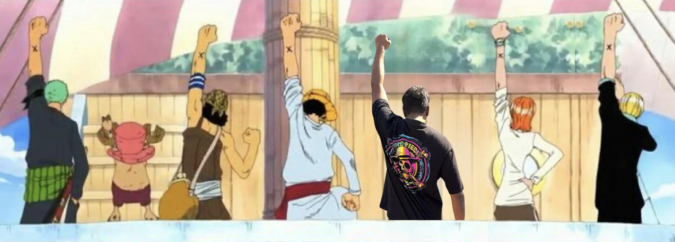
1. Brotherhood (One Piece)
In One Piece, this moment happens when Princess Vivi must stay behind in Alabasta while the Straw Hat crew continues their journey. Instead of saying goodbye out loud, the crew silently raises their arms to show the “X” marks they drew earlier, a promise that they will always remain friends no matter where they go.
The fan stands among them, copying the same gesture. More than adventure or pirates, this scene has always been about brotherhood. The fan is not trying to become the main character here, only trying to feel like part of the crew for a moment. Standing beside them makes the world of One Piece feel a little more real, like there is room for one more ‘nakama’ on the ship.
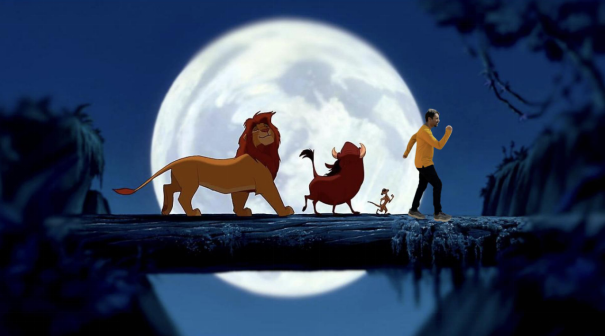
2. Joy (The Lion King)
In The Lion King, the “Hakuna Matata” sequence shows Simba leaving behind fear and responsibility for a simpler and happier life with Timon and Pumbaa. It is one of the most carefree moments in the film.
The fan walks beside them naturally, matching their movement like he has always been part of the group. There is nothing dramatic happening here—just walking forward together without worry. The scene captures the kind of happiness fiction can create, where even a viewer begins to imagine what it would feel like to exist inside that world.
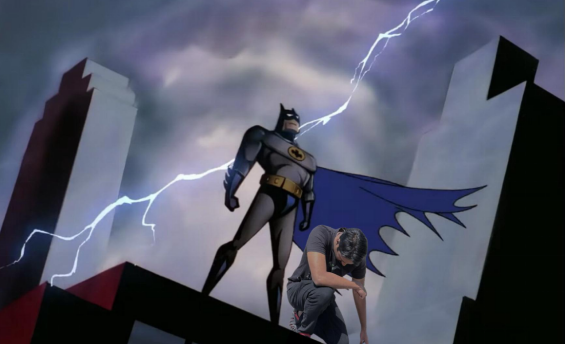
3. Aspiration (Batman: The Animated Series)
In Batman: The Animated Series, Batman is presented as more than just a superhero. Throughout the series, Gotham is shown as a dark and dangerous city, and Batman becomes a constant figure watching over it from rooftops and shadows. Unlike many heroes, he has no powers—only discipline, intelligence, fearlessness, and an endless sense of responsibility. The series helped define Batman for an entire generation of fans and turned him into a symbol of strength and determination.
The fan kneels beside him, not because Batman asked him to, but because this is how many superhero fans imagine themselves in that world. Not as the hero, but as someone trusted enough to stand beside him. The posture feels similar to a young sidekick waiting to learn, watching Gotham from above while imagining what it would feel like to fight for the city alongside his “hero”.
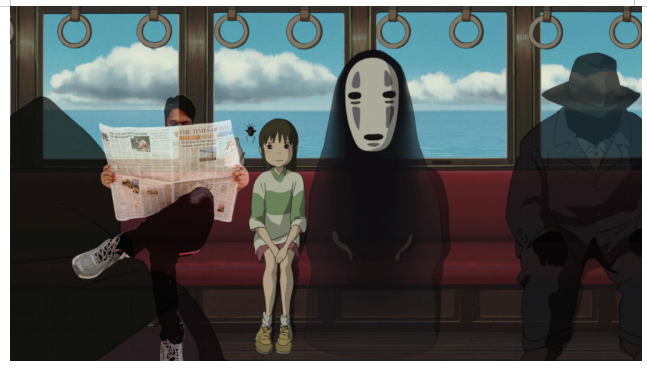
4.Stillness (Spirited Away)
In Spirited Away, the train scene shows Chihiro traveling through a quiet, dreamlike world. The passengers are silent spirits, and the mood is calm and reflective.
The fan sits among them, blending in like one of the spirits. He is not standing out, but trying to match the nature of the world. Unlike other images where the fan is clearly separate, here the fan adapts to the environment. It shows a different way of entering fiction: not by standing out, but by fitting into its rules.
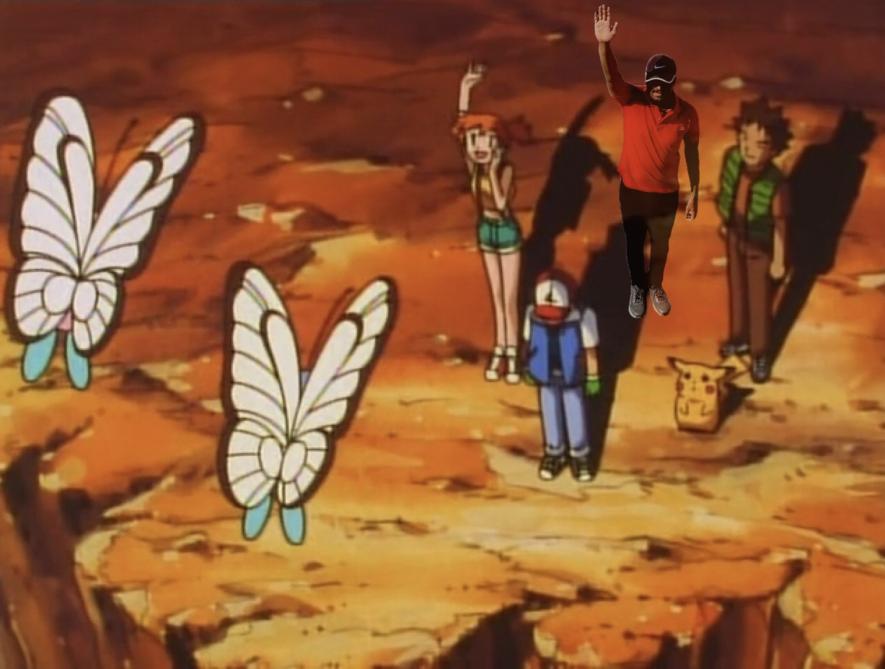
5. Nostalgia (Pokémon)
In Pokémon, this emotional scene happens when Butterfree leaves Ash after finding a partner. Even though Ash is sad to let it go, he still smiles and waves goodbye, remembering everything they experienced together.
The fan waves with the group, joining a moment that many viewers grew up with. For a lot of fans, Pokémon is tied closely to childhood memories, and scenes like this are remembered years later almost exactly as they were first watched. The fan does not change the moment, only joins in on the goodbye.
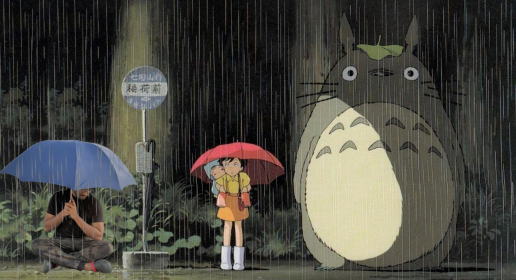
6. Comfort (My Neighbor Totoro)
In My Neighbor Totoro, this is one of the film’s most iconic moments. Mei and Satsuki wait at a quiet bus stop in the rain when Totoro suddenly appears beside them. The scene is simple, calm, and slightly magical, turning an ordinary moment into something unforgettable.
The fan sits nearby under a separate umbrella, not directly interacting with the characters but sharing the same quiet space. Unlike other images where the fan tries to join the scene more actively, here the presence is softer and more personal. The fan does not interrupt the moment, only exists within it.
The rain creates a feeling of silence and comfort rather than sadness. Even though everyone is separate under their own umbrellas, they are still connected by the same atmosphere and stillness. The image reflects the kind of calm that certain fictional worlds can create—where simply being present feels enough.
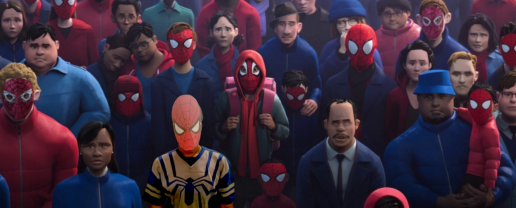
7. Identity (Spider-Man: Into the Spider-Verse)
In Spider-Man: Into the Spider-Verse, this scene shows a crowd gathered after the loss of Spider-Man. Many people in the crowd wear his mask, showing that Spider-Man is not just one person, it is an idea that anyone can carry forward. It is a meaningful scene for Miles’ journey throughout the story.
The fan stands among them, wearing a Spider-Man t-shirt and mask just like the others. Here, he is not trying to stand out, but to be part of something shared. The mask removes individuality and replaces it with a collective identity. The fan becomes one of many, connected by the same symbol.
We don’t just watch heroes, we adopt them, wear them, and carry what they represent into our own lives.
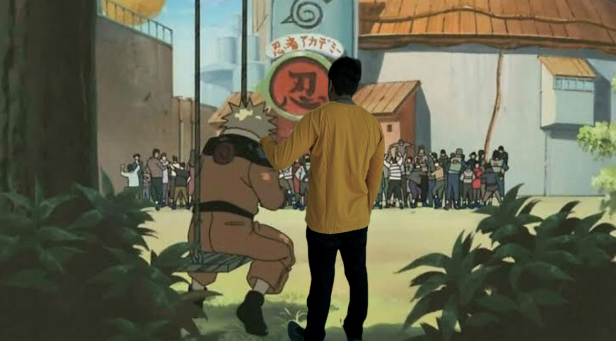
8. Loneliness (Naruto)
In Naruto, this scene shows Naruto sitting alone on a swing while the rest of the village celebrates at a distance. Early in the story, Naruto is treated as an outsider because of the cursed Nine-Tailed Fox sealed inside him. While other children are accepted and celebrated, he grows up isolated, constantly seeking acknowledgment from the people around him.
The fan stands beside Naruto instead of joining the crowd in the background, sharing the space of his loneliness. There is no dramatic action in the scene, only quiet support.
Unlike many heroic moments in anime, this image focuses on vulnerability before strength. The fan enters the scene not to become part of Naruto’s victories, but to stand with him during the moment when nobody else would.
9. Freedom (Attack on Titan – The Sea)
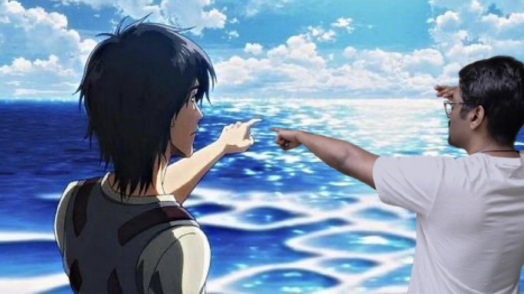
In Attack on Titan, reaching the sea is a major turning point. For most of the characters, the ocean represents freedom after being trapped behind walls for their entire lives. However, for Eren, this moment is more complicated, he realizes that the world beyond the sea is not as simple as they once believed.
The fan stands beside Eren, pointing toward the horizon in the same way. Here, the fan is trying to share in that idea of freedom and the future ahead. Unlike Eren, the fan approaches the moment with curiosity and excitement. The image shows how viewers often hold onto the hopeful meaning of a scene, even when the story itself becomes more complex.
10.Fear (Attack on Titan – Titan Form)
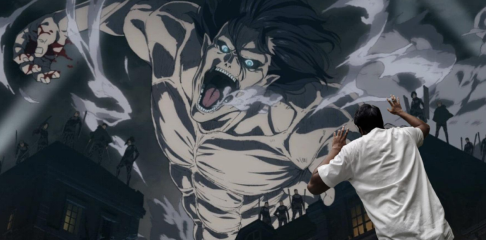
In this scene from Attack on Titan, Eren appears in his Titan form, huge, violent, and overwhelming. It is the aftermath of crossing the sea, seeking freedom. What once felt like power begins to feel dangerous and uncontrollable.
The fan reacts with fear, stepping back with raised hands. The fan is no longer trying to belong, but simply trying to respond. It shows a moment of realization: the same world that looked exciting from a distance can also be terrifying when experienced up close.
Romir graduated this year with Economics major. This visual project has emerged out of a course on photographic image taught by Sreedeep Bhattacharya, a sociologist at Shiv Nadar University, Greater Nodia.
Get the latest reports & analysis with people's perspective on Protests, movements & deep analytical videos, discussions of the current affairs in your Telegram app. Subscribe to NewsClick's Telegram channel & get Real-Time updates on stories, as they get published on our website.