





Ireland: Fuel Protests Express Deep Anger Over Austerity, Neglect
Source: Communist Party of Ireland/X
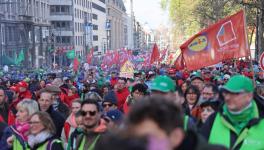
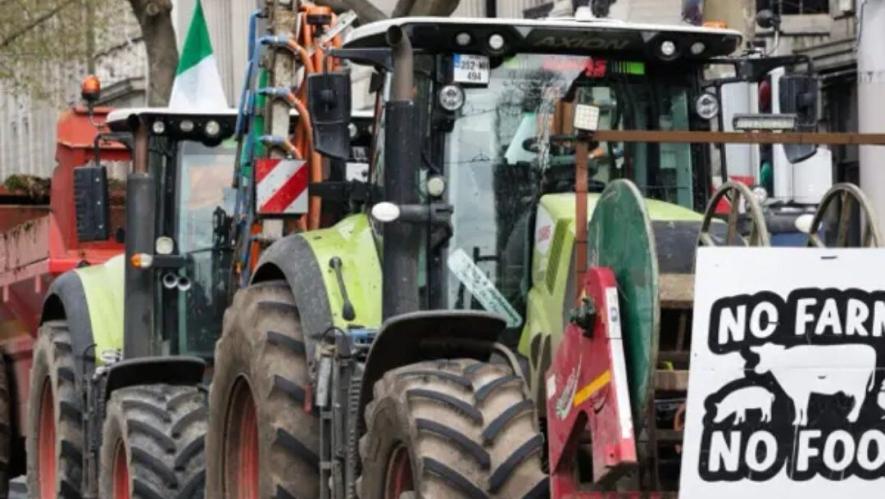
For almost two weeks, protests and blockades against high fuel prices caused upheaval in Ireland: major roads were blocked, along with key fuel supply nodes. While the disruption of oil prices caused by the illegal war launched by the United States and Israel on Iran might have been the immediate trigger of the discontent, the reaction on the streets was the expression of much deeper and long-standing anger.
In an interview with BreakThrough News, Sinn Féin MP Chris Hazzard pointed out that rural areas of Ireland had been particularly hard-hit by underfunding and underdevelopment of public services, including transport, leaving them cut off and living through the worst effects of growing inequities.
“Across the country, and particularly in rural and small-town Ireland, workers have been left exposed to rising costs and chronic underinvestment, with little meaningful political response,” the Communist Party of Ireland (CPI) stated. For years, all sections of the working class in Ireland have struggled with a severe housing crisis – with many working people being priced out of the places they work in – and neglect of public services like healthcare, among other things. “They [high prices] are the direct outcome of a dependent economic model and a political establishment subordinated to the strategic interests and permanent wars of US and EU imperialism,” CPI warned when the mobilizations started. “The strategy of the ruling class has been, and remains, the maintenance of its relationship with imperial blocs at the direct expense of the Irish people.”
The danger of right-wing infiltration
Local activists who spoke to Peoples Dispatch explain that the impact of the recent price hike was particularly hard on the agricultural sector not only because of the increase of fuel costs, but also because it affected access to fertilizer and animal feed – issues of critical concern considering the importance of this industry. It came as little surprise that organizations such as the Irish Farmers’ Association would take action on this, the activists say, but further development of the protests gave cause for concern – as narratives attempting to blame migrants for farmers’ problems and the overall cost of living crisis became more pronounced among one part of the demonstrators, and British far-right figures became involved in the discussion.
For activists, this strengthening of anti-immigration discourse should be seen as the result of a process that has been taking place for years, aiming to channel people’s legitimate frustration over living conditions and unfit policies onto migrant communities. And while this narrative has not immediately taken root, its re-emergence in situations such as this one shows right-wing groups are ready to use every opportunity to push their anti-immigrant agenda, activists warn.
The danger of co-optation of the latest mobilization by the right was also recognized by progressive parties. “Rural workers, facing genuine hardship and long-term neglect, risk being drawn into alignment with a vocal and organized right-wing current, one which presents itself in national colors while advancing demands that do not serve the interests of the working class as a whole,” they warned.
“The far right is not leading these protests, but it is present, vocal, and organized,” the party added on April 11. “Where there is a vacuum, it will seek to shape events if the labor movement does not intervene, the anger now visible will not dissipate; it will be redirected in ways that deepen division rather than build solidarity.”
Despite the risk of infiltration, Hazzard insisted that the right wing had not been able to overtake the mobilizations, and was, on several occasions, actively rejected by protesters. It was this determination to see the protests through on their own terms that ultimately pushed the government to negotiate.
The need for a sovereign energy system
The local response to the effects of the blockades also signaled that communities were ready to stand in solidarity despite high pressure. For example, in the West coast of Ireland, where the population is largely rural and dependent on long commutes, basically all aspects of life were disrupted as pumps went dry, with people unable to go to work or receive care, activists told Peoples Dispatch. As delivery of fuel gradually resumed, these same communities figured out ways of navigating the situation: adhering to self-defined caps and prioritizing that farmers and essential workers had first access to fuel.
Compared to the responses created at community level, the government’s approach to the mobilization was criticized by progressive political parties as largely inadequate and aggressive – including suggestions to deploy the army – with Sinn Féin tabling a vote of no confidence. And while the coalition government survived the vote and announced measures that are supposed to ease the impact of high energy prices on the groups at the core of the protests, many grievances remain unaddressed – and the administration’s standing has certainly been shaken by recent events.
With this in mind, various parts of the left are demanding more decisive change. In the North of Ireland, Sinn Féin MPs Dáire Hughes and Chris Hazzard called for government action to reduce the burden of high energy prices on households, with Hazzard criticizing the enormous profits made by fossil fuel giants like BP during this period. “It is a scandal that BP is celebrating ‘exceptional’ profits while workers and families are struggling to heat their homes and put fuel in their cars,” he said. “To see this surge in corporate profits during a time of global conflict is an indictment of a broken energy system. We cannot continue to leave essential resources in the hands of private corporations who prioritize profits over the public good.”
Similarly, Ireland’s Workers’ Party advocated for a publicly-owned, sovereign energy system that would protect people’s interests and livelihoods. “The answer to energy dependency is the public ownership of renewable infrastructure. Ireland must break its dependence on the fossil fuel markets that imperialist wars repeatedly destabilize,” they wrote. “The government must remove the regressive burden of carbon and excise levies from working people, and begin the work of building a publicly-owned and genuinely sovereign energy system.”
Courtesy: Peoples Dispatch
Get the latest reports & analysis with people's perspective on Protests, movements & deep analytical videos, discussions of the current affairs in your Telegram app. Subscribe to NewsClick's Telegram channel & get Real-Time updates on stories, as they get published on our website.