






India in Space: ISRO, Private Sector and Prospects
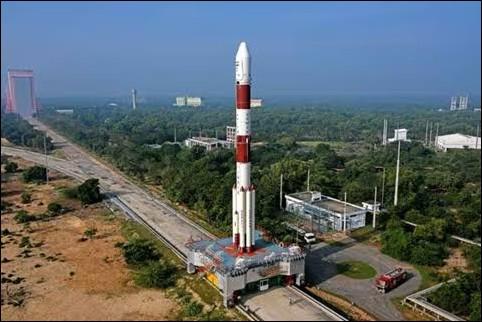
Kulasekarapattinam Spaceport, Tamil Nadu.
National Space Day was observed in India on August 23, commemorating the historic successful soft landing of Chandrayaan-3 on the south polar region of the Moon. The Moon landing in 2023, the fourth ever by any nation, marked a big leap in India’s space journey.
The year 2023 also marked another major milestone with the government declaring an Indian Space Policy opening up the entire value-chain of the space industry to the private sector with a highly liberal environment for foreign investment (FDI), with ambitious goal of growing India’s space economy five-fold to about $40-45 billion by 2030.
Expectation is that the state-sector ISRO (Indian Space Research Organisation) would be freed from commercial activities so as to focus on deep space exploration, science and research, while the industrial base for space-related commercial activities and innovation would be broadened mainly through the private sector with some initial hand-holding by ISRO.
To underline this new trajectory, the Prime Minister addressed a gathering of CEOs and other leaders of the seemingly burgeoning private sector start-up ecosystem on Space Day, and trumpeted India’s march toward a “dominant position in the global space sector,” based on India’s ‘cost-competitiveness in launching space ventures..., vast talent pool and high risk-taking capacity.’ In the now familiar style of the ruling dispensation prioritising appearance over substance, the Prime Minister stressed the importance of “creating an aura around the private sector in space research.”
Over-Promotion of Private Sector
Space start-ups are being generously supported with venture capital, seed money, technology transfer and hand-holding. Currently over400 start-ups are now operating in India. Other important actions in pursuit of the new Space Policy have included initiation of technology transfer for manufacture of rocket launchers and engines and, more recently, steps to hand over operation and management of the newly built ISRO spaceport for small launch vehicles at Kulasekarapattinam in Thuthukudi district of Tamil Nadu to non-government entities. (It should be noted that technologies for ISRO’s new Small Satellite Launch Vehicle or SSLV, rated for payloads up to 500kg to low-earth orbit, have been transferred to PSU aviation giant Hindustan Aeronautics Ltd for Rs.511 crore, not to a private player. It is to be hoped that the larger PSLV and LVM3 would similarly be transferred to, say, Bharat Dynamics which makes the Agni missiles).
As expected, there has been much criticism of these moves, including from a retired Chairman of ISRO. These developments taken together are being viewed as evidence of the government aggressively promoting private enterprises in the space sector even to the extent of weakening ISRO and damaging its ability to deliver on India’s hitherto successful space programme.
Whereas these moves may not amount to ‘privatisation’ of ISRO in the classical sense of selling the entity to corporate interests, it certainly places a large and important chunk of India’s space programme in the hands of the nascent private sector, and relies on it to deliver on quite ambitious goals.
It has long been held in these columns that involvement of the private sector in strategic areas need not by itself be viewed negatively. ISRO and India’s defence PSUs (public sector undertakings) have long worked with numerous private sector companies for manufacturing components and sub-assemblies. ISRO is not structured as a mass manufacture factory, and some defence PSUs are required to supply equipment at rates and volumes beyond their capacity. The issue to be discussed is, rather, the role of private entities and their contribution to strengthening and broadening the industrial base and self-reliant capabilities.
In that context, this article argues that the new Space Policy and the manner of its implementation are framed with pre-conceived and mistaken ideological notions about the private sector vis-à-vis the State sector, totally misunderstand the global commercial space industry and India’s place in it, and adopt a strategy that runs counter to India’s needs.
Supply and Demand
One of the cornerstones of the new Space Policy is said to be a shift from a ‘supply based model to a demand based model.’ Yet, all the initiatives taken under the policy are on the supply side: venture and seed funding for new technologies for launchers and satellites, especially by 17 selected start-ups, technology transfer and capacity building from ISRO, handing over management of spaceports and so on. But where is the demand, and what space-based services would be provided with how much projected revenue?
The global space-based economy is estimated at around $300 billion in 2023, or $400 billion currently with 15% annual growth, for so-called backbone applications such as launch, satellites and data sensors feeding services such as GPS, resource exploration, broadcast, communications etc., with another $300 billion of ‘reach’ applications such as taxi aggregators, delivery services, logistics and so on. The global space economy as a whole is expected to grow to about $1.3 trillion by 2035. The US currently holds about 50% market share, China around 8% and India about 2%.
About 78% of the space economy is in the commercial sector, with about space-based services worth about three times as much as space-based infrastructure and assets. Within the commercial sector driving the market, a noticeable trend is that, while hardware such as launchers and satellites were once precious assets and coveted by investors for offering services, currently it is the outcomes that hold the most value with hardware being only the instruments that enable them.
Companies providing such services need no longer worry about launchers or satellites, but look only at outcomes. For example, Space X holds a dominant share in the launch segment in the US, but investors see its real value in satellite telephony services offered by SpaceX-led Starlink constellations of thousands of low-earth satellites. Because of their ability to deliver good geographical coverage and efficient data transmission to paying consumers, such constellations have become major revenue generators for space companies, and in turn drive launcher and satellite technologies.
Only a few start-ups in India offer such services but with a thin customer base which are today mostly the government itself. This is a huge gap, and one where the private sector would be expected to play a big role, which is not yet visible. If not filled, India will continue to have a space economy offering supply-side potential but not the requisite revenue generating services and consumer base.
Launch Cadence and Cost
Scaling-up of the space economy today then depends on ability to provide those paying services. Here, launch services and scale play a big role, with one particular technology being a star actor. Cost of launch, reliability of schedule and success rates are major factors.
Two interlinked aspects are currently setting the pace, namely reusability of rockets and cadence (space sector term for frequency) of launches. In both the US, specifically SpaceX, is far ahead, but China is catching up fast.
Especially after introduction and proving of reusable Falcon 9 rockets, of which over 400 launcher first-stage boosters and engines have been recovered on land or sea, Space-X currently conducts about 140 reusable and 40-odd expendable launches each year, almost one every two days. Even Rocket Lab, the US small payload expendable rocket, now launches around 25 missions every year, and currently offers launch within 17 hours from receiving the order, for example for defence satellites. ISRO conducted five launches in both 2024 and 2025.
China has moved rapidly from 40 launches in 2018 to almost 100 last year and is estimated to cross 140 this year. This rapid increase has been facilitated by evolution of reusable launchers, although this is at an early stage of development with only single-digit recoveries till date, but the trajectory is clear with at least four companies engaged in it.
Increased cadence in China is driven by state industrial policy prioritising commercial space activities led by two State-owned space enterprises and many private companies encouraged and supported since 2014. This is part of a government policy to develop and provide global or regional data services using an estimated over 200,000 low-earth orbiting satellite constellations like Star-link, with a few state-owned and private companies involved in the programme. Space-X and its Starlink programme too are heavily funded by the State.
Significantly, even in the reusable rockets, the basic booster engines and launchers are essentially the same as originally designed for expendable rockets, both in Space-X Falcon9 and in China’s Long March series, both of which are over three decades old. The European Space Agency’s Ariane 9 series is also being upgraded for reusability.
The point to note is the requirement in India is indeed not so much for technology innovation in basic rocketry or launch infrastructure, but for application products and services. That is what the private sector is supposed to be good at. But are they in India? If they don’t deliver on that, ISRO may as well set up sub-contractors to handle the rest.
The writer is with the Delhi Science Forum and All India People’s Science Network. The views are personal.
Get the latest reports & analysis with people's perspective on Protests, movements & deep analytical videos, discussions of the current affairs in your Telegram app. Subscribe to NewsClick's Telegram channel & get Real-Time updates on stories, as they get published on our website.