





Dignity of Labour: Notions of Purity and Pollution in India
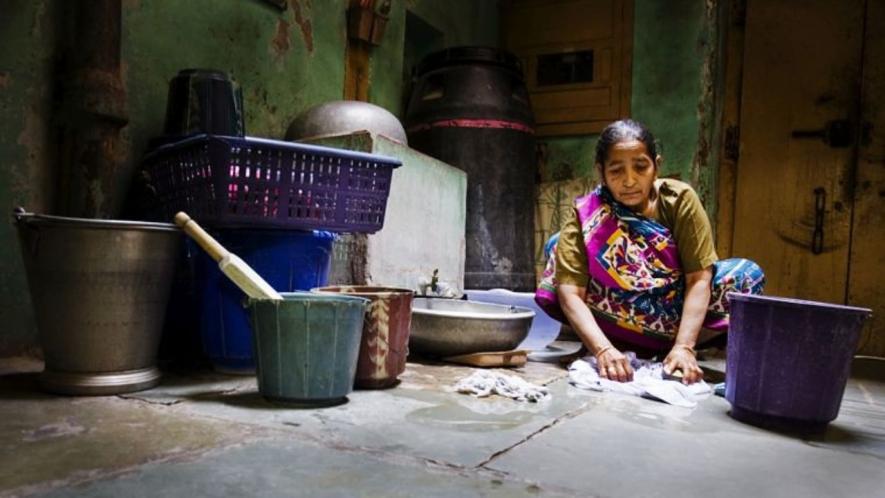
Image Courtesy: Flickr
Children’s upbringing in India faces two distinct challenges. One how to upbring girls and boys as equals. Second, how to upbring them with a sense of dignity of labour in a society where labour is looked down as uncivilised.
Let us take up the first problem. If there is a girl and a boy in a nuclear family, how does a mother start teaching the girl and boy about food eating and playing games? Generally, a mother's daily interaction with the child is more intimate and more frequent than the father. If the family is multi-cuisine, and eats meat, fish and vegetables, the mother keeps mentioning that one must eat meat or vegetables as these are tasty. The child, hence, acquires a mental framework of enjoying meat, fish or vegetables by listening to his/her mother’s lessons on food culture.
If it is only a vegetarian family in a caste-ridden society, mostly a mother teaches her children to eat only vegetables, highlighting its taste and health benefits. Incidentally, if the child interacts with another child who eats multi-cuisine, and does try to eat meat or fish items too, the mother admonishes, terming these as “bad items”.
This has nothing to do with girls or boys but with caste and food-cultural background of a family. The father would do the same. Here children are taught about caste, food culture, the “difference” between families and children. Gradually, this becomes a ritual or a religious cultural difference. This is mostly a case of Indian caste cultural food division training of the children. This training does not take place in the same way among Indian Muslims or Christians. In those religions, the food culture does not divide families so much.
THE LABOUR QUESTION
Second, teaching about work or labour-related issues as differing ones between girls and boys of the same family and same caste, is a more serious one. The difference begins with games in childhood. Girls are given feminine toys, and are told about dress codes and hair styles. Boys are given male toys told how they should dress and keep the hair styles. At this stage, both parents are involved in buying sexually differentiated toys.
Even among poor families that cannot afford toys, the female and male differences are explained by showing the difference between a mother and father and other members of the family. Even before children understand their biological and sexual differences, the family members educate them on how they are different.
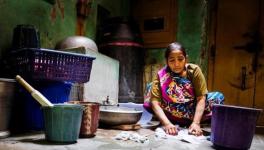
But, a more serious gender difference is with regard to work. Education begins while children grow and help in housework, even before they go to school. Home is also a work culture training place. Children see only their mother or mother-like women members sweeping the house, washing dishes and washing clothes. They see only mothers or other women working in the kitchen. Men are never seen entering a room to arrange things related to cooking. They see only mothers or other women serving food to men and children, never do they see men doing those things. Many men do not even wash the plates in which they themselves eat food.
Children see men handling cattle and going for work outside the house. In the villages, they see them tilling land and women sowing the seeds and weeding crops. But not vice-versa.
In urban areas, children observe mothers or other female members doing similar gendered tasks. In urban society, though men are at home, the children never see them sweeping the house, washing dishes, clothes or cooking food. They see them driving scooters or cars and so on.
CASTE DIVISION OF LABOUR
In India, children are taught division of labour based on their caste status. Only children born in Dalit/adivasi and Shudra families are told that it is their historical role to get involved in the work that soils their hands—like preparing land for agriculture, artisanal productive work. They are taught that only Dalits do road cleaning or leather technology work. Even while talking about such tasks, the language is condescending.
Among upper caste—particularly Brahmins, Banias and Kshatriya—families, children are taught that the work of producing food in fields is polluting. Those who do not get involved in such muddy work are treated as superior. Those who do such work are seen as inferior. Such treatment of productive work by educated people as “pollution”, becomes a norm for other children whose parents do productive work, because it involves a sense of shame.
Once children begin to be told that such work is not dignified, the idea of physical labour begins to be treated by them as inferior. Based on caste cultural values, as children grow, they think that those who work in agrarian fields, sweep roads, make pots, do the tasks of smithing—iron, bronze or gold- or leather technology, are also unworthy of respect.
Once such ideas are taught to children generation after generation, it becomes national culture, where all artisanal, agricultural and animal economy related work is generally despised by the children and youth. Nowhere in the world does ritual (religious) ideology treat production or agrarian-based engineering or leather-related work as “pollution.” This practice exists only in India, particularly as practiced by Hindu religion.
There is yet another purity-pollution ideological training that conditions the life of girls and boys. This is purely a gender issue. The menstrual cycle of girls around 11-12 years of age is treated as “pollution” or impure. This treatment goes up to childbirth.
A young college girl, Soorya Sri, writes: “Then suddenly, that day arrived. They called it menstruation.
At first, I was not unhappy—rather, I was glad. I got nearly two weeks of leave: watching TV, playing with cousins, eating, sleeping, talking, laughing. Then, after seven days, the cycle repeated. I was happy.
But I did not realize then that this celebration was actually a ceremony of confinement—a ritual meant to place a child inside a golden cage. People’s eyes changed after that—especially men’s. I was made to stay completely outside the house for five whole days, regardless of rain, wind, or cold. I slept on the floor with insects, enduring a haunting pain that was entirely new to me. I was no longer allowed to go out, not even to nearby shops as I had earlier. I was forbidden from speaking to boys—even my cousins—and was expected to remain constantly within my parents’ sight”.
She further adds: “Slowly, society made me believe that this is how a “proper girl” must be. That was when my inner child began hiding behind a people-pleaser mask. I started doing what others wanted me to do. I said things people liked to hear. I became the most obedient girl in my family” (Unlearning a Childhood of Silence And Embracing a Future of Resistance, in the book Learning English Nationalism, published by Phule-Ambedkar Centre for Philosophy and English Training. (PACPET) Tellapur, Hyderabad, 2026)
WHAT COULD BE DONE
The cycle of a child’s life in India is conditioned by strict gender inequalities and caste inequalities. If this human cycle of indignity of labour and the idea of pollution of women's bodies around menstruation and childbirth and also gender-based division of labour does not change, India will not progress. This very backward cycle of life puts the nation backward in many scientific discoveries, making it dependent on Western nations, where this cycle of life certainly is different.
In my entire experience of writing on rural human societies, I found two profound sayings that could change this cycle. In Telugu, it is said “Buruda Lenide Buvva Ledu” (Without Mud There is No Food) and “Rajaswala Kanide Pindem Ledu” ( Without Menstruation There is No Child). If all castes and all human beings—men and women-understand these two sayings and mould their life accordingly, India as a nation will change into a powerful nation.
The writer is a Political Theorist, Social Activist and Author. His latest book is The Shudra Rebellion. The views are personal.
Get the latest reports & analysis with people's perspective on Protests, movements & deep analytical videos, discussions of the current affairs in your Telegram app. Subscribe to NewsClick's Telegram channel & get Real-Time updates on stories, as they get published on our website.