





Cuba: Dignity is Immortal, Blockades Are Not
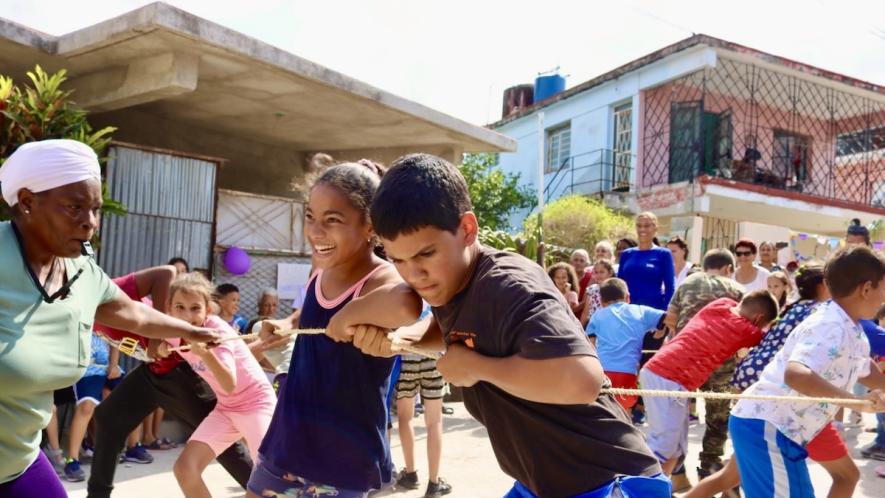
Children playing on the street in Havana, Cuba. Photo: Zoe Alexandra
In 1453, Ottoman troops successfully blockaded the ancient capital of Byzantium from both land and sea. Constantinople had withstood countless attacks from its Turkish rivals, but the successful blockade of supplies brought down the hitherto impregnable walls of the ancient Eastern Roman Empire.
The Ottomans did not invent anything new in this regard. As early as 332 BC, Alexander the Great of Macedonia blockaded the ancient city of Tyre after its inhabitants proved unconquerable by conventional military means. The island held out for seven months, until a furious Alexander, who could not tolerate the insolence of those who resisted, managed to breach its walls and, according to some ancient historians, destroyed half the city and killed most of its inhabitants.
The blockade of a city or country is, in fact, one of the most controversial measures that can be taken in a war. In the minds of generals and kings, it is hoped that the blockade will drive the people inside the city to despair, destroy their morale, and ultimately provoke an internal rebellion by starving and sick people, causing the resistance to capitulate.
But not all blockades have worked. Probably the most famous failure of a blockade in recent history is that of Leningrad, now St. Petersburg, which resisted the siege of the Nazi machinery from 1941 to 1944 (872 days in total). The siege of Leningrad caused the death by starvation and cold of over a million people who, despite the cruelty of Hitler’s troops, did not surrender the city until the USSR managed to counterattack and defeat the Third Reich.
Without a doubt, Cuba has written a new chapter in the history of resistance to a blockade. For more than 60 years, Cuba has managed to withstand a blockade that clearly seeks to destroy the most emblematic revolutionary process of the 20th century in the Americas. A process that declares itself socialist, that is led by a mass party (the Communist Party of Cuba) and, perhaps most importantly, that takes place on the southern border of the most powerful capitalist country in history, a country that has also proclaimed itself the staunchest rival of socialist processes in the Americas.
Indeed, the blockade against Cuba has not been absolute. For decades, solidarity from the USSR, China, Vietnam, and other socialist countries managed to sustain a process supported by the vast majority of the island’s inhabitants. However, after the fall of the USSR, Cuba faced an apparently catastrophic scenario. Washington thought it would be the end of the revolutionary government and tried to deliver the final blow during the Clinton administration by creating new sanctions and difficulties for third countries to trade with Cuba.
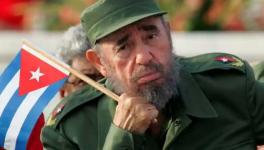
But Cuba resisted once again. Fidel Castro inaugurated the so-called “Special Period” during the 1990s, in which the country’s economy was reconfigured to withstand the fall of its main trading partner. And Cuba resisted.
At the beginning of the 21st century, the start of the Chavista process in Venezuela gave Cuba some peace of mind, but it continued to apply special measures. Venezuelan oil helped overcome significant energy and production problems.
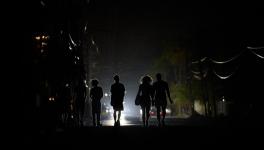
However, since December 2025, when the US imposed an oil blockade on Venezuela, and January 3, 2026, the day the United States directly attacked Venezuela for the first time in its history, Cuba has been suffering from suffocation that could cause unprecedented pain for the Cuban people.
Not only has the United States ordered the suspension of Venezuelan oil sales to Cuba, but it has also threatened to impose special sanctions on any country that sells oil to the island, something that threatens the very lives of Cubans who need crude oil not only for their personal vehicles, but also to transport food, run their hospitals, produce agricultural goods, power industries, etc. It is a measure that seeks to destroy Cuba.
In fact, according to his own statements, Trump is willing to drive Cuba to despair in order to bring down the Cuban government, hoping that this will fulfill one of Washington’s most cherished fantasies, namely, the collapse of the only socialist government in America that has managed to challenge the United States with notable success.
Yet, Cuba does not pose a military challenge that threatens US security (as Washington claims). Though, it is worth pointing out that Fidel’s troops managed to defeat several military attempts to overthrow him in the 1960s, including the famous invasion of Playa Girón, where thousands of US-backed soldiers were defeated militarily by the Cuban Revolutionary Army. Nevertheless, Cuba has never attacked the United States in any way.
Nor is Cuba depriving its people of cultural, scientific, or sporting advances, given that Cuba was the first country on the continent to eradicate illiteracy; it has become one of the countries with the most doctors per capita in the world; it has a much higher life expectancy than most other Latin American countries; and it is the second country with the most Olympic medals on the entire continent (only behind the United States and far ahead of the others).
In reality, the “threat” that Cuba poses to the US government is and always has been its mere existence. The dignity of being a people that have decided their own destiny in the face of the most powerful military empire in history, Fidel insisted, is a price that the US makes Cuba pay by suppressing its potential every day.
One cannot help but imagine what Cuba would have become if the United States, the defender of the much-vaunted free market, had not stifled its economy and trade for the last six decades. What other achievements would Cuba have accomplished? How economically powerful could it have become compared to the state of extreme poverty to which the country was subjected by those who turned it into a casino and brothel for the rich in Florida, while the people in the interior of the country suffered the most ignominious material deprivation?
The Trump administration seems determined not to tolerate this existential affront any longer. Its geopolitical project is to restore a powerful imperialism, albeit through intimidation; hyper-technological, albeit with nineteenth-century ideas; revitalized, albeit through practices that isolate it from the rest of the world; in short, a powerful imperialism that continues to be symbolically challenged by that small island of almost 10 million inhabitants (roughly the population of Michigan and a little more than New York City).
Cuba is to the Trump administration, what the cities and countries that refused to surrender to great conquering empires have been: an intolerable example of the limits of military and economic power in the face of human dignity, which cannot be bought, but only sought to be destroyed through methods of siege and blockade that several great generals in history have refused to use even in periods of bloody wars, due to the suffering it brings to its inhabitants.
For now, Cuba resists. And it has always been that way. And before, it was also “for now.” But the sum of these “for nows” makes up the legends, the stories that inspire entire generations not to give in, even if they happened hundreds or thousands of years ago; that redefine the concept of heroism, not through military actions, but through the will not to lose dignity in the face of the most apocalyptic threat. Cuba is a legend that imperialism can no longer bear, and it seems that it will do everything in its power to eradicate it from the earth and from memory.
But every connoisseur of history knows that the dignity of peoples is immortal, whereas empires are not. Shelley reminds us of this in his sonnet Ozymandias, which tells of Ramses the Great, probably the most powerful pharaoh of his time, around whose monument only the ruins remain of what once seemed indestructible: “And on the pedestal these words appear:/ ‘My name is Ozymandias, king of kings:/ Look on my works, ye Mighty, and despair!’/ Nothing beside remains. Round the decay / Of that colossal wreck, boundless and bare. / The lone and level sands stretch far away.”
Courtesy: Peoples dispatch
Get the latest reports & analysis with people's perspective on Protests, movements & deep analytical videos, discussions of the current affairs in your Telegram app. Subscribe to NewsClick's Telegram channel & get Real-Time updates on stories, as they get published on our website.