





Credibility, Not Taiwan, is New Frontline in Indo-Pacific
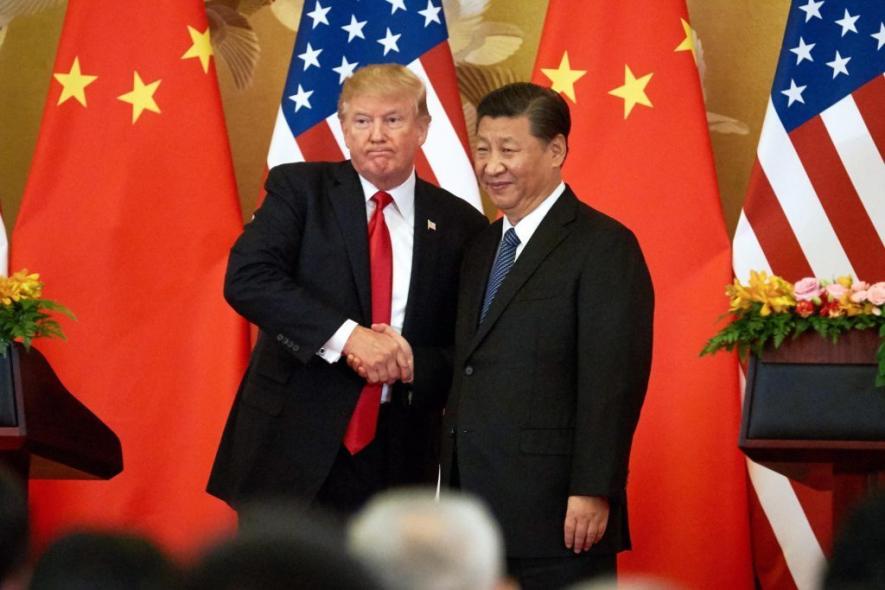
Donald Trump’s recent suggestion that US arms sales to Taiwan could be treated as a negotiating chip with China has reopened a larger question in Indo-Pacific politics: can American credibility still be treated as a strategic constant? The issue is no longer only whether Taiwan can defend itself against Chinese military pressure. It is whether Taipei, Tokyo, Manila, New Delhi and other regional actors can trust Washington’s commitments beyond one electoral cycle.
For decades, the United States managed the Taiwan question through a carefully constructed ambiguity. Washington recognised Beijing diplomatically, avoided a formal defence guarantee to Taipei, and still supported Taiwan’s self-defence through arms sales and strategic signalling. This ambiguity worked because all sides understood the risks of escalation. It was not clarity that preserved stability, but the belief that American policy would remain institutionally durable even when administrations changed.
That belief is now under visible strain.
American foreign policy is increasingly shaped not only by institutions, but also by electoral cycles, populist politics and domestic fatigue with overseas commitments. Every presidential election now appears capable of producing a major reassessment of alliances, aid packages and security partnerships.
For allies and partners, the question is no longer simply what Washington promises today. It is whether those promises will survive the next political turn. This is precisely the uncertainty Beijing can exploit. China does not need to launch an immediate invasion of Taiwan to weaken the island’s strategic position. It can wait, pressure, divide and narrate. If China can convince Taiwan and its partners that US support is conditional, negotiable or temporary, it gains psychological ground without firing a shot.
China’s Taiwan strategy is increasingly built around what may be called deterrence through inevitability. Beijing seeks to project the impression that unification is historically unavoidable and that resistance will eventually become diplomatically exhausting and strategically costly. Military exercises, maritime pressure and aerial incursions are part of this approach. But so are economic leverage, information campaigns, diplomatic messaging and the constant repetition of Beijing’s claim that time is on China’s side.
Taiwan is, therefore, trapped between two insecurities. One is the direct threat of Chinese coercion. The other is anxiety over US unpredictability. The first is visible in the movement of aircraft, warships and military drills around the island. The second is less visible but equally consequential. It affects morale, planning, investment, diplomacy and the calculations of every state watching the Taiwan Strait.
This does not mean China holds all the cards. Beijing faces serious constraints of its own: economic slowdown, demographic pressure, regional distrust and the enormous global cost of any military conflict over Taiwan. A war in the Taiwan Strait would disrupt semiconductor supply chains, destabilise maritime trade and damage all major economies, including China’s. For that reason, invasion remains a high-risk option.
But Beijing may not need a quick military victory if strategic uncertainty slowly weakens Taiwan’s external support network. The central contest is shifting from the balance of forces to the balance of confidence. In modern geopolitics, power is not measured only by aircraft carriers, missiles or troop deployments. It is also measured by whether other states believe a power will stand firm when pressure rises. This is where the US faces a deeper problem.
For much of the post-war period, American influence rested not only on military superiority but also on the perception of reliability. States aligned with Washington because US commitments were seen as embedded in institutions rather than dependent on one leader’s mood. That perception is now weakening. A transactional approach to alliances may appear tactically useful in negotiation, but it carries strategic costs. It encourages adversaries to test limits and allies to hedge.
For India, Taiwan is not a distant island dispute. It is a test case for the future of the Indo-Pacific order. New Delhi does not have formal diplomatic relations with Taipei, but Taiwan matters to India’s economic, technological and strategic environment. The island sits at the centre of global semiconductor networks, close to vital sea lanes, and at the heart of the US-China rivalry that shapes Asia’s security architecture.
If American commitments become increasingly uncertain, regional states will respond by hedging more aggressively. Japan, Australia, the Philippines and several Southeast Asian countries will have to reassess how much they can rely on US-led deterrence and how much autonomous capability they must build. India will face a similar calculation. The likely result may not be immediate war, but accelerated militarisation, sharper alignments and a more anxious Asia.
India should, therefore, read the Taiwan moment carefully. The lesson is not that New Delhi should simply choose sides in a Taiwan conflict. The lesson is that dependence on any external power carries risks when domestic politics begins to reshape strategic commitments. India’s long-term answer must lie in strengthening its own defence capacity, deepening resilient technology partnerships, diversifying supply chains and sustaining diplomatic flexibility without ignoring the coercive behaviour of stronger powers.
The Taiwan Strait remains a dangerous military flashpoint. But it is also becoming a mirror of a wider crisis in global strategic confidence. The real frontline is no longer only the waters between Taiwan and China. It is the credibility that underwrites deterrence, reassures partners and prevents adversaries from misreading uncertainty as weakness.
Deterrence is made not only of weapons, but of belief. Once that belief begins to erode, even a crisis without war can alter the balance of power. That is why Taiwan matters far beyond Taiwan. It shows that in the 21st century, trust itself has become a strategic asset and its erosion may be one of the most dangerous forms of geopolitical decline.
Dr Ruchika Raina is a Post Doctoral Fellow (ICSSR) at CIPOD, JNU, New Delhi. She can be reached at: rraina730@gmail.com. Dr Zahoor is an Assistant Professor at Department of Social Science, Akal University, Talwandi Sabo, Bhatinda. He can be reached at: mirzahoor81.mz@gmail.com . The views are personal.
Get the latest reports & analysis with people's perspective on Protests, movements & deep analytical videos, discussions of the current affairs in your Telegram app. Subscribe to NewsClick's Telegram channel & get Real-Time updates on stories, as they get published on our website.