





A Comradely Reply to Manoj Jha’s Letter to Communists
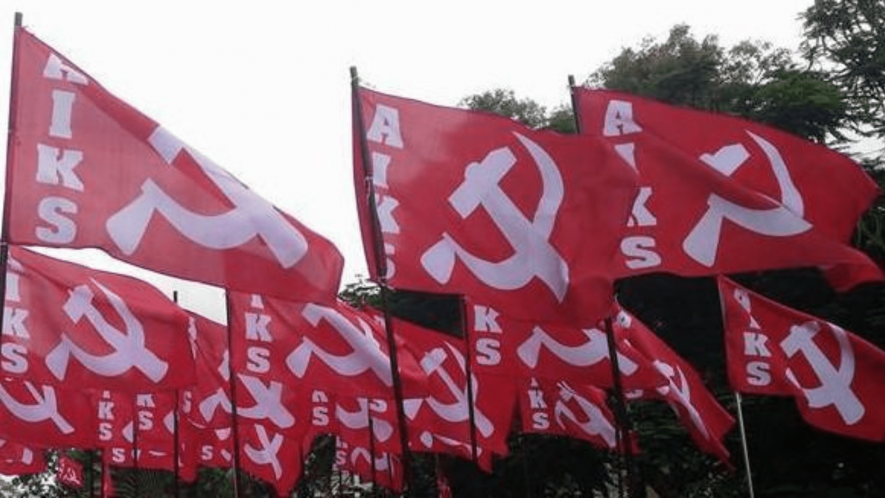
Representational image.( File Image)
Rashtriya Janata Dal leader Manoj Jha’s “imaginary letter from Karl Marx to Indian Communist Parties”,
written in a spirit of solidarity and comradeship, however, carries significant elisions and misrepresentations. The letter, published in the form of an article in a national daily, reiterates criticisms that have traditionally been levied against communists, but merits a response given not just the commonality of this criticism but also because addressing such a critique can pave the way for a united and robust attack against the Hindutva forces that govern us today.
A historical and contemporaneous overview on communists and the caste question is hence critical in clarifying the theoretical weaknesses in Jha’s arguments, as it is in strengthening our praxis against the violence of caste.
Jha argues that Indian communists have failed to imbue their theory with “realities around it”. This marks the tone of the article, written in sweeping generalisations, peppered with strawman assertions, and alluding to debates and positions that have long been settled and thoroughly debunked.
Indian communists and their allied organisations have acted decisively against the social reality of caste, with the All India Democratic Women’s Association providing shelter to inter-caste couples in Haryana, under the threat of immediate physical violence; with communist parties in Tamil Nadu leading temple entry movements and with communist-led Kerala being the first state to utilise technology in cleaning manholes and sewers, signalling an end to the degrading practice of manual scavenging.
This praxis of communists is also a product of the democratic structure of communist parties themselves, which ensures that at all levels of the party structure, cadres are educated regarding the criticality of participating proactively in social movements against caste. Thus, communists view the annihilation of caste as axiomatic and antecedent to their project of emancipation.
Further, Jha argues that communists merely view caste as a “cultural residue” and he also points to the prevalence of caste since pre-capitalist society. To understand Jha's point, one must consider pre-capitalist societies, where labourers were bound to their lords through custom, law, and force.
In India, the Brahminical ideology functioned as such a custom, rationalising why specific occupations were assigned to particular castes, while Dalits were barred from owning land and confined to toiling in upper-caste fields. As Ambedkar described it, this created "caste as an enclosed class," where dominant castes profited from the labour of exploited ones, degrading them as second-class citizens under the guise of religion.
Karl Marx viewed capitalism as a relatively progressive mode of production, which in Europe emerged after overthrowing feudal forces and their ideology. Unlike pre-capitalist systems, capitalism exploited labourers directly, through paltry wages, without relying on customs or religious justifications. This is why Marx and Engels write in the Communist Manifesto: "The bourgeoisie, wherever it has got the upper hand, has put an end to all feudal, patriarchal, idyllic relations".
On similar lines, old-guard communists like S.A. Dange argued that machine-based industrial production would erode caste distinctions. Since capitalism exploits labour without needing feudal ideologies like Brahminism, they believed the advent of capitalism would naturally dissolve caste-based exploitation. These ideas ultimately imply that there is no need to fight the caste system separately, as capitalism alone would eradicate it.
Does this view represent mainstream Indian communist thought? To that one can only respond with a resounding no. Most Indian communists argue that capitalism's progression in India was neither organic nor revolutionary; it was superimposed by British colonialism.
Post-Independence, unlike the West—where capitalism overthrew feudalism—India's weak capitalist class allied with feudal landlords rather than dismantling them. Consequently, capitalists preserved semi-feudal relations that sustain caste and its ideology. This materialist lens rejects caste as mere cultural residue, instead rooting it in the bourgeoisie-landlord alliance.
The Communist Party of India (Marxist) Party Programme captures this precisely: “The problem of caste oppression and discrimination has a long history and is deeply rooted in the pre-capitalist social system. The society under capitalist development has compromised with the existing caste system…To fight for the abolition of the caste system and all forms of social oppression through a social reform movement is an important part of the democratic revolution. The fight against caste oppression is interlinked with the struggle against class exploitation.”
The CPI(M) programme thus many years earlier captured exactly what Jha is arguing today. Jha’s deliberate elision of such literature then is also revelatory of how such critiques often stem from vested political interests that knowingly misrepresent communists to malign them.
The refrain that caste is consigned to a post-revolutionary future yet again constitutes a stale criticism levied on Indian communists that Jha merely regurgitates. While Indian communists are internally diverse, there is overwhelming unity in decoding the struggle against caste as immediate and enduring rather than as an afterthought.
Communists adhering to dialectical materialism, view change as constant, and hence understand it as imperative to address casteism in the here and now, through a concrete analysis of the concrete conditions.
Further, since caste does not gain significance only through culture and instead has a material base, communist assertions against capitalism, toward land reform and against feudal remnants and landed elites, also means a direct assault against the caste system. The praxis of parties replicates this theoretical framework, with one-third of the Tamil Nadu unit of the CPI(M) specifically belonging to Scheduled Caste or Scheduled Tribe communities, and with the party regarding anti-caste struggle as key to class struggle with Indian characteristics.
In their struggle against caste, communists place at the centre the necessity of cultivating class consciousness in place of caste consciousness, given how the latter fragments and divides the working class, and thus plays into the interests of the ruling classes. This privileging of class consciousness does not mean a negation of caste, instead indicating a battle to eradicate it.
Jha lectures communists that “to defend constitutional rights is not to abandon class politics,” conveniently erasing the fact that those martyred in defence of democracy and the Constitution, have overwhelmingly been working-classes organised under the banner of the red flag. Before sermonising communist parties on the necessity of defending the Constitution, Jha should have acquainted himself with the rich history in defence of parliamentary democracy that communists have fought for across India.
Even before India had achieved Independence, communists remained the only force that fought without compromises for the demand of universal adult franchise, with political outfits, such as Congress, reconciling themselves to limited franchise. Moreover, in states such as Bihar, communists have led movements against village elites who have prevented, with force, working classes from casting their right to vote.
In realising the secular promise of the Preamble of our Constitution, the communists have the most spotless of records, with the Kerala government passing a resolution against the divisive Citizenship Amendment Act and with the Jyoti Basu’s government in West Bengal undertaking rallies for communal unity in the aftermath of the destruction of the Babri Masjid. The Constitution’s truest allies have been none other than the communists.
Jha makes a compelling point: class formation in India bears the indelible imprint of caste hierarchy. Thus, the fight against caste cannot be confined to self-respect alone; it must target material bases like land, which underpins upper-caste power in the countryside.
Landlessness enforces dependence on upper-caste holdings, perpetuating subservience. However, RJD’s own history reveals a sketchy record on land reforms. Karpoori Thakur—a leader from an oppressed caste—ruled Bihar contemporaneously with Jyoti Basu, yet Thakur's contributions barely touched land redistribution. In stark contrast, Basu, a communist Chief Minister, spearheaded massive reforms in West Bengal.
The Ministry of Rural Development's 2006-07 Annual Report reveals that of 2.1 million SC beneficiaries nationwide had received land, out of which almost 50% SCs who obtained land were from West Bengal. Dalits in Left-governed Bengal, Kerala, and Tripura gained not just land but dignity—stripping upper castes of dominance. However, no comparable land struggle erupted in Bihar either under Karpoori Thakur or RJD’s Lalu Prasad, who positioned himself as an oppressed-caste champion. The record visibly reveals that communists are the only force who address the question of land distribution seriously, aware of its implications for caste and social justice.
We extend Jha our comradely greetings in the New Year, and agree that the evil of caste must be banished to the dustbin of history. In this struggle against caste, it is critical to transcend caste as merely an identity and also the utilisation of caste as merely a metric to toy with during elections. Instead, we hope to see Jha and his party further land struggles and struggles for dignity across Bihar.
Amulya Anita is a student of history and a graduate of law, interested in questions of labour, legality and people's movements. Aman is a PhD scholar in history at the University of Delhi, with research interests in caste dynamics, agrarian relations, and social movements. The views are personal.
Get the latest reports & analysis with people's perspective on Protests, movements & deep analytical videos, discussions of the current affairs in your Telegram app. Subscribe to NewsClick's Telegram channel & get Real-Time updates on stories, as they get published on our website.