





CJI Remark on TUs Sparks Huge Row, Labour Groups Says it ‘Attacks’ Constitutional Rights
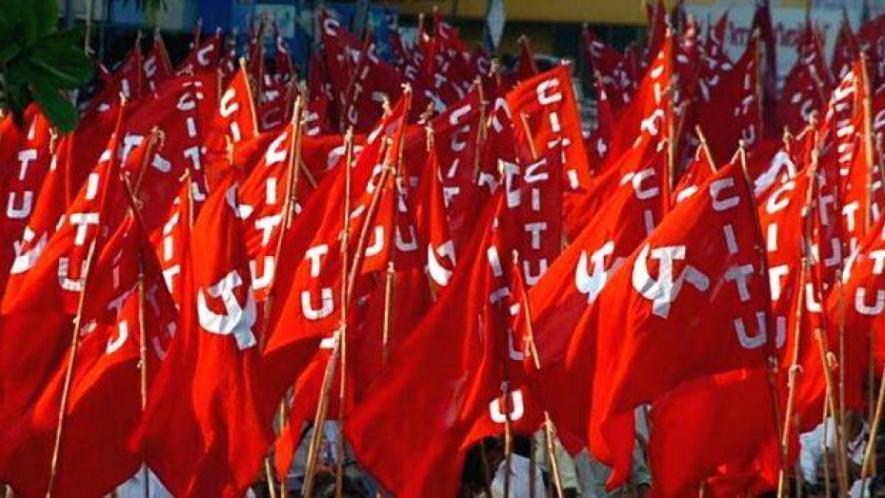
File Image
New Delhi: The remarks made by Chief Justice of India (CJI) Justice Surya Kant during the hearing of a public interest litigation (PIL) on domestic workers’ rights have triggered a sharp backlash from trade unions and Left political organisations. Labour bodies have accused the head of the judiciary of echoing neoliberal economic arguments, undermining constitutional freedoms, and misrepresenting the role of trade unions in India’s industrial and economic life.
According to LiveLaw, which first reported the observations, the CJI remarked that trade unions and their leaders were “largely responsible” for slowing down industrial growth in the country. He also suggested that fixing minimum wages—particularly in sectors such as domestic work—could discourage employers from hiring, thereby creating obstacles to employment generation.
These comments were made on January 29, 2026, during the hearing of a PIL filed by Penn Thozhilalargal Sangam vs Union of India (W.P.(C) No. 42/2026), which sought welfare measures and minimum wage protection for domestic workers.
What the CJI Said
As reported by LiveLaw, the CJI questioned whether increased regulation and union intervention were contributing to industrial stagnation. He observed that trade unions often resist structural changes and reforms, thereby discouraging investment and industrial expansion. On the issue of minimum wages for domestic workers, the court expressed concern that imposing statutory wage floors could reduce demand for domestic labour and make employment unaffordable for middle-class households.
The remarks were framed as ‘economic concerns’, but immediately drew criticism for appearing to assign responsibility for industrial decline to organised labour, rather than to broader structural and policy failures.
Immediate Reaction from Trade Unions
The Centre of Indian Trade Unions (CITU) issued a strongly worded statement condemning the CJI’s remarks as “most unfortunate, unconstitutional, and divorced from empirical reality.”
CITU argued said the CJI’s statement “closely resembled” the language of proponents of failed neoliberal economic policies and accused the judiciary of lending moral and ideological legitimacy to a policy framework that had systematically weakened labour protections.
“The insinuation that trade unions are responsible for industrial slowdown has neither theoretical soundness nor empirical validity,” CITU said, adding that global and Indian evidence shows that organised, protected labour often contributes to higher productivity, stability, and sustainable growth.
Constitutional Concerns
One of the central criticisms raised by CITU and other labour organisations is that the CJI’s remarks undermine the constitutional right to association. Under Article 19(1)(c) of the Constitution, workers are guaranteed the fundamental right to form associations and unions.
Trade unions are further regulated and protected under the Trade Unions Act, 1926, which provides for registration, collective bargaining, and legal immunity for union activity. Labour organisations argue that portraying unions as obstacles to growth effectively delegitimises this constitutional framework.
CITU warned that such statements, especially when made by the “custodian of the Constitution,” weaken public faith in constitutional guarantees and embolden employers and governments to further erode labour rights.
Timing of CJI’s Remarks Raises Alarm
The controversy has been intensified by the timing of the CJI’s statement. The remarks come just weeks before a nationwide general strike scheduled for February 12, 2026, called by a joint platform of central trade unions, mainly against the implementation of four new labour codes.
Read Also: New Labour Codes: TUs Pledge to Make Feb 12 General Strike ‘Unprecedented’
These labour codes—covering wages, industrial relations, social security, and occupational safety—have been criticised by unions for diluting collective bargaining rights, making layoffs easier, and weakening job security.
CITU noted that the logic underlying the labour codes is identical to the logic reflected in the CJI’s remarks: that labour protections are barriers to economic growth and that weakening unions is necessary for “Ease of Doing Business.”
Do Facts Support the Claim?
Labour organisations have strongly disputed the claim that trade unions are responsible for industrial decline, citing official government data.
According to Labour Bureau reports on Industrial Disputes, Closures, Retrenchments, and Lay-offs in India, industrial disputes have sharply declined over the past decade:
• In 2006, India recorded 430 industrial disputes—the highest in recent history.
• Between 2006 and 2014, the average annual number of disputes was 354.
• Between 2015 and 2023, this number fell dramatically to an average of 76.
• Since 2018, industrial disputes have remained below 100 each year.
• By September 2023, only 30 disputes were reported nationwide—a 17-year low.
“These figures alone demolish the claim that trade unions are choking industrial growth,” CITU stated.
Moreover, unions argue that industrial closures are actually more frequent in states where trade unions are weak or marginalised, contradicting the narrative that organised labour causes shutdowns.
Corporate Closures and Financialisation
The trade union also cited official data presented in Parliament by the Ministry of Corporate Affairs, which revealed that over 2,04,268 private companies were closed in the past five years due to amalgamation, dissolution, conversion, or being struck off under the Companies Act, 2013.
Additionally, data from the Insolvency and Bankruptcy Board of India (IBBI) shows that large corporate failures and poor debt recovery—not labour disputes—are central to India’s industrial crisis.
Trade unions argue that industrial decline is driven by financialisation, corporate concentration, policy-induced stress on MSMEs, and the withdrawal of the welfare state—not by workers asserting their rights.
Domestic Workers and Minimum Wages
The CJI’s remarks on domestic workers’ minimum wages have drawn particular criticism.
CITU pointed out that several Indian states already have scheduled minimum wages for domestic workers, and these have not resulted in employment collapse. Labour activists argue that denying minimum wages effectively legitimises exploitation in one of the most informalised and feminised sectors of the workforce. Critics say the court’s concern for affordability ignored the constitutional mandate to ensure dignity of labour and the right to livelihood under Articles 21 and 23.
Left Parties Flay CJI’s Remarks
The Communist Party of India (Marxist–Leninist) Liberation also issued a strong statement condemning the Supreme Court’s observations.
The party described the remarks as reflecting “narrow, anti-worker prejudices” and accused the judiciary of amplifying elite anxieties while ignoring lived realities of workers.
According to the party, industrial closures are overwhelmingly caused by managerial failure, diversion of capital, and speculative practices—not by trade unions. Workers, the statement said, have the greatest stake in keeping factories running.
The party further reminded that core labour rights—such as the eight-hour workday, minimum wages, and social security—were won through decades of struggle and sacrifice by trade unions, not through institutional benevolence.
Larger Implications
Legal and political observers note that the controversy raises deeper questions about the evolving relationship between the judiciary, economic policy, and labour rights. Critics argue that courts are increasingly adopting an economic common sense shaped by market-oriented ideology, rather than grounding their observations in constitutional principles and social justice. For the labour movement, the concern is not merely about one statement, but about a broader shift in institutional attitudes that normalise precarity and delegitimise collective resistance.
Call for Reconsideration
The CITU has formally urged the CJI to review and reconsider his remarks, warning that such statements risk weakening constitutional democracy itself.
As India moves toward another nationwide strike, the episode has sharpened the fault lines between labour and the State. The unfolding debate suggests that the struggle over labour rights is no longer confined to factory floors or legislative chambers—but has reached the highest constitutional institutions of the country.
(This is an AI-assisted translation of the original Hindi report)
Get the latest reports & analysis with people's perspective on Protests, movements & deep analytical videos, discussions of the current affairs in your Telegram app. Subscribe to NewsClick's Telegram channel & get Real-Time updates on stories, as they get published on our website.