





Can We Stop Our Brains from Becoming Colonies of White Institutions?
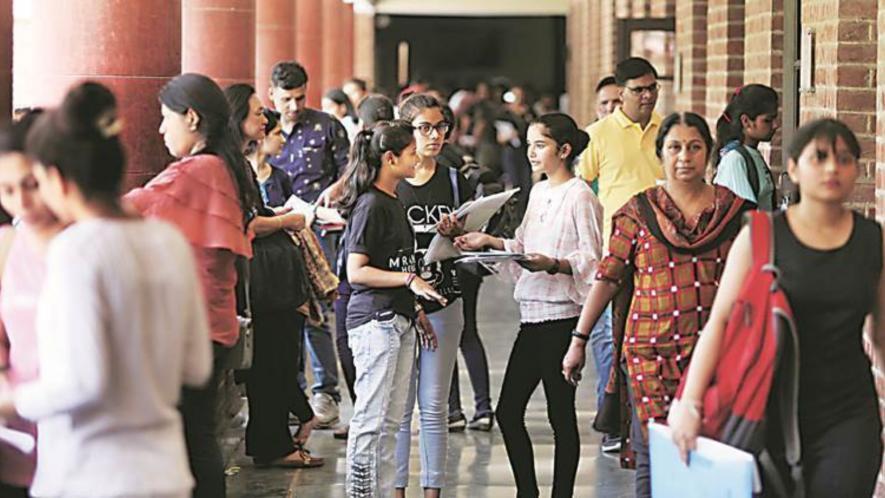
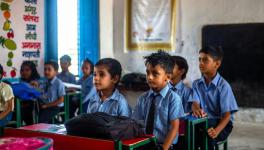
Representational Image.
There is a disturbing question India’s education system can no longer postpone: Who controls the production of knowledge in India? The crisis is deeper than poor rankings, vacant faculty positions, declining research standards or the commercialisation of degrees. At its heart is a struggle over intellectual sovereignty.
An education system may have millions of students, thousands of universities and an enormous examination machinery, yet remain intellectually dependent if it teaches citizens to believe that knowledge becomes legitimate only when certified by institutions in the West.
The metaphor of an “education mafia” is useful here, not merely as a description of corrupt individuals, but as a system of entrenched interests, institutional privileges, rankings, accreditation mechanisms, publishing hierarchies and networks that determine whose knowledge counts.
For decades, Indian universities have operated within an intellectual architecture substantially shaped by colonial institutions. The colonial State did not merely govern territory; it classified communities, produced administrative knowledge and established hierarchies of legitimate knowledge. English became the language of power, while indigenous intellectual traditions were frequently reduced to cultural material rather than recognised as sources of theory.
More than seven decades after Independence, the uncomfortable question remains: has political decolonisation actually been followed by intellectual decolonisation? In many departments, a scholar citing Oxford, Cambridge, Harvard, Stanford or European theoretical traditions is immediately perceived as sophisticated, while a scholar beginning with Adivasi knowledge, an Odia intellectual tradition, oral history, village archives or community memory often has to struggle harder to establish academic legitimacy.
The problem is not that Western scholarship has nothing to teach India. It has produced extraordinary contributions to science, technology, humanities and social sciences. The problem begins when one intellectual tradition becomes the universal measuring instrument for all others.
India does not need to reject Western knowledge; India needs to stop treating Western knowledge as the only passport to intellectual legitimacy. A confident civilisation does not close its doors to external knowledge. It engages, translates, interrogates and transforms it. Yet our universities often reward intellectual imitation more than intellectual originality. Research proposals are frequently shaped around fashionable global terminology because scholars know that institutional committees recognise certain intellectual languages more readily than others. India supplies the empirical material while others supply the conceptual framework. The community becomes the “case study”; the foreign theory remains the authority.
This raises fundamental questions about knowledge itself. Why should an Adivasi community appear merely as an object of research rather than a source of theory? Why should oral traditions be treated only as “data” instead of epistemology? Why should indigenous environmental knowledge be described as folklore while Western environmental theory is described as scholarship? Why should Indian languages be considered inadequate for sophisticated academic argument? These are not merely linguistic questions. These are questions of power.
The most dangerous form of intellectual colonisation is not when somebody prevents us from thinking, but when we begin to believe that our own intellectual resources are insufficient. India possesses an enormous intellectual archive: Buddhist philosophy, Nyaya, Vedanta, Jain epistemology, Bhakti traditions, Sufi thought, Adivasi ecological knowledge, oral histories, folk institutions, village governance traditions, linguistic movements and anti-colonial struggles. These cannot remain museum pieces; these must become living resources for contemporary scholarship.
This does not mean romanticising the past or claiming that ancient India possessed all the answers. Every knowledge system must be subjected to critical scrutiny. The objective should be critical synthesis, not civilisational nostalgia.
Indian universities should encourage students to place B R Ambedkar in conversation with contemporary political theory, Jyotiba Phule with social justice scholarship, MK Gandhi with environmental thought, Adivasi ecological knowledge with climate science, Indian linguistic movements with theories of nationalism and local community practices with contemporary development studies. Such scholarship would not be anti-Western; it would be genuinely global. Internationalisation should not mean transforming Indian universities into pale replicas of Western institutions. It should mean enabling Indian intellectual traditions to enter global conversations on equal terms.
Another dimension of the crisis is the bureaucratisation and commercialisation of higher education. When access to quality education increasingly depends on purchasing power, academic careers depend heavily on institutional networks, research becomes a race for metrics and students are treated primarily as consumers, education loses its democratic purpose.
Universities risk becoming credential factories: a degree replaces knowledge, a ranking replaces reputation, a publication count replaces intellectual contribution, a foreign affiliation replaces originality and an expensive institution replaces an excellent teacher. The answer to this problem is not another layer of bureaucracy. India needs transparent appointments, independent peer review, accountable university governance and a culture in which intellectual merit matters more than proximity to power.
India also needs a new generation of public universities capable of competing intellectually with the best institutions anywhere without becoming copies of them. Why should the ambition always be to create an “Indian Harvard” or an “Indian Oxford”? Why not build institutions that the world wants to study and imitate? This requires investment, academic freedom, serious research infrastructure and confidence in Indian intellectual capacity.
Universities should establish strong centres for indigenous knowledge, oral history, regional intellectual traditions, community-based research and Indian-language scholarship. Research funding should encourage scholars to investigate questions emerging from Indian society rather than simply adapting international research fashions. Promotion systems should reward originality, field-based scholarship and meaningful intellectual contribution rather than reducing academic achievement to publication counts.
The stakes are even higher in the age of artificial intelligence, biotechnology, climate change and technological disruption. The countries that control knowledge production will exercise enormous influence over the future. India therefore faces a strategic choice: will it remain primarily a consumer of intellectual frameworks produced elsewhere, or will it become a major producer of globally relevant theories and concepts? A nation that cannot produce its own questions will remain dependent even if it produces millions of graduates.
The real purpose of education is not merely to manufacture employable manpower. It is to produce citizens capable of questioning power, interpreting society and imagining alternatives. India’s demographic advantage will become meaningful only when its young people are trained to think independently rather than merely reproduce established intellectual formulas.
The transformation must, therefore, begin inside classrooms, departments, laboratories and research institutions. We must teach English without teaching intellectual dependence. We must expose students to Western scholarship without teaching them intellectual inferiority. We must internationalise universities without erasing their civilisational, regional and linguistic identities. We must learn from the world without surrendering our capacity to think for ourselves.
The Indian university should become a meeting ground between multiple epistemologies rather than a hierarchy in which one tradition sits permanently at the top. The goal is not to replace one intellectual orthodoxy with another, but to create an academic culture where evidence, argument, originality and intellectual courage determine the value of knowledge.
Ultimately, the struggle for educational reform is a struggle for the freedom of the Indian mind. If colonial education taught Indians to look outward for intellectual authority, contemporary India must develop the confidence to look both outward and inward. The future university must be neither anti-Western nor blindly Westernised; it must be confidently Indian and genuinely global.
India cannot become a knowledge superpower by merely importing rankings, curricula, consultants and institutional models. It must produce questions, concepts, theories and knowledge rooted in its own complex realities and capable of speaking to the world.
The real decolonisation of education will begin when an Indian student no longer feels that a theory becomes superior simply because it was produced in a prestigious white institution. The greatest educational revolution India still needs is the liberation of its intellectual imagination.
The writer is Director, Center for Adivasi Research & Development (CARD), Odisha. The views are personal.
Get the latest reports & analysis with people's perspective on Protests, movements & deep analytical videos, discussions of the current affairs in your Telegram app. Subscribe to NewsClick's Telegram channel & get Real-Time updates on stories, as they get published on our website.