





Beyond Sanctions, Strikes: Iran’s Timeless Civilisational Strength
Civilisation is not a fragile object that can be shattered by force or erased by decree. It is a living river, deep and resilient, fed by underground springs of language, memory, poetry, and shared identity. This river flows around obstacles, absorbs new currents, and continues carving its path through centuries. Nowhere does this truth shine more clearly than in Iran, the ancient land of Persia, whose story stretches back more than 2,500 years. Iran stands today as living proof that civilisations are not easily wiped out, no matter how loudly modern leaders claim otherwise.
Recent statements by US President Donald Trump, suggesting that Iran’s power and influence could be destroyed through military action or sanctions, reflect a common but dangerous misunderstanding. Such claims assume that a civilisation is merely its current government, its buildings, or its military capacity. In reality, civilisations are far deeper. They live in the hearts and minds of people, in their language, festivals, stories, and daily habits.
Iran’s long history shows that even the fiercest attempts to erase a culture have failed. Instead of disappearing, Iranian civilisation has repeatedly absorbed its conquerors and emerged with its core identity intact.
Iran as a civilisation begins with the Achaemenid Empire founded by Cyrus the Great in 549 BCE. Cyrus overthrew the Median king Astyages, captured the Babylonian capital in 539 BCE, and created the largest empire the world had yet seen. Rather than destroying the cultures he conquered, he embraced them. He allowed subject peoples to keep their customs and religions. His famous decision to free the Jewish captives and let them return to Jerusalem earned him the title of “Saviour” in the Bible. His successors, including Cambyses, Darius, and Xerxes, built on this foundation. Darius created the satrapy system of regional governance, established a professional bureaucracy, and built the famous Royal Road stretching 1,677 miles with relay stations for messengers. Herodotus praised these couriers, noting that nothing, neither snow nor rain nor heat nor darkness, stopped them from delivering their messages quickly.
The empire developed the highest levels of administration, communication, and tolerance known at that time. Persepolis rose as a magnificent capital adorned with grand buildings and gardens. Even after Alexander the Great burned Persepolis in 334 BCE, Persian culture did not vanish. It absorbed Greek influences and later reemerged under the Parthians and Sasanians with renewed strength.
When Islam arrived in the 7th century, many expected Iran to lose its identity like other conquered lands in West Asia. Egypt, Syria, and Iraq were largely Arabised and lost their ancient languages. Iran, however, followed a different path. It accepted Islam but remained Persian. Bernard Lewis, one of the most respected historians of West Asia, explained this unique outcome clearly. In his lecture “Iran in History,” he wrote that Iran was Islamised but never Arabised. Persians kept their Indo-European language, Farsi, and gradually reshaped Islamic civilisation with their own contributions. Shi’ism became a distinctly Iranian expression of faith, helping preserve a separate identity within the Muslim world.
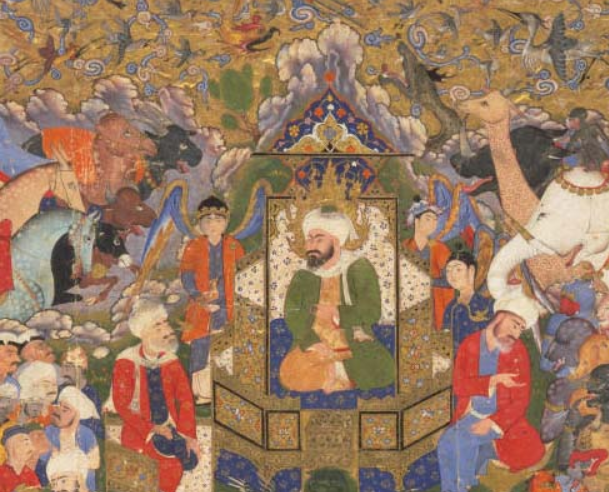
The Persian language survived and flourished again. After a period of relative silence, it reappeared enriched with new vocabulary but still unmistakably Persian. The greatest symbol of this revival is Ferdowsi’s Shahnameh, completed around 1010 CE. This epic poem of 50,000 couplets retells the history and legends of pre-Islamic Persia in pure Persian verse. It became known as the wellspring of Persian culture, a handbook of kingship, heroism, and identity. Even today, Iranians recite lines from the Shahnameh and feel connected to their ancient past.
Iran’s contributions to world civilisation are immense and lasting. Will Durant, the renowned historian, described Persia in 1948 as a “watershed of civilisation” that poured its achievements eastward and westward.
Zoroastrianism, the ancient faith of the Persians, introduced ideas that shaped later religions: an invisible God, the cosmic struggle between good and evil, angels, heaven, hell, final judgment, and the power of human free will. These concepts influenced Judaism after the Babylonian exile and later passed into Christianity and Islam.
Persian administration set standards that later empires followed. The satrapy system, professional bureaucracy, roads, and postal network influenced governance across Asia and beyond. Persian scholars advanced science and medicine. Khwarazmi laid the foundations of algebra and introduced Hindu-Arabic numerals. Razi and Avicenna produced medical works that served as standard texts in European universities for centuries.
Poetry reached new heights with Omar Khayyam, whose rubaiyat explored life’s fleeting pleasures, and Rumi and Hafiz, whose verses spoke of divine love through images of wine, gardens, and human passion. Their words crossed borders and inspired writers from Emerson to Goethe.
Persian gardens, carpets, and cuisine also left deep marks. The very word “paradise” comes from the Persian concept of an enclosed garden. Persian food balanced sweet and sour, hot and cold, creating sophisticated dishes that influenced cooking from India to Spain. Hand-knotted carpets, each telling its own story through patterns and colors, became treasures sought across the world. The celebration of Nowruz, the ancient Persian New Year at the spring equinox, continues today as a 13-day festival of renewal, picnics, and joy that unites Iranians across religious and political lines.
These elements form the deep roots that make civilisations hard to destroy. Laina Farhat-Holzman, in her study of cultural persistence, highlights Iran’s remarkable “cultural stamina.” Despite invasions by Alexander, Arabs, and Mongols, Persians repeatedly co-opted their conquerors. The Mongols, who caused terrible destruction in the 13th century and may have killed half the population, eventually became patrons of Persian art, astronomy, and literature. The Safavid dynasty in the 16th century reunited the country and strengthened a distinctly Iranian form of Shi’ism that set it apart from its Sunni neighbors.
History is full of leaders who believed they could wipe out a civilisation. Each time, the claim proved false. Arnold Toynbee observed that civilisations usually die from internal suicide rather than external murder. Oswald Spengler saw cultures as living organisms that pass through seasons but rarely disappear completely. Will Durant noted Persia’s role in seeding ideas across India and the West. Bernard Lewis emphasised that Persians remained Persians even after becoming Muslim. These historians understood what many modern voices forget: civilisations are not surface structures. They are living memories carried in language, literature, and daily life.
The Western tendency to believe military power can erase deep-rooted cultures is a recurring delusion. In 2003, the US invaded Iraq expecting to quickly reshape the region into a stable democracy. Ancient identities, tribal bonds, and religious traditions proved far more enduring. In Afghanistan, two decades of foreign presence could not erase local customs and codes of honor.
Similar patterns appear throughout history. When Alexander sought to Hellenize the East, Persians instead incorporated Greek elements while keeping their core identity. After the Arab conquest, Iran gave the Islamic world many of its greatest administrators, scientists, and poets. The Mongol catastrophe destroyed cities and libraries, yet Persian culture revived and shaped its conquerors once more.
Iran today has a population of around 80 million, with more than half under the age of 30. The country is officially an Islamic Republic, yet its people continue ancient traditions. They speak Farsi, celebrate Nowruz with family picnics beside streams, cook dishes flavoured with saffron and rosewater, recite poetry by Rumi and Hafiz, and gather in bazaars and tea houses for conversation and bargaining. Persian carpets still adorn homes, and gardens remain places of beauty and reflection. Even under pressure and sanctions, Iranian cinema, literature, and music show the same creative spirit that has survived for millennia.
Civilisations endure because they are bigger than any single ruler, regime, or weapon. They live in the quiet teaching of grandparents who pass on festival rituals, in the verses children learn by heart, and in the pride that survives every crisis. Iran has faced conquest, destruction, and attempts at cultural erasure many times. Each time it has bent without breaking, absorbed new influences without losing itself, and continued its long journey.
The claim that any civilisation can be easily wiped out ignores this deep reality. Iran’s story reminds us that true power lies not in missiles or sanctions but in the enduring strength of human memory, language, and culture. When the noise of current headlines fades, the Persian river will still flow. Gardens will bloom, Nowruz will return each spring, and the Shahnameh will continue to be read.
The world will remain richer for the gifts Iran has given across the centuries: ideas of justice and tolerance, advances in science and administration, and beauty expressed in poetry, art, and daily life.
Civilisations are not easy to destroy. They are rooted too deeply, carry too much wisdom, and possess too strong a spirit of renewal. Iran has proven this truth for more than two and a half thousand years. It will surely prove it again.
The writer, who hails from Jammu & Kashmir, is Assistant Professor, Department of Education, Akal University, Bathinda, Punjab. Email: aishxing@gmail.com. The views are personal.
Get the latest reports & analysis with people's perspective on Protests, movements & deep analytical videos, discussions of the current affairs in your Telegram app. Subscribe to NewsClick's Telegram channel & get Real-Time updates on stories, as they get published on our website.