





Bangladesh Sees First National Elections Since Fall of Hasina Govt
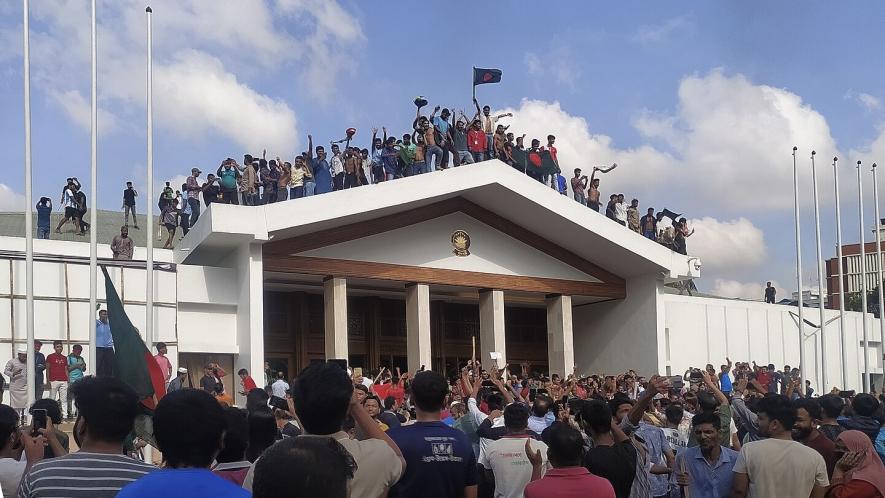
People rallying in front of the prime minister's office after Sheikh Hasina's resignation in August 2024. Photo: Md Joni Hossain / Wikimedia Commons.
127 million Bangladeshi voters are eligible to vote in the parliamentary elections being held this Thursday, February 12. These elections are being held almost 18 months after prime minister Sheikh Hasina was forced to resign and left the country in response to an uprising initially led by students against a quota system in the government jobs.
Bangladeshi voters will be electing their representatives in the country’s National Assembly (Jatiya Sangsad). There are 350 seats in Bangladesh’s parliament out of which 50 are reserved for women. 299 seats will be directly elected this Thursday as the contest for one seat has been postponed following the death of one of the candidates.
Whichever party or coalition wins more than half of the seats in the National Assembly will form the next government.
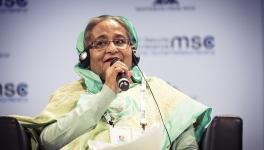
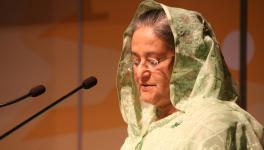
Former PM Sheikh Hasina, who is now living in exile in India, has been convicted and sentenced to death for her alleged role in the death of hundreds of protesters in July-August 2024. Her party, the Awami League, has also been banned from participating in the elections.
An interim administration led by Nobel Laureate Mohammad Yunus has been ruling the country since Hasina’s resignation.
February 12 will be the 13th national election in the South Asian country of over 173 million people since its formation in 1971.
Major parties and coalitions
The conspicuous absence of Awami League seems to have greatly benefited the Bangladesh Nationalist Party (BNP). Several polls predict a win for the conservative party led by Tarique Rahman, son of former prime minister and long term rival of Hasina, Khalida Zia.
Rahman returned to the country late last year after living in exile for over 17 years.
BNP’s main contender is the Islamicist party Jamaat-e-Islami or simply Jamaat led by Shafiqur Rahman. Jamaat has formed a broad alliance with 10 other parties including the newly formed National Citizen Party (NCP) led by some of the main organizers of the uprising against the quota system.
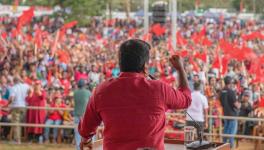
There are nearly 50 parties contesting the elections. A left democratic alliance led by the Communist Party of Bangladesh is also contesting the elections. However, polls indicate it has very little chances of winning seats in the parliament.
Different factions of the centrist Jatiya Party are the only other parties, except BNP and Jamaat coalition partners, with any prospect of winning a significant number of seats in parliament.
Several political parties such as the left-wing Workers Party of Bangladesh (WPB) have called for a boycott of the elections, claiming that conditions do not exist in the country for free and fair elections given targeted attacks and the banning of a major party.
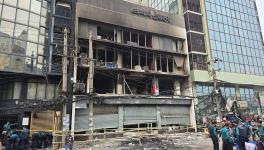
Since Hasina’s resignation, hundreds of members of the Awami League and its former alliance partners, including the WPB, have been arrested. Members’ homes and offices of the AL, WPB, and others have also been vandalized. Some workers with these parties have also been killed in mob violence in the last 18 months.
The WPB and Jatiya Samajtantrik Dal (JSD), another former AL coalition partner, have faced repeated attacks on their offices. Both their presidents Rashed Khan Menon (82) and Hasanul Haq (78) are in jail on murder charges which supporters say is a form of political persecution.
Speaking to Peoples Dispatch, Sharif Shamshir, a left political activist in Bangladesh, claimed that the absence of Awami League has benefited both the BNP and Jamaat with the former getting most of the swing votes.
However, he claimed that in any outcome, the prospect of a strong government is impossible in the coming elections as popular votes would be divided between BNP and Jamaat with little margins.
Economic issues at the fore
Despite the political turmoil the country has been facing since the July 2024 uprising, polls seem to indicate that economic issues such as political and administrative corruption, rise in the prices of essential commodities, unemployment, and slow economic growth have remained the top priorities among the electorate in the country.
Bangladesh has been facing severe economic challenges since the COVID-19 pandemic with inflation in essential commodities remaining consistently high, affecting the daily life of the majority of the population. In January 2026, the inflation rate was recorded at 8.58%.
Despite this, both the BNP and Jamaat-led coalitions are largely campaigning around a conservative agenda with little or no clear policy alternatives to address the basic economic problems of the people.
July National Charter
Bangladesh is also holding a national referendum along with the elections for the National Assembly.
The interim government has proposed a set of fundamental changes in the country’s political system and constitution calling it the July National Charter. Among the changes proposed is a bicameral parliament instead of the unicameral one Bangladesh has right now.
The provisions of the charter have been opposed by many on the left as well as the Awami League, who have termed it a threat to Bangladesh’s secular, democratic, and socialist character.
They also claim that the so-called charter goes against the principles of the country’s formation during the war of liberation in 1971.
Major political parties participating in the elections, including the BNP and Jamaat signed the charter in October.
Now, it will be put in front of voters who have a choice to reject the proposed changes.
Shamshir told Peoples Dispatch, that he believes that there is a wider confusion about the need and nature of the referendum among the people in the country particularly in the rural areas given its complexity and the lack of proper information about it. He further claimed that none of the parties, including the BNP, are actually in favor of the changes proposed through the July Charter. They agreed to sign the charter in October just in order to expedite the election process in the country.
According to the constitution, elections should have been held within three months of Hasina’s resignation. However, the electoral process was delayed by the interim government which claimed that it was working on reforms in the system.
Even if the July Charter is accepted in the referendum it would be very difficult for a government to implement it as it would require creating consensus over the necessary amendments in the country’s constitution, claimed Shamshir.
Courtesy: Peoples Dispatch
Get the latest reports & analysis with people's perspective on Protests, movements & deep analytical videos, discussions of the current affairs in your Telegram app. Subscribe to NewsClick's Telegram channel & get Real-Time updates on stories, as they get published on our website.