






Sigachi Incident Exposes Huge Gaps in New OSH Code
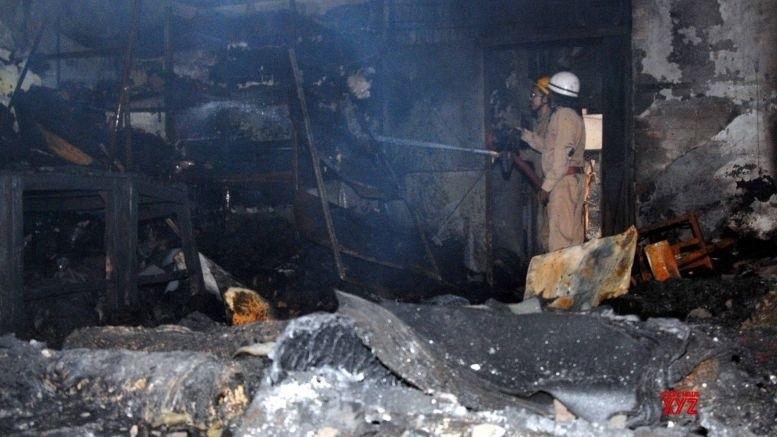
Image for representational use only. File Image
On the morning of June 30, 2025, in a bulk drug manufacturing industry (Sigachi Industries Ltd.) located on the outskirts of Hyderabad, a massive explosion of unchecked accumulated Microcrystalline Cellulose (MCC) dust claimed the lives of 54 workers, including eight workers whose bodily remains have not been found, and injured 28+ workers, many of whom are migrant workers, contract workers, and from marginalised communities.
Immediately after the incident, the Government of Telangana and Sigachi Industries Ltd. issued press releases promising ex-gratia compensation of Rs 1 crore to the families of the deceased, Rs 5 lakh to the injured, Rs 10 lakh to the seriously injured, and full medical and rehabilitation support to those injured.
The Technical Expert Committee’s 128-page report on the Sigachi incident found the plant’s fire and safety officer lacked required industrial safety qualifications under the Factories Act 1948, no first-aid facilities were provided, and critical safety measures were severely lacking.
The report also held that the inspections conducted by the Department of Factories in 2019-2024 “appear to be non-serious activity and did not reflect the factual violations of the industry.”
In the aftermath of the disaster, in a State-mandated survey of high-risk factories in Telangana, alarmingly but unsurprisingly, it was found that one in every five high-risk category factories is not in compliance with the law of the land.
These findings make it clear that the Sigachi incident is not merely a story of one factory’s collapse on June 30, 2025; it is a living reminder of what happens when the law that was meant to protect workers is ignored or weak. The Factories Act, 1948, which at least set clear minimum standards on occupational safety and health, is now repealed and replaced by the Occupational Safety, Health and Working Conditions Code, 2020 (OSH Code).
In its press brief on the day it notified the new law, the Union government claimed that the OSH Code “balances the twin objectives of safeguarding worker rights and safe working conditions, and creating a business-friendly regulatory environment.” Yet, the Sigachi incident forces us to ask a simpler, more urgent question: does the new law actually close the very gaps that killed 54 workers or does it widen them?
In the sections that follow, we step back from the immediate horror of Sigachi and examine, in plain language, the key provisions of the OSH Code that ordinary readers, workers, unions, and concerned citizens should be aware of. Our purpose is not to litigate the past but to illuminate the future. We argue that unless these provisions are challenged and corrected, the conditions and implementation gaps that made the Sigachi incident possible, if not inevitable, are being hardwired into the statute book itself.
How the Code Leaves Small Hazardous Units Exposed
Previously, the Factories Act covered the establishments employing 10 or more workers where electricity or machinery were used in the manufacturing process and 20 or more workers where no power was used. The OSH Code raises these requirements to 20 or more workers and 40 or more workers, respectively.
While the smaller establishments were already outside the ambit of the Act, increasing the threshold, the code further narrows down the scope of statutory protection. As a result, a large segment of workers, including those employed in smaller units engaged in hazardous processes, now fall outside the protective framework of the code, thereby exacerbating the vulnerabilities.
In addition, the code uses inconsistent terminology. This will result in interpretative ambiguities, leading to uneven application of the law and increased legal disputes.
Core, Minimum Protections Deferred to Union Executive
Sections 18, 23, and 24 of the OSH Code, which form the fulcrum of the legislation, defer the substantive determination of occupational safety standards, employer responsibilities, and welfare obligations to rules to be prescribed later by the Central government/executive. This is a clear departure from the Factories Act, 1948, which expressly laid down the minimum safety and welfare standards in the statute itself.
This deferral by the Code and the lack of legislative guidance in the Code itself raises two significant concerns. First, the essential welfare safeguards are rendered uncertain, as they are deferred to future action by the executive. Even the Central OSH Rules (‘Central Rules’) framed and pre-published on December 30, 2025, offer no insight or give effect to the OSH Code on the aforementioned sections. This legislative approach of deferring it to the executive also raises serious constitutional concerns of excessive delegation, as it fails to lay down the essential policy of the enactment or provide adequate legislative guidance for rule-making.
Second, the concentration of rule-making authority on welfare safeguards at the Central level limits the ability of workers and local institutions to meaningfully engage with authorities to secure the timely formulation and enforcement of welfare-related rules.
Hazardous Industries and Executive Discretion
A further dilution of worker protection in hazardous industries is evident compared with Section 41F of the Factories Act, which prescribed permissible exposure limits for hazardous substances through the Second Schedule. This schedule has been completely omitted in the OSH Code, and instead, Section 88 of the OSH Code delegates the determination of permissible exposure limits to state governments, which shall be prescribed through rules. Such omission removes a critical legal safeguard against chemical exposure in industries, thereby increasing the risk of long-term occupational health hazards.
The International Labour Organisation (ILO) recognises that a safe and healthy working environment is a fundamental principle and right at work, imposing an obligation on member states to realise this right through domestic laws. This obligation necessarily requires that the applications for setting up hazardous industries must be evaluated through rigorous environmental and occupational safety assessments.
The Factories Act mandated the constitution of a site appraisal committee that grants permission for setting up an industry, with a predetermined and diverse composition, including bureaucrats, technical experts, and other direct stakeholders. However, the OSH Code leaves the composition of the site appraisal committee to the discretion of the appropriate government, without mandating the inclusion of diverse stakeholders, especially the workers.
Such a broad discretion seriously weakens environmental and safety scrutiny at the very stage when approval to set up a hazardous industry is granted.
Safety Committees and Safety Officers
The Factories Act had a mandatory and universal requirement to constitute a Safety Committee in all factories with hazardous processes under Section 41G. The OSH Code eliminates this requirement. Under Section 22 (1) of the OSH Code, it is now completely up to the Central Government “by general or special order” to require an establishment or a class of establishments to constitute a Safety Committee. Factories with hazardous processes no longer need to have a Safety Committee, which was a strict requirement aimed at ensuring worker participation in safety management, typically involving representatives from both management and workers to identify hazards, recommend safety measures, and monitor compliance.
However, strangely, Rule 25 (1) of the Central Rules squarely contradicts the Code by mandating Safety Committees for all establishments employing 500 or more workers, while simultaneously carving out an exception for the establishments covered under Section 22 (1) of the Code. Given that Section 22 (1) is itself the enabling provision governing the constitution of Safety Committees, this drafting renders the statutory framework internally incoherent. Needless to say, Rules (delegated legislation) cannot lay down fresh obligations that are not provided for or enabled in the parent law.
Rules 29-33 of the Central Rules deal with appointment and duties of Safety Officers for dock work, building and other construction work, and mines, subject to their respective statutory thresholds. Notably, however, these provisions are silent with respect to factories. In contrast, Section 22 (2) (a) of the OSH Code expressly mandates the appointment of a Safety Officer in factories employing 500 or more workers. This disjunction between the parent legislation and the subordinate rules reveals a lack of coherence in the regulatory framework governing occupational safety, raising concerns regarding the effective and uniform implementation of safety obligations in factory establishments.
This incoherence is further aggravated by inexplicable errors in Form IX (Annual Return) under the Central Rules. In Part I of the Form, which applies to all establishments, Point E requires details of health and welfare amenities. However, the accompanying instructions (Sl. No. 4) incorrectly mix up the requirements relating to the safety committee and safety officers. The Form refers to establishments covered under Section 22 (2) (which refers to safety officers) while discussing the safety committee requirement under Section 22 (1). In doing so, the Form misapplies the statutory criteria and disregards the threshold prescribed in Rule 25 for safety committees.
Further, the Form restricts the scope of reporting for the Safety Officer (Sl. No. 5), to only Mines and Buildings, thereby entirely omitting “factories” that are clearly mandated under Section 22 (2) of the Code. In sum, the operational requirements, thresholds, and reporting mandates are unclear and contradictory across various components of the same law. And in effect, as in the case of the Sigachi Incident, workers’ safety and lives may become the cost of these errors.
Exemptions as Default
The changes and contradictions we have described above already paint a very grim picture of the OSH Code’s enforcement for the safety and health of workers. Worse still, even when these inadequate and flawed rules apply, the Code allows governments to simply switch them off at will. Section 127 (1) of the code confers an overarching power upon the appropriate government to exempt “any establishment from all or any provisions of the Code,” without prescribing qualification to this power, objective grounds, procedural safeguards, or a maximum time limit. This omnibus power marks a clear departure from the Factories Act, where exemptions were narrowly tailored, chapter-specific and expressly included core protections, such as the prohibition on child labour.
This annihilating power with the Union executive is compounded by Section 128, which expands the grounds for exemption from the limited category of “public emergency” under Section 5 of the Factories Act to include broad terms such as “disaster” and “pandemic”, while simultaneously extending the permissible exemption period from three months under the Factories Act to a year.
In Gujarat Mazdoor Sabha v. The State of Gujarat, the apex court held that “Section 5 of the Factories Act could not have been invoked to issue a blanket notification that exempted all factories from complying with humane working conditions and adequate compensation for overtime, as a response to a pandemic that did not result in an ‘internal disturbance’ of a nature that posed a ‘grave emergency’ whereby the security of India is threatened.” This ruling is now undone by the change in law.
Conclusion
All in all, we find that the purported balance that the OSH Code brings between the “twin objectives” is unequal. The irony is so stark in many places. For instance, the timeline within which permissions to establish a new factory are to be dealt is brought down from three months in the Factories Act to 30 days in the OSH Code, while the timeline for completing inquiry into an accident that causes death, is doubly increased.
Today, with the Factories Act repealed and the all-pervasive ‘ease of doing business’ policy from the lifetime of the Factories Act itself now poured into and hardened in the text of the OSH Code, the struggle will continue in the rule-making process, in implementation of the Code, in judicial institutions, and in the streets. In this process, now more than ever, the echo of the Sigachi incident must continue to ring ominously.
Akhil Surya is a lawyer with focus on labour law and public grievance redress systems. Pragna Maddepally is a final year law student at NALSAR University of Law, Hyderabad. The views are personal.
Get the latest reports & analysis with people's perspective on Protests, movements & deep analytical videos, discussions of the current affairs in your Telegram app. Subscribe to NewsClick's Telegram channel & get Real-Time updates on stories, as they get published on our website.