





Odisha: Power Before Preparation -- Is BJP Facing First Real Political Test?
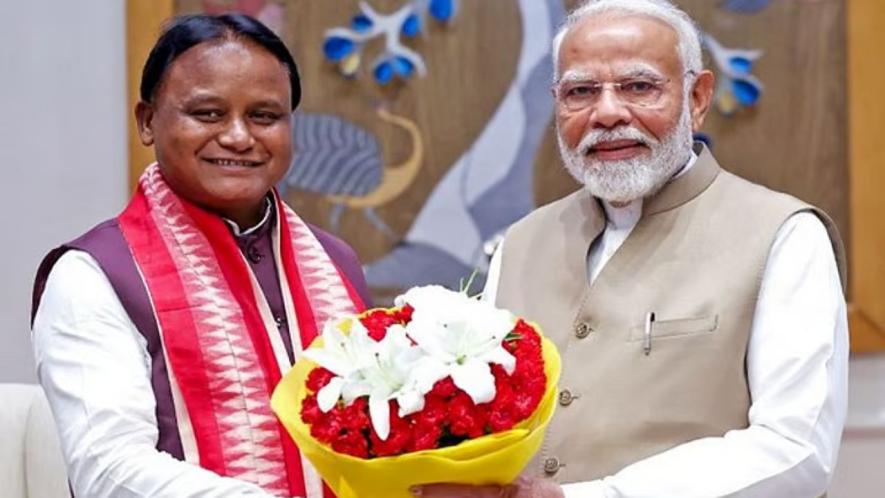
Odisha CM Majhi with Prime Minister Narendra Modi. File photo: PTI
Two years in government is often considered an early but meaningful point in democratic evaluation. It is long enough for citizens to distinguish campaign promises from administrative capacity and short enough for governments to correct direction before public disappointment becomes irreversible.
In Odisha, political conversations across villages, towns, campuses, and policy circles increasingly revolve around a difficult question: has the Bharatiya Janata Party (BJP) government converted electoral victory into effective governance, or is it confronting a crisis of political execution?
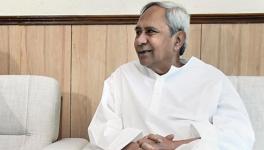
The BJP’s arrival to power in Odisha marked a historic political transition. For nearly a quarter century, governance in Odisha had become synonymous with the leadership of Naveen Patnaik and the regional strength of Naveen Patnaik’s Biju Janata Dal (BJD). The defeat of such a durable political structure generated enormous expectations. Voters expected administrative acceleration, faster infrastructure delivery, stronger investment, employment generation, and a visible benefit from what was described politically as a “double engine” arrangement between state and Union governments.
However, electoral victory and governing competence are not always identical.
A growing section of observers argues that the Odisha government appears to be facing the challenge of converting political energy into administrative depth. Chief Minister Mohan Charan Majhi is frequently described even by critics as personally modest, accessible, and socially rooted. His rise from an Adivasi background has symbolic and democratic significance in Indian politics. Yet, democratic politics has repeatedly shown that personal simplicity and political success are different competencies. Governance requires institutional coordination, anticipation, persuasion, crisis management, and the ability to communicate a long-term developmental imagination.
The criticism emerging in public discourse is not necessarily directed at personality but at capacity. Questions are being raised regarding whether enough experienced political and administrative minds exist within the present cabinet structure to transform ambition into measurable outcomes. Citizens often judge governments not by announcements but by visible changes in roads, employment, irrigation, urban services, public delivery systems, and household economic confidence.
The challenge becomes sharper because Odisha is not a politically blank state. It enters every election with a strong regional memory. For many years, governance under the previous administration created a political culture where administrative predictability became a form of political capital. Whether one agreed or disagreed with policy choices, there existed a perception of continuity. Replacing such a structure requires not merely criticism of the past but construction of a persuasive future.
Another subject increasingly discussed in political circles is the role of senior BJP leaders from Odisha at the national level. Attention frequently turns toward Union Ministers Ashwini Vaishnaw and Dharmendra Pradhan. Public expectations from nationally visible leaders are naturally higher because people assume such figures possess the influence necessary to channel investment, institutions, and strategic attention toward the state. At the same time, political perceptions are complex. Questions about alignment, political messaging, and strategic clarity often emerge whenever parties transition from opposition to government.
Political observers also point toward the parliamentary performance question. Odisha sends a substantial number of Members of Parliament to New Delhi, and expectations rise proportionately. Citizens increasingly ask whether representation is translating into stronger economic outcomes, industrial expansion, educational institutions, and employment opportunities. The benchmark today is not symbolic presence but measurable impact.
The deeper issue may not be anti-government sentiment alone but expectation inflation. When a political movement promises structural change, voters become impatient for evidence. Rural dissatisfaction, whether real, exaggerated, or unevenly distributed, acquires political force because local experience shapes electoral psychology more than macro narratives. Development, in electoral politics, must be felt before it is celebrated.
The Opposition space also remains dynamic. Despite electoral defeat, Patnaik continues to retain significant recognition and political recall. Regional identity remains an influential force in Odisha’s political culture. Unlike some states where leadership transitions quickly erase old loyalties, Odisha’s politics has historically rewarded continuity, familiarity, and regional articulation.
Equally important is the future arithmetic of opposition politics. If opposition parties coordinate effectively, electoral contests become less predictable. In Indian politics, alliances often change outcomes even where individual party strengths appear limited. Electoral history repeatedly demonstrates that no political dominance is permanent. Leaders once considered invincible have experienced defeat. Congress leader Indira Gandhi lost power. BJP leader Atal Bihari Vajpayee faced electoral setbacks. Even long-serving regional governments eventually encounter public fatigue.
At the same time, assuming inevitable decline can be equally misleading. Governments possess an advantage unavailable to opposition parties: the ability to course-correct. Administrative reform, stronger district-level delivery, visible local outcomes, cabinet recalibration, and clearer political communication can change public sentiment faster than many expect.
For the BJP in Odisha, the next phase may not be about slogans but governance credibility. The central question is whether the party can produce a second generation of state-level leadership beyond established faces and convert national political strength into local confidence. If it succeeds, the present criticism may become a temporary adjustment phase. If it fails, the current conversations may evolve into a broader political challenge.
Democracy remains unpredictable because voters are neither permanently emotional nor permanently ideological. They compare, remember, punish, reward, and surprise. In the end, governments are not judged by the scale of victory that brought them to power but by the quality of governance they leave behind. Odisha’s political future will not be decided by narratives alone, it will be decided in the minds of ordinary people and at the ballot box.
The writer is Director, Center for Adivasi Research & Development (CARD), Odisha. The views are personal.
Get the latest reports & analysis with people's perspective on Protests, movements & deep analytical videos, discussions of the current affairs in your Telegram app. Subscribe to NewsClick's Telegram channel & get Real-Time updates on stories, as they get published on our website.