




The Last Living Symbol
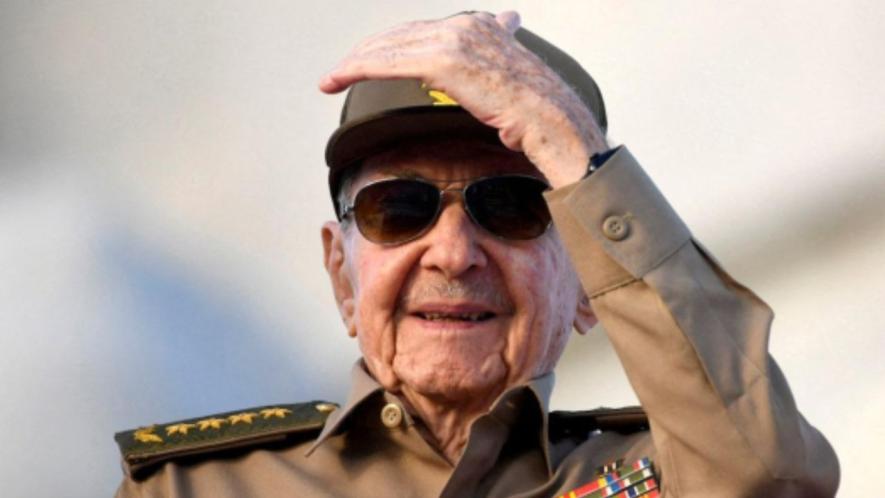
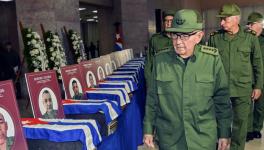
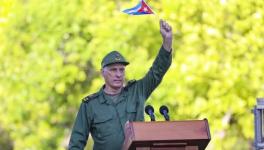
Raul Castro. Image Credit: Special Arrangement
In his recently published book, Who Paid the Pipers of Western Marxism, Gabriel Rockhill recounts the hunt for Che Guevara. "They wanted his head... they literally wanted him decapitated so that his head could be placed in a jar and expedited to Washington as a war trophy." Che was not merely a celebrated anti-imperialist guerrilla. He embodied a living alternative to capitalism, and he fought for it until his final breath. His execution was intended not only to eliminate a revolutionary leader but also, symbolically, to decapitate the very idea of socialist and anti-imperialist nation-building.
We will return to the decapitation of the idea later. But this article is not about Che. It is about one of the three leaders of the Cuban Revolution apart from Che and Fidel Castro: the former President of Cuba, Raul Castro, who has recently been indicted by the same imperialist power’s Justice Department. After killing Che and years of assassination attempts on Fidel, in which they eventually failed, their attention has now turned to Raúl.
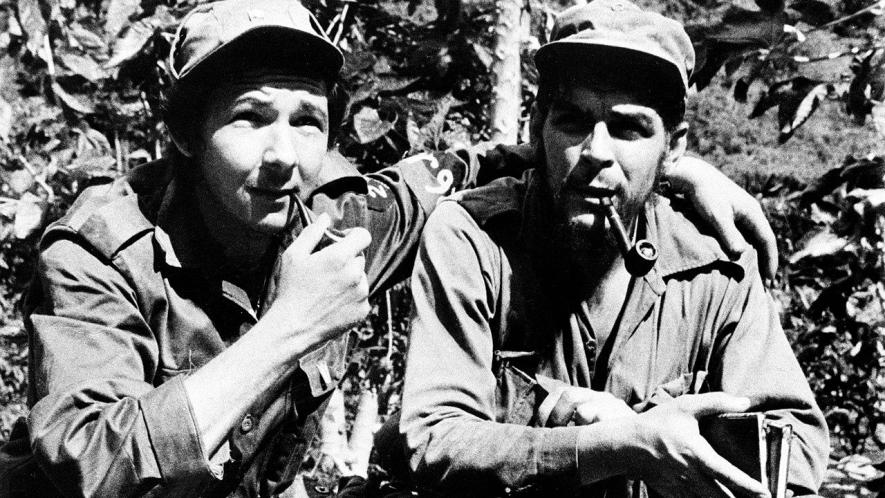
Raul Castro (left) with Che Guevara (right)
What does Raul Castro represent that makes the Wall Street cronies so vindictive? He represents everything they despise. Before following his brother into guerrilla warfare, Raul followed Fidel to Havana University Law School, where he became active in communist student politics. He enthusiastically joined the attack on the Moncada garrison on July 26, 1953, after which the guerrilla movement became known as the 26th of July Movement. It was he who introduced Che to the rebel group.
During the guerrilla war, Raul earned his own command, rising through the ranks as captain. After the revolution, Raul led the Ministry of Defence, heading the newly created Cuban Revolutionary Armed Forces. Tasked with defending the revolution, under his supervision in his capacity as minister, the armed forces defeated the 1961 Bay of Pigs invasion, the imperial plot to overturn the revolution and recolonise Cuba once again. Those who participated in invading Cuba were exiled Cuban Americans who, until 1959 under Batista’s military authoritarian regime funded and maintained by Washington, were the beneficiaries, while the rest of the majority in the countryside suffered from imperial plunder.
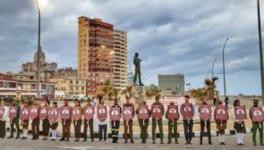
In the middle of this struggle, we cannot forget the 1961 Cuban literacy campaign, when almost 250,000 young volunteers, mostly women, packed their bags with just textbooks and kerosene lanterns and travelled to the remotest areas of the country, where water, electricity, and roads had yet not reached, to educate.
Kian Seara Rey writes: “While their compatriots fought what remained of Batista’s loyalists in the mountains and in the invasion at the Bay of Pigs, the brigadistas did their part at home. They fought with the pen rather than the rifle, and their enemy was an enemy within, a deeply entrenched one: ignorance and widespread illiteracy.” Beginning in January 1961 and outlined by Fidel’s September 1960 UN speech, the campaign virtually eradicated illiteracy in Cuba, decreasing it from 23.6% to 3.9% by December 1961.
In the introduction to the collection of Lenin’s writings from February 1917 to October 1917, the month Bolsheviks seized power in Moscow, Slavoj Žižek writes, “If ever a pen was a weapon, it was the pen which wrote Lenin’s 1917 texts.” Žižek is right to argue that Lenin’s pen was the driver of the Russian Revolution, but I disagree that it only happened once.
The Cuban Literacy Campaign was the second time in history when the pens of hundreds of thousands of brigadistas became the harbinger of a revolution — the Cuban Revolution was not intended merely to seize power but to decolonise the consciousness of its countrymen and women through mass education, and until then it was not complete.
Raul Castro remains the symbol of this consolidation of revolutionary consciousness, as he defended it as the leader of the Armed Forces against Batista’s loyalists at the Bay of Pigs.
Most histories of the Cuban revolution end with the invasion, the Cuban Missile Crisis, and the imperial assassination of Che with impunity, Raul Castro’s most enduring contribution begins in institutionalising the revolution after the 1960s. Antoni Kapcia writes:
“There was also another dimension to Raúl’s admiration of the USSR, already glimpsed in the Sierra: his belief in effective organization and economic stability. Like many others, Raúl perceived both to be present in the USSR, overriding any doubts that he may have harbored about a lack of accountability in Soviet structures. His belief in the need for an effective, accountable, and internally democratic single party remained consistent throughout the decades, reflecting his preference for material incentives (rather than the moral ones stressed by Che), constant accountability, and effective debate.”
That institutionalisation process first began in 1975, when the leadership declared that the country’s revolution had “engaged in a transition to socialism,” where popular mobilization was replaced by a Soviet-style state structure. Raul favoured closer Cuba-Soviet ties. He also welcomed a regular five-year meeting of the Congress of the Party, pushing for internal democracy. He always favoured “a more measured drive toward socialism, with structured accountability and appropriate — but limited — material rewards, but always with a clearly socialist and moral ethos behind everything.”
Not limiting the revolution to home, Raul supervised Cuba’s largest international deployment of forces in support of Angolan President Agostinho Neto against intervention by apartheid South Africa. “The 15-year engagement ultimately forced Pretoria to the negotiating table and helped accelerate the end of apartheid in southern Africa — a contribution acknowledged by none other than Nelson Mandela.”
The 1980s and 1990s tested Raúl’s military leader and organisational skills, with the weakening and collapse of the Soviet Union, Cuba’s “main economic benefactor.” Raúl transformed the armed forces (FAR) into an institution with economic functions and promoted the idea that practical needs mattered more than military strength. The military was directed toward agricultural production and other economic activities. These changes eventually led to the creation of GAESA (Grupo de Administración Empresarial S.A.), a military-run business conglomerate that controls large parts of Cuba’s economy.
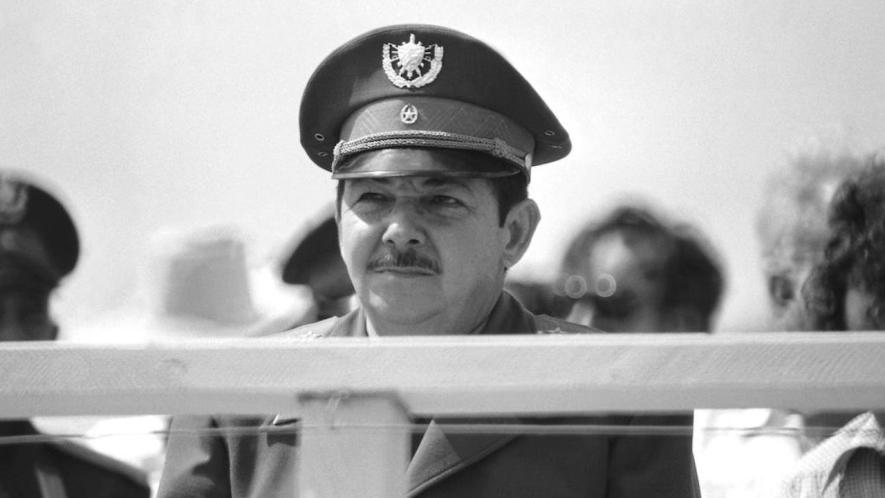
Minister of Defence Raul Castro attends May Day parade in Havana 1978
When Raul was elected to succeed Fidel in 2006 as the President, the Western media buzzed with claims of hereditary leadership, ignoring the fact that he was already first vice president since 1976 and Second Secretary of the Party since 1965. As a pragmatic socialist, Raul understood that the system was in urgent need of upgrading. But he reaffirmed to the skeptics that he was not Gorbachev. He used his revolutionary legitimacy to launch a broad programme of reforms aimed at modernising Cuba while preserving the socialist system, which included an open critique of the revolution’s economic and administrative weaknesses and encouraged a nationwide public debate.
His commitment to inner-party democracy led him to convene the long Sixth Party Congress in 2011, where he became the leader of the Party and gained the authority to implement reforms gradually under the principle of “without haste, but without pause.” His government expanded the initiatives for self-employment, increased opportunities for limited private investment, eased travel restrictions, which later developed the Cuban tourism sector: reforms that had begun during the economic crisis of the early 1990s after the Soviet collapse.
Secondly, he promoted younger leaders within the Communist Party and government, gradually replacing the aging revolutionary generation.
Upon fulfilling his promise of retiring after two terms as Cuba’s President in 2018, Raul remained the party leader until 2021 and oversaw the political, economic, and legal reforms to be carried out properly. This included the 2019 Cuban Constitution, which focused on separation of power, “reflecting Raúl’s known doubts about the concentration of power before 2008. It shared responsibility for government between four potential centers: Cuba’s national president, who was still elected indirectly; a prime minister for day-to-day government; the president of the reformed Council of State and National Assembly; and the party leader.” The Constitution subtly redefined revolution’s ideology from the Soviet-style Marxism-Leninism to “unhyphenated references to ‘Marxism, Leninism’ as sources of political inspiration, along with the ideas of José Martí and Fidel Castro.”
Raul Castro retired from active politics in 2021, largely withdrawing from the public life. Throughout his life he remained the defender of the revolution, of an alternative idea that there can exist a political, social, and economic system which does not perpetuate staggering inequality, illiteracy, illness, ignorance, and hunger, without bowing down before the “invisible hand” of the market. An idea that does not believe in the hegemony of a few who would live their lavish lifestyles without giving little thought about the rest of the working population, who, while facing the daily struggles, would have to work six days a week so the hegemonic elites could enjoy their lifestyle. Yet Raúl has been more than its defender, he remains a symbol of this alternative. And with the passing of the revolutionary symbols who personified this alternative, starting from Lenin and going down to Fidel, Che, Ho Chi Minh, Amílcar Cabral, Thomas Sankara, and Hugo Chávez, Raul Castro remains its last living symbol.
The United States, for decades, has called Cuba “a State Sponsor of Terrorism,” a striking irony. In reality, the US has itself for decades sponsored Miami-based anti-Cuban terror groups. And by indicting Raul, which is surely a pretext for war, it wants to punish Cuba for what Chomsky and Prasad have called the unpardonable sin of “defying” the US by not conforming, as did the rest of Latin America, which obeys US suzerainty through economic, political, and military means.
The issue was never communism, democracy, or human rights — it was sovereignty. I am no fan of Venezuelan President Nicolas Maduro, but the kidnapping of him and his wife by the US armed forces in January 2026 showed to what extent the imperialist power could go on to punish those who would not accept its servitude, along with the Wall Street economic model that it perpetuates. But I must argue that this indictment is more than just a pretext for war.
We began with the image of Che's severed head carried to Washington as a trophy. That image was never simply about a man. It was about an idea. The indictment of Raúl Castro seeks to accomplish something similar—not through execution, but through criminalisation. It is an attempt to delegitimize the revolution that Che fought for and Raúl spent decades institutionalizing: the proposition that nation-building can proceed through anti-imperialist socialism rather than submission to global capital.
In targeting the last living symbol of that revolutionary generation, Washington seeks once again to decapitate the idea itself. As Mark Fisher famously observed, it has become easier to imagine the end of the world than the end of capitalism. Criminalising those who embodied an alternative, helps ensure that this remains so.
The writer completed his Master’s in Political Science from the Department of Political Science, University of Delhi, in May 2026. The views are personal.
Get the latest reports & analysis with people's perspective on Protests, movements & deep analytical videos, discussions of the current affairs in your Telegram app. Subscribe to NewsClick's Telegram channel & get Real-Time updates on stories, as they get published on our website.