





Illusion of Multipolarity: Power Still Has One Address
Image Courtesy: Pexels
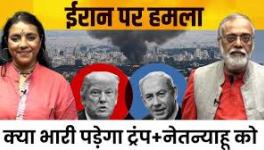
On January 3, 2026, the US special forces swept into Caracas under cover of night, grabbed then Venezuela’s President Nicolas Maduro and his wife Cilia Flores, and whisked them off to New York to face narco-terrorism charges. Barely eight weeks later, on February 28, the US and Israel unleashed Operation Epic Fury, wave after wave of strikes that left Iran’s Supreme Leader Ali Khamenei dead and much of Tehran’s nuclear and missile infrastructure in ruins.
Two months, two seismic moves. And the world watched. What was perhaps even more striking than the operations themselves was the absence of any meaningful deterrent response, revealing not merely the audacity of American power but the permissive environment in which it continues to operate.
For two decades we have been told this kind of swagger was finished. Journalist Fareed Zakaria’s “rise of the rest” became the mantra: China was rising, Russia was back, BRICS was the future, and de-dollarisation was just around the corner. The unipolar moment, we kept hearing, was history. The planet had gone multipolar. Academic discourse, policy think tanks, and diplomatic rhetoric alike converged around this assumption, presenting multipolarity not as a distant possibility but as an already unfolding reality.
The evidence on the ground tells a different story. When Trump’s second administration slammed tariffs on imports, pushing the average effective rate from around 2.5% to peaks that touched 28% on key goods in 2025, the global outcry was loud but toothless.
When Maduro was snatched in broad daylight, Beijing and Moscow issued angry statements and demanded his release. They did nothing more. When the bombs rained on Tehran, the same script played out: furious condemnations at the United Nations, followed by silence.
Why the restraint? Not because China and Russia suddenly lost their nerve, but because the math of self-interest simply did not add up. Beijing is not about to torch its $600 billion plus trade relationship with the US or risk its oil tankers in waters the US Navy can shut down at a moment’s notice, not for Tehran.
Moscow, already stretched thin elsewhere, saw no upside in opening a second front over Caracas. They talk multipolarity at every BRICS photo-op. When the chips are down, they act like countries that know exactly where real power still sits. Even within BRICS itself, internal asymmetries and competing national interests prevent the emergence of a coherent strategic bloc capable of challenging American primacy in any sustained manner.
And then there are the institutions that were supposed to keep any single power in check. In a truly multipolar world, the UN and its sister bodies were meant to be the referee, the place where collective will could balance American muscle. Instead, they have become spectators in the cheap seats.
The UN Security Council, where Washington holds a permanent veto, could not muster a meaningful resolution on either Venezuela or Iran. The General Assembly passed ritual condemnations that everyone knew would change nothing.
The IMF and World Bank? Same story. These organisations were not designed to be neutral; they were built on the realities of 1945 power. Seventy years later, those realities have not shifted as much as we like to pretend. Institutional inertia, combined with entrenched voting structures and financial dependencies, ensures that any challenge to the existing order remains procedurally constrained and politically diluted.
Look at the hard numbers and the picture sharpens. The US dollar still handles 58% of global reserves and 89% of foreign exchange transactions. The US defence budget, the latest SIPRI figures put it at roughly 37% of total world military spending, dwarfs everyone else’s. When Washington sanctions someone or rewrites the trade rulebook, the rest feel the pain because they are still plugged into an American dominated system. No rival currency or alliance has come close to breaking that grip.
Efforts to promote alternative financial architectures, whether through currency swaps, regional payment systems, or digital currencies, remain fragmented and far from achieving systemic disruption.
Sure, the economic map has changed. China is a giant. India has real swing weight. Global GDP is more spread-out than it was in 1990. But turning economic heft into the ability to project force, enforce rules, and hold alliances together is another matter entirely. That part of the game still runs through Washington.
Power in the international system is not merely about accumulation of wealth but about the capacity to convert that wealth into strategic leverage, and on that count, the US continues to enjoy a decisive edge.
For India, this illusion has been a useful diplomatic tool. We have balanced the Quad with the US for tech and sea lanes, BRICS with the Russians for cheap oil, and kept our own strategic autonomy intact. It felt smart when the world looked messy and multipolar. The shocks of January and February have made the limits painfully clear. When the biggest player moves, the rest, institutions included, mostly scramble to react. This moment, therefore, compels a reassessment of strategic autonomy not as an end in itself but as a flexible instrument that must adapt to enduring hierarchies of power.
The language of multipolarity will not fade. It sounds nice in seminars, flatters our sense of fairness, and gives everyone hope that the old order is crumbling. But the past three months have been a cold reminder: the centre of gravity has not moved nearly as far as the headlines suggested. US dominance may be contested in speeches. In practice, it still sets the boundaries of what the rest can safely do. Until alternative centres of power develop not only economic scale but also institutional influence and credible military reach, the gap between rhetoric and reality is likely to persist.
The world is changing, no question. The real question is whether it is changing, as fast or as deeply, as we keep telling ourselves. For now, the answer appears uncomfortable yet unmistakable: beneath the language of transition lies a system that remains, in its core logic, remarkably unchanged.
Zahoor Ahmed Mir is an Assistant Professor at Akal University, Bhatinda, Punjab. He holds PhD from Jamia Millia Islamia. (mirzahoor81.m@gmail.com.) Hilal Ramzan is an Assistant Professor and Head of the Social Science Department at Akal University. (hilal.mphcupb@gmail.com.) The views expressed are personal.
Get the latest reports & analysis with people's perspective on Protests, movements & deep analytical videos, discussions of the current affairs in your Telegram app. Subscribe to NewsClick's Telegram channel & get Real-Time updates on stories, as they get published on our website.