





'Dimagi Naxal’: When Mind Becomes Site of Suspicion
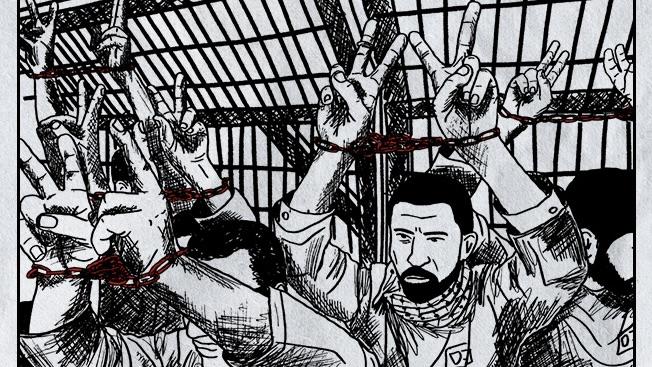
Illustration by Midhun Puthupattu
Independence transferred political power from a colonial State to a sovereign people. Democracy was supposed to transform the relationship between those who govern and those who are governed. Citizens in a democracy are not subordinate recipients of governmental wisdom. They possess the constitutional standing to question those who govern them, disagree with their policies, organise against them and imagine a different society.
India’s 80th Independence Day, however, came with an unusual warning from the Red Fort. Having declared that armed Naxalism was nearing its end, Prime Minister Narendra Modi turned to another enemy. The armed Naxals may have been defeated, he argued, but the “dimagi Naxals” remain. They must be identified and isolated.
The choice of words matter. Seventy-nine years after India became independent, the country’s most important annual celebration of political freedom became the occasion for asking citizens to identify and isolate a category of people by something apparently distinguished by something associated with the dimag, the mind.
An armed Naxal can be identified, at least conceptually, through participation in an armed insurgency. A “dimagi Naxal” is harder to locate. The adjective shifts the terrain of suspicion. The question begins to move from what a person does toward what a person is presumed to think.
Naxalism has a specific political history. Its name derives from the 1967 uprising in Naxalbari in West Bengal and the Maoist political movements that subsequently emerged. For decades, the Naxalite was associated primarily with armed revolutionary politics.
Then came the term, “Urban Naxal”.
The expression acquired wider political currency particularly around 2018, when activists, lawyers and intellectuals were arrested in connection with the Bhima Koregaon case. The political category began travelling beyond those accused of participation in armed insurgency.
Historian Romila Thapar recognised the significance of this transformation. Speaking in 2018 in an address subsequently published in 2019, she noted that “liberals and intellectuals” were being labelled “Urban Naxals”. Her concern was larger than the allegations against particular individuals. What happens when a vocabulary historically associated with armed rebellion begins to encompass academics, lawyers, writers, poets and those raising questions of social justice?
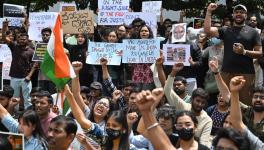
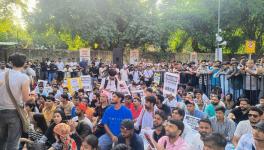
The category continued to travel. By 2025, Delhi University Vice-Chancellor Yogesh Singh was speaking of “Urban Naxals” inside universities and accusing professors of “polluting minds”. He also criticised movements, such as Pinjra Tod. Students and faculty protested against the remarks.
It’s been quite a journey …from the forest to the city. From the city to the university. From the activist to the professor and student. And now, from the university to the mind itself.
The geography of suspicion has progressively contracted until the last territory left to enter is thought.
But what exactly makes a mind Naxal?
Does criticism of extreme inequality qualify? What about research on Adivasi displacement? Opposition to a mining project? Marxist scholarship? A lawyer defending somebody accused of Maoist links? A journalist documenting allegations of state violence? What about an economist who argues that land alienation, dispossession and failures of governance help explain why insurgencies acquire support?
It may be argued that the Prime Minister was not referring to dissenters at all. His words associated “dimagi Naxals” with attempts to create violence and unrest. If that is all the expression means, the problem becomes simpler, Indian criminal law already contains provisions dealing with conspiracy, incitement, unlawful association and assistance to prohibited organisations. These categories require legally specified conduct and evidence. Why, then, is another category needed? And if “dimagi Naxal” describes something beyond conduct already prohibited by law, its boundaries become all the more important.
Can there be an objectively specified category called the “dimagi Naxal”?
Does a political label require these safeguards? Or can boundaries of this label expand according to the preferences of those possessing sufficient political, administrative or discursive power to apply it.
Now the problem changes from one of language to one of incentives. Nothing but power defines this category of “dimagi Naxal”. This term delegitimises the critic. Delegitimisation raises the expected cost of dissent. People anticipate that cost and alter their behaviour.
No censorship order will ever need to arrive.
A professor will decide that a research question is unnecessarily risky. An editor will conclude that an article is better avoided. A university administrator will prefer not to invite a controversial scholar. An employer will consider an outspoken employee inconvenient. A student will learn that silence carries fewer costs than questioning authority.
Compliance will emerge, not because everybody has been ordered to comply, but because institutions make non-compliance increasingly expensive.
That is a more effective form of discipline than censorship.
Further, the costs of political labelling are not equally distributed. A powerful politician accused of extremism by an opponent has a party, lawyers, media access and networks of influence through which to respond. A student, teacher, journalist, researcher or activist possesses far fewer institutional resources.
The same label, therefore, produces unequal vulnerability.
More importantly, its effects extend beyond the person actually labelled. Everyone observing what happens learns something about the expected cost of crossing an uncertain boundary.
Now a political signal becomes a behavioural mechanism.
The objective need not be to silence every critic. It is sufficient to make people ask themselves a question before speaking, Could this make me suspect?
Once that question enters ordinary decision-making, the boundaries of public discussion begin to shift. The ideal citizen is no longer just a law-abiding citizen, an ideal citizen is now a compliant citizen, one who does not ask questions capable of attracting the wrong interpretation. An ideal citizen is one who keeps safe. Political safety begins to depend not simply upon obeying the law, but upon avoiding suspicion.
The use of the word “isolate” deserves as much attention as “dimagi”. Isolate transfers attention from the argument to its author. One need no longer question if the argument is correct? One instead asks What kind of person would make such an argument? Once that substitution occurs, rebuttal becomes unnecessary. Classification does the work of argument. Dialogue ends.
The implications are particularly serious for institutions whose social purpose requires independent thought. A university that produces only acceptable conclusions has ceased to be a university in any meaningful sense. Journalism that scrutinises only what governments permit it to scrutinise cannot hold power accountable. Lawyers cannot perform their constitutional function if defending an unpopular person becomes evidence against the lawyer. Researchers cannot investigate the origins of conflict if explaining an insurgency can be confused with endorsing it.
If disagreement can place a citizen under ideological suspicion, while compliance carries no comparable cost, institutions begin to select for silence. The effect is cumulative. What starts as a label attached to a few dissenting individuals can become a warning absorbed by many who will never themselves be labelled.
A society learns through disagreement. Silence, on the other hand, makes policy mistakes survive longer. Compliance can protect power. It cannot produce knowledge. That is how the regulation of thought can occur without a law regulating thought.
Constitutional democracy rests on the proposition that governments govern, but citizens retain the right to judge those who govern them.
The thinking citizens are, therefore, not an inconvenience that democracy must tolerate. They are a part of the institutional machinery through which democracy corrects itself. A confident republic should know the difference between the citizen who carries a gun against the State and the citizen who carries an argument against the government. The first can be confronted by law. The second must be confronted by another argument. Seventy-nine years after Independence, a democracy should not be asking its citizens to fear the independent mind. It should be sufficiently secure to depend upon it.
The writer is Associate Professor at Zakir Husain Delhi College, University of Delhi. The views are personal.
Get the latest reports & analysis with people's perspective on Protests, movements & deep analytical videos, discussions of the current affairs in your Telegram app. Subscribe to NewsClick's Telegram channel & get Real-Time updates on stories, as they get published on our website.