





Chabahar and Limits of India’s Strategic Autonomy
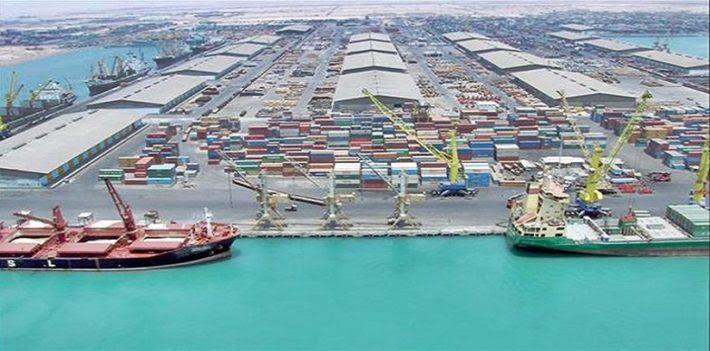
File Image
When US President Donald Trump warned that countries continuing business with Iran would face sweeping punitive tariffs, India’s decade-long investment in the Chabahar port quietly became collateral damage. India’s geopolitical and strategic engagement has experienced a roller-coaster type of upheaval in the recent past.
A recent report suggesting India’s strategic withdrawal from Iran’s Chabahar port triggered a sharp political confrontation between the opposition Congress party and the ruling Bharatiya Janata Party (BJP), with each advancing competing narratives of strategic competence and diplomatic resolve. Yet, beyond partisan sparring, the episode exposes a deeper contradiction between India’s repeated invocations of strategic autonomy and the structural constraints imposed by an increasingly coercive international order. In this sense, strategic autonomy appears less as an achieved condition than as a rhetorical claim repeatedly tested by external pressure.
India’s effective retrenchment from Iran’s Chabahar port constitutes a revealing case of constrained strategic autonomy under conditions of intensifying great-power rivalry. Located on Iran’s south-eastern coast, Chabahar is India’s only viable Western maritime corridor, providing direct access to Afghanistan and Central Asia while bypassing Pakistan, whose land routes remain largely closed to Indian trade.
Over the years, New Delhi has committed close to $500 million through port operations, infrastructure development and credit lines linked to road and rail connectivity from Chabahar to Afghanistan.
Conceived as a cornerstone of India’s Westward connectivity strategy, Chabahar was intended to secure access to Afghanistan and Central Asia while bypassing Pakistan, thereby embedding India more deeply within Eurasian trade and geopolitical networks. Its partial abandonment under renewed US sanctions pressure highlights the structural limits faced by middle powers seeking to reconcile geopolitical ambition with asymmetric interdependence. The logic was simple. Geography had boxed India in, and Chabahar offered a rare escape. It was never just a commercial port but a strategic instrument that gave India access, influence and leverage in a difficult neighbourhood. Its dilution, therefore, represents not merely a tactical setback, but a contraction of India’s continental strategic imagination.
Strategically, Chabahar occupied a pivotal role in India’s regional vision. Beyond its commercial utility, the port functioned as a geopolitical instrument enabling India to project influence across continental Asia, sustain engagement in Afghanistan, and offset the strategic implications of the China–Pakistan Economic Corridor anchored at Gwadar.
India’s reduced involvement consequently weakens its capacity to shape regional connectivity and undermines its ability to contest China’s expanding logistical and maritime footprint across the Indian Ocean and Eurasian landmass. That an infrastructure project linking Afghanistan, Iran, and India could be so decisively shaped by Washington’s sanctions regime underscores the asymmetries of power embedded in the contemporary international system. It also reveals how economic instruments increasingly function as tools of geopolitical discipline rather than neutral regulatory mechanisms.
The episode is particularly instructive for assessing India’s much-invoked multi-alignment doctrine. While New Delhi has sought to balance relations with competing power centres, the Chabahar case underscores the disciplining effect of US secondary sanctions on Indian strategic behaviour.
Faced with the risk of economic and financial exposure, India has implicitly prioritised convergence with Washington, especially in defence, technology, and Indo-Pacific security, over a long-term infrastructure commitment central to its continental strategy. This trade-off reveals how strategic autonomy, in practice, remains vulnerable to economic coercion by dominant powers.
The episode sits uneasily with official claims of an assertive and independent foreign policy, exposing the gap between strategic aspiration and material capacity. It also calls into question the practical resilience of autonomy in an international system increasingly structured by coercive economic statecraft.
At the bilateral level, India’s retrenchment risks eroding trust with Iran, reinforcing Tehran’s perception of India as a risk-averse and sanction-constrained partner. The resulting diplomatic deficit may accelerate Iran’s turn toward alternative external actors, notably China, thereby further marginalising India within the Persian Gulf and weakening prospects for future cooperation in energy and transit connectivity.
Simultaneously, India’s diminished access to Afghanistan through Chabahar narrows its already limited leverage in a post-Western intervention regional order. As per a January 15 report, “India’s decade-old, turbulent involvement in developing Iran’s Chabahar Port has collapsed after US President Donald Trump said on January 12 that any country doing business with the Persian Gulf nation will face a 25% tariff on any and all business being done with the USA”. Such developments risk recasting India from a reliable regional partner into a strategically cautious actor constrained by external vetoes.
Regionally, the strategic consequences are asymmetric. China and Pakistan stand to gain disproportionately as Chabahar’s countervailing potential declines, enhancing Gwadar’s relative significance and consolidating Beijing’s role in shaping regional logistics and supply chains. For Pakistan, India’s loss of an independent corridor to Central Asia reinforces Islamabad’s position as a critical transit gatekeeper, with attendant strategic dividends.
Experts, however, have challenged both the assumption of an Indian “exit” and the rationale for sanctioning a project that directly undermines China-Pakistan strategic interests by serving as a counterweight to the Gwadar Port in Balochistan.
Economically, the retreat constrains India’s trade diversification across Iran and Central Asia, increasing transaction costs and reducing competitiveness. Yet, New Delhi appears to have calculated that preserving its far larger economic and strategic relationship with the US outweighs the narrower, albeit geopolitically significant, returns associated with Chabahar. This calculation, however, foregrounds the growing hierarchy within which India must operate, even as it seeks recognition as a leading power.
Ultimately, India’s withdrawal from Chabahar illustrates a broader structural dilemma confronting emerging powers: the tension between long-term geostrategic positioning and short-term vulnerability to external coercion.
While the decision may safeguard immediate economic and diplomatic interests, it narrows India’s continental reach and reinforces an evolving regional order increasingly shaped by rival powers. Chabahar, then, is less a story of diplomatic miscalculation than a cautionary tale about the limits of strategic autonomy in an era of weaponised interdependence.
For all its claims of multi-alignment and global agency, India remains exposed to the disciplining power of economic sanctions wielded by stronger states. The retreat from Chabahar reveals not merely a contingent policy choice, but a structural condition, one that continues to constrain India’s ability to translate geopolitical ambition into sustained regional influence.
Dr Adil Qayoom teaches Political Science at Government Degree College, Soibugh, Kashmir. Dr Waseem Ahmad Bhat is Assistant Professor of Political Science at Akal University, Punjab. The views are personal. They can be reached at qayoomadil6@gmail.com/waseembhat94@gmail.com
Get the latest reports & analysis with people's perspective on Protests, movements & deep analytical videos, discussions of the current affairs in your Telegram app. Subscribe to NewsClick's Telegram channel & get Real-Time updates on stories, as they get published on our website.