





Bankipur Bypoll: Ram Temple ‘Loot’ Also Played Key Role in BJP’s Defeat
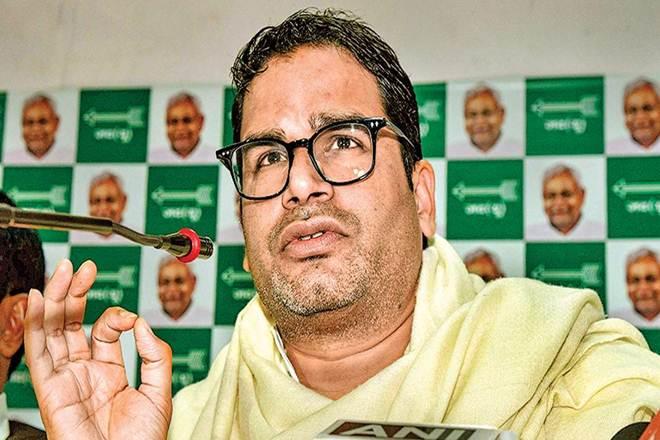
As Jan Suraaj Party (JSP) chief, Prashant Kishor, managed to demolish the Bharatiya Janata Party’s (BJP) bastion of Bankipur in the heart of Patna--the seat vacated by the party’s national president, Nitin Nabin—a week after the resignation of the Union Education Minister Dharmendra Pradhan, there is no dearth of political pundits who are interpreting the verdict as a sort of referendum against the ruling saffron party after the Jantar Mantar students’ movement.
Yet, what is being overlooked is the fact that the alleged loot of crores of rupees from the Ram Mandir Trust in Ayodhya also played a significant role in keeping a big chunk of BJP voters away from the booths on polling day, July 30, thus paving the way for its defeat.
Notwithstanding the enormous efforts made by BJP and its allies, the Assembly constituency registered just a 34.31% voter turnout, about 7% less than last year’s election and lowest ever here. Though BJP lost by 19,324 votes, it got 50,000-odd less votes than in the election held nine months ago.
The allegation of large-scale embezzlement of Ram Temple funds levelled by, inter alia, many of those associated with Sangh Parivar, dampened the spirit of a sizeable section of voters who are usually inclined toward BJP. What could not get enough attention is the fact that while the NEET paper leak took place on May 3, the students anger exploded on July 20, that is about a month after the June 21 re-examination and subsequent declaration of result.
Perhaps, the outburst of the common masses on the streets of Delhi and elsewhere in India would not have been so strong, had the Ram Mandir ‘dacoity’ charge not levelled from within on top brass of Rashtriya Swayamsevak Sangh or RSS and Vishwa Hindu Parishad or VHP in June. The BJP cadres lost the moral courage to aggressively campaign for its candidate.
Why Bankipur Was Different
Media attention is relatively less focussed toward the poll outcome in Datia, Madhya Pradesh, and Manjalpur in Gujarat, which also went to poll on July 30, though Datia witnessed an open rebellion by a section of BJP workers following the denial of ticket to former minister Narottam Mishra, a strong contender, who had lost the last Assembly election. The Congress once again managed to retain this seat.
In contrast, all eyes were rivetted toward Bankipur, obviously because much was at stake for BJP in the seat, which the present party chief had been representing since 2006 before getting elected to the Rajya Sabha in April. Earlier, Nabin’s father, Navin Kishore Prasad Sinha, was the MLA between 1995 and 2005, that is till his death. On the other hand, Datia went to poll following the disqualification of the sitting Congress MLA. Manjalpur seat got vacated after the death of the BJP legislator.
While the BJP won Manjalpur, seats like Datia and Bankipur, saw infighting within the saffron brigade. The Ram Temple loot factor played a role in indirectly facilitating the victory of rival Congress and Jan Suraaj candidates. Contrary to this, in Manjalpur, where BJP emerged victorious, the sympathy factor also played its part. But here, too, the turnout was just 37.5% , which showed that voters were not very enthusiastic in the home state of Prime Minister Narendra Modi and Home Minister Amit Shah.
Three trips to Bihar by Nitin Nabin and a door-to-door campaign by him and road shows, as well as rallies jointly held with Bihar Chief Minister Samrat Chaudhary, failed to enthuse voters, especially traditional BJP supporters. The 34.31% turnout is being largely attributed to the presence of poll strategist-turned-JSP founder, Prashant Kishor, in the fray.
The hunger strike at Jantar Mantar in Delhi, launched by Sonam Wangchuk, to be followed by a widespread agitation led by the Cockroach Janata Party and other students’ outfits in Delhi, Patna, Mumbai, Kolkata and elsewhere, added fuel to the flames caused by the sensational disclosure of corruption in Ayodhya’s Ram Temple.
Besides, the abrupt replacement of candidate in Bankipur by the saffron party a day after the high-profile nomination by Abhishek Kumar Sinha Bunty on July 9, generated great amount of mistrust among the rank and file of the party. What angered BJP supporters more was the announcement of political lightweight, Neeraj Kumar Sinha, 32, as its candidate.
As Bankipur is among the strongest citadels of BJP in Bihar, with a huge population of educated middle class, the fielding of a small fry against Kishor was a big miscalculation. A wrong message went that BJP has taken its own vote bank for granted. There was already strong resentment over the way Samrat Chaudhary was thrust over Bihar. With a person having such a controversial past installed as the Chief Minister, how can BJP claim to be a party with a difference?
The argument given for the removal of Bunty, considered close to Nabin, a day after the filing of nomination papers attended by the Chief Minister, could not convince party foot soldiers. It was said that Bunty was reportedly asked by the top brass—obviously someone other than Nabin--to withdraw his resignation as his father and mother were convicted in the fodder scam.
But the counter-argument by a section of BJP leaders is that the father of Nitish Mishra, a BJP minister in Samrat Chaudhary’s cabinet, Dr Jagannath Mishra, a former Chief Minister, was also convicted in the same multi-crore fodder scam. So, why this double standard?
Likely Fall-Out
The rout in such a prestigious seat, which has an overwhelming BJP support-base (Muslims and Yadavs form only 20% votes in Bankipur), came as a blow to the image of both to Nabin and first saffron party Chief Minister of Bihar, who took office only on April 15, replacing Janata Dal (United) stalwart Nitish Kumar. If Nabin cannot ensure victory in the constituency vacated by him, how would he be able to lead the party to victory across India?
What is more, as the national president of BJP—the post once held by Atal Bihari Vajpayee, Lal Krishna Advani, Murli Manohar Joshi and other heavyweights – Nabin could not even prevent his own trusted lieutenant (Bunty) from humiliation? Is he really running the party or is he there only as a figurehead?
At the same time the win in Bankipur has come as a shot in arm to Kishor or PK whose party lost all the seats in the Assembly election held last year. The moot question is whether he adopts an ‘Ekla Chalo Re’ (Go it alone) approach or joins hands with the opposition Indian National Developmental Inclusive Alliance or INDIA bloc. Much depends on the response of the Rashtriya Janata Dal (RJD), the largest opposition party in Bihar. Congress has already softened its stand toward PK.
There is another side of this story. It is said that RJD deliberately fielded Rekha Kumari Gupta, as she comes from the trading community, which is considered as BJP’s vote-bank and thus helped PK further consolidate the lead. The RJD ended up with 14,723 votes. In 2025, Rekha got about 44,000 votes, almost the same number the BJP got this time.
The writer is a Patna-based freelance journalist. The views are personal.
Get the latest reports & analysis with people's perspective on Protests, movements & deep analytical videos, discussions of the current affairs in your Telegram app. Subscribe to NewsClick's Telegram channel & get Real-Time updates on stories, as they get published on our website.