





Andhra Pradesh: Real Crisis is Development, Not Demography
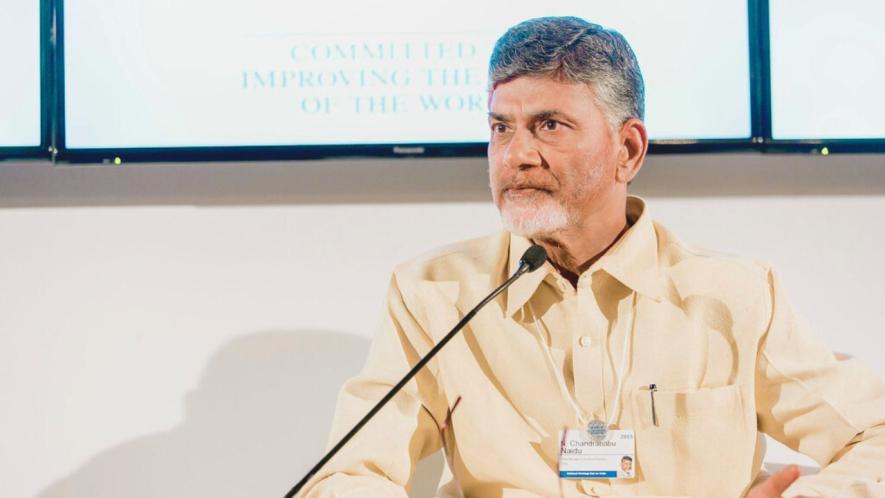
N. Chandrababu Naidu. Image Courtesy: Flickr
Andhra Pradesh Chief Minister N. Chandrababu Naidu has announced that his coalition government will provide ₹30,000 for the birth of a third child and ₹40,000 for a fourth child under the state’s proposed population management policy. Presented earlier in draft form in the Assembly, the policy marks a decisive shift from the language of family planning to what the government now calls “population care.”
The anxiety underlying the move is not entirely imaginary. Andhra Pradesh’s fertility rate has indeed fallen, with NFHS-5 (National Family Health Survey) estimating the state’s total fertility rate at 1.7 children per woman, below replacement level. But demographic concern by itself cannot justify a policy whose social and economic consequences may ultimately deepen the very crisis it claims to address.
The state’s own Socio-Economic Survey 2024-25 notes that decadal population growth had already slowed to 9.21% during 2001-11, significantly below the national average of 17.70%. Population density in the state has consistently remained lower than the all-India average, but that fact alone cannot be treated as evidence of demographic collapse.
The real question is not whether Andhra Pradesh has “too few people,” but whether it has been able to provide education, healthcare, employment, social security and dignity to the people who already live there.
That question becomes sharper when viewed alongside the state’s present economic distress. Andhra Pradesh’s unemployment rate for persons aged 15 and above stood at 8.2% in the July–September 2025 quarter, far above the national average of 5.2%. Rural unemployment at 8.5% was even higher than urban unemployment at 7.7%, reflecting continuing agrarian distress and the absence of sufficient non-farm livelihoods across many districts.
Agriculture is increasingly unable to absorb surplus labour, while manufacturing and service-sector growth in smaller towns has remained weak. The consequence is visible in growing youth unemployment and precarious casual work.
Women bear the heaviest burden within this already fragile economy. In rural Andhra Pradesh, female unemployment touched 10.5% compared with 7.3% for men; in urban areas, female unemployment stood at 9.3% against 7% for males.
Overall female unemployment in the state reached 10.1%, nearly double the national female average. These figures reveal not merely a labour market imbalance but a structural crisis shaped by unsafe working conditions, lack of childcare support, restricted mobility and inadequate employment opportunities for women.
The policy effectively asks economically insecure households to absorb the long-term costs of a demographic problem the state itself has failed to address through development. A one-time payment of ₹30,000 or ₹40,000 cannot sustain the lifelong cost of raising a child. According to NSSO (National Sample Survey Organisation) consumption expenditure data, a woman delivering in an urban private hospital in Andhra Pradesh spends on average ₹63,989 on antenatal care, delivery and post-natal care alone. The government incentive does not even cover half that amount. Even a rural government hospital pregnancy costs nearly ₹18,000.
Andhra Pradesh already records a high dependence on private healthcare, with one-third of rural deliveries and nearly half of urban deliveries taking place in private hospitals. Beyond childbirth itself lie the far larger costs of nutrition, schooling, healthcare, transport, housing and eventual employment.
For poorer households, particularly among lower-caste and working-class communities, the policy risks creating a long-term burden under the illusion of short-term assistance. Families already struggling with stagnant incomes and insecure employment may find the immediate cash transfer attractive, only to confront years of additional financial precarity afterwards.
Instead of strengthening public schools, anganwadis, healthcare systems, employment programmes and social security, the state appears to be transferring the burden of demographic anxiety onto households least capable of carrying it.
The contradiction becomes even sharper when viewed against Andhra Pradesh’s debt burden. According to estimates based on CAG (Comptroller and Auditor General) and state economic data, public debt is projected to rise from around ₹5.68 lakh crore in 2024-25 to over ₹7.11 lakh crore by 2026-27.
Reserve Bank of India data already places Andhra Pradesh among the most indebted states in India, while the inclusion of off-budget borrowings pushes total liabilities close to ₹10 lakh crore, with estimates suggesting they may rise further to around ₹11.2 lakh crore. A government struggling to sustain existing welfare systems can scarcely claim that the answer lies in producing larger families.
The strain is already visible in the state’s existing welfare system. Andhra Pradesh has faced repeated criticism over arrears and delayed payments under major health schemes, such as the NTR Vaidya Seva programme, with hospitals raising concerns over mounting unpaid dues. The government recently released around ₹919 crore to clear part of these pending liabilities. A state struggling to sustain existing welfare commitments can scarcely treat cash incentives for larger families as a serious developmental solution.
The policy is also deeply patriarchal in its assumptions. By placing childbirth at the centre of demographic planning, the state effectively turns women’s bodies into instruments of population management. The financial incentive may formally go to the family, but the physical and emotional costs of repeated pregnancies fall overwhelmingly on women.
In a society where women already shoulder disproportionate unpaid care work, insecure employment and unequal access to healthcare, encouraging third and fourth births without guaranteeing strong maternal health systems, childcare infrastructure, workplace protections and reproductive autonomy cannot be described as empowerment. Far from empowering women, the policy places the burden of the state’s demographic anxieties directly onto their bodies and lives.
A serious demographic policy would begin elsewhere. It would invest in women’s education, employment, nutrition, safety and healthcare. It would reduce economic precarity so that families feel secure enough to make reproductive choices freely rather than under the pressure of immediate financial incentives. It would recognise that declining fertility rates across many societies are closely linked to insecurity, unemployment, rising costs of living and weak welfare systems. Demographic anxiety cannot be solved through cash transfers disconnected from structural reform.
To its credit, Andhra Pradesh does exhibit certain advances. Across Indian states, it remains among those with a relatively lower gender gap in labour force participation despite having a comparatively modest per capita GSDP (gross state domestic product). Among all Indian states, Andhra Pradesh ranks second only to Kerala in terms of a lower gender gap in labour force participation across industries.
Yet, these gains coexist with troubling realities — persistent female unemployment, low higher-education gender parity among youth aged 18-23, agrarian distress and fragile employment generation. The contradiction itself reveals the central issue: the crisis of demography cannot be separated from the crisis of development.
Population decline is not addressed by asking poorer families to produce more children for one-time incentives. It is addressed by building a society in which people possess confidence in the future — confidence that their children will receive education, healthcare, employment, dignity and social protection. What families need is not a temporary cash inducement attached to childbirth, but long-term economic stability and freedom from precarity.
Without that, Andhra Pradesh’s new population policy risks becoming less a vision for the future and more an anti-poor experiment in the name of demographic planning.
Abhishek Matta is a double-gold medalist from the University of Oxford, and currently works with Dr. SY Quraishi, and has previously worked in UN Youth Office and UNICEF. Ashok Danavath is a PhD researcher at the University of Amsterdam studying caste, critical university studies, inequalities in Telugu states, among others. The views are personal.
Get the latest reports & analysis with people's perspective on Protests, movements & deep analytical videos, discussions of the current affairs in your Telegram app. Subscribe to NewsClick's Telegram channel & get Real-Time updates on stories, as they get published on our website.